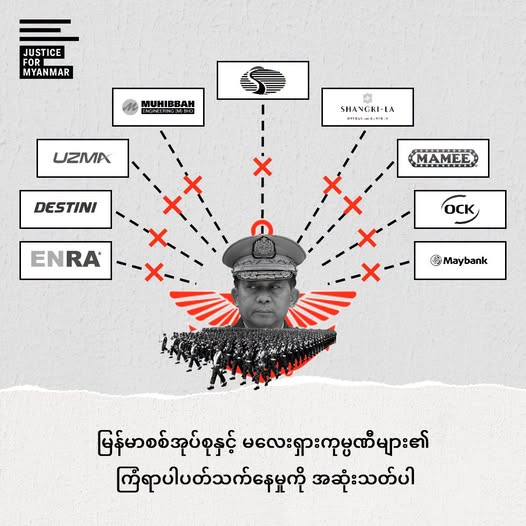
An Investigative Analysis of Business Ties Sustaining Myanmar’s Junta
“Following the Money: How Malaysian Businesses Remain Entangled with Myanmar’s Military Economy”
“An investigation into energy contracts, military-linked land leases, telecommunications infrastructure and financial networks that continue to connect Malaysian companies to Myanmar’s junta.”
More than five years after Myanmar’s military seized power on February 1, 2021, international attention remains focused not only on the junta’s well-documented human rights abuses but also on the foreign companies that continue to conduct business with military-linked entities.
A growing body of reports from human rights organizations, United Nations experts, and independent investigators suggests that the Myanmar military’s survival has depended not only on weapons suppliers and diplomatic support but also on a network of regional businesses that provide revenue, services, infrastructure, financial access, and commercial legitimacy.
Among the countries facing increasing scrutiny is Malaysia.
Reports by Justice For Myanmar identify a number of Malaysian corporations operating in sectors ranging from oil and gas and telecommunications to banking and real estate, which allegedly maintain commercial relationships with military-controlled entities or projects that generate revenue for the junta. While the companies involved may argue that their activities are lawful commercial operations, human rights advocates contend that such relationships carry significant ethical and legal risks. [justicefor…yanmar.org]
The Economics of Military Rule
Since the 2021 coup, governments including the United States, United Kingdom, European Union, Canada, and Australia have imposed sanctions on numerous Myanmar military leaders and military-controlled enterprises.
The objective has been simple: restrict the military’s access to money.
Yet despite these sanctions, Myanmar’s military has continued to finance military operations, import weapons, purchase aviation fuel, and sustain its administrative apparatus.
According to investigations by Justice For Myanmar, one reason is the continued operation of revenue-generating sectors such as oil and gas, telecommunications, real estate, and financial services, where foreign companies continue to play important supporting roles. [justicefor…yanmar.org]
The issue is not merely whether foreign companies directly support military activities. Rather, it is whether their commercial operations indirectly help sustain the economic structures upon which military rule depends.
The Oil and Gas Lifeline
Among Myanmar’s most important sources of foreign currency is its offshore natural gas industry.
For years, natural gas exports have generated billions of dollars in revenue, making the sector one of the country’s largest sources of foreign exchange.
According to Justice For Myanmar, Malaysian-listed companies including ENRA Group, Destini Berhad, Uzma Group and Muhibbah Engineering have continued involvement in projects connected with Myanmar’s energy sector after the coup. The organization reported that these companies obtained contracts linked to major gas projects including Yetagun, Zawtika and Shwe. [justicefor…yanmar.org]
The services reportedly include condensate storage, offshore engineering support, coiled tubing operations, well-maintenance services and EPCIC projects that enable oil and gas facilities to remain operational. [justicefor…yanmar.org]
Critics argue that although these activities may appear technically removed from politics, they help maintain energy production that generates revenue ultimately accessible to military authorities.
The fundamental question raised by human rights advocates is whether commercial service providers bear responsibility when their activities help sustain sectors that finance a regime accused of war crimes and crimes against humanity.
From Property Development to Military Revenue
Another area drawing attention is real estate.
Perhaps the most prominent case involves Kuok Group and its affiliated hospitality brand Shangri-La Hotels and Resorts.
According to investigations published by Justice For Myanmar, the landmark Sule Square development in downtown Yangon occupies land leased from the Myanmar Army’s Quartermaster General’s Office, an institution responsible for military procurement. The lease arrangement dates to the military era of the 1990s and has remained in place for decades. [justicefor…yanmar.org], [justicefor…yanmar.org]
Human rights campaigners argue that rental payments represent a continuing source of revenue for military institutions.
The controversy became sufficiently significant that several international tenants reportedly reviewed or terminated their occupancy arrangements after concerns emerged regarding the property’s military-linked ownership structure. [business-h…rights.org]
A second example involves MAMEE-Double Decker, which has been reported as operating a manufacturing facility on land leased from the sanctioned military conglomerate Myanmar Economic Holdings Limited (MEHL). Justice For Myanmar argues that such arrangements provide long-term financial benefits to military business interests. [justicefor…yanmar.org]
These cases highlight a broader challenge facing foreign investors in Myanmar: whether long-standing commercial agreements signed during previous decades can remain ethically defensible amid dramatically changed political realities.
Telecommunications and the Infrastructure of Control
The telecommunications sector presents another complex issue.
Malaysian telecommunications infrastructure provider OCK Group Berhad has operated extensively in Myanmar, including providing tower-related services for Mytel. [capacityglobal.com], [burmacampaign.org.uk]
Mytel is a joint venture involving the military-owned conglomerate Myanmar Economic Corporation (MEC) and Vietnam’s Viettel Global Investment. [justicefor…yanmar.org]
Telecommunications networks serve obvious civilian purposes. However, human rights organizations warn that communication infrastructure can also facilitate surveillance, intelligence gathering, and military communications.
No public evidence has demonstrated that OCK itself participates in surveillance activities. Nevertheless, critics argue that companies providing infrastructure to military-linked telecommunications operators face heightened due-diligence obligations due to the possibility that the networks may be utilized in ways that support repression. [burmacampaign.org.uk], [justicefor…yanmar.org]
Banking and Access to the International Financial System
Perhaps the most sensitive issue involves banking.
In June 2024, Tom Andrews, the United Nations Special Rapporteur on the situation of human rights in Myanmar, released a report examining how the junta accesses international financial systems to procure weapons and military supplies. The report identified foreign banks and correspondent-banking relationships that continued to provide access to global financial channels for Myanmar state-owned banks under military control. [ohchr.org], [ohchr.org]
The report concluded that international banking relationships remain critical to the junta’s procurement activities and called on financial institutions to review or terminate relationships that may facilitate military transactions. [ohchr.org], [news.un.org]
Within this broader context, attention has been directed toward Maybank and its continued presence in Myanmar.
While allegations concerning individual institutions require careful scrutiny and direct responses from the banks concerned, the larger issue raised by the UN report is whether international financial institutions can continue operating in Myanmar without inadvertently facilitating military-controlled entities. [ohchr.org], [ohchr.org]
Malaysia’s Dilemma
Malaysia has frequently positioned itself as a vocal critic of the Myanmar junta within ASEAN.
Malaysian leaders have repeatedly expressed concern regarding violence, democratic backsliding, and the humanitarian crisis in Myanmar.
Yet critics argue that a gap exists between diplomatic rhetoric and economic reality.
While Malaysia publicly supports regional efforts to address Myanmar’s crisis, Malaysian companies continue to face allegations of maintaining business relationships that financially benefit military-linked entities. [justicefor…yanmar.org]
This contradiction raises difficult questions.
Can governments genuinely support accountability while permitting companies under their jurisdiction to continue business arrangements that generate revenue for military institutions?
Should corporations be held responsible only for direct participation in abuses, or also for indirect commercial relationships that help sustain abusive regimes?
And what level of due diligence is required when operating in a country where the military stands accused by UN experts and human rights organizations of widespread violations of international law?
Conclusion
The debate over Malaysian corporate involvement in Myanmar ultimately extends beyond Malaysia itself.
It reflects a broader global challenge: how businesses should operate in countries governed by military regimes accused of grave human rights violations.
The evidence currently available does not establish that Malaysian companies directly participate in military operations. However, reports by Justice For Myanmar and findings from United Nations investigations suggest that some commercial relationships may contribute to the financial and institutional ecosystem upon which Myanmar’s military government depends. [justicefor…yanmar.org], [ohchr.org]
As pressure on Myanmar’s junta continues, scrutiny is likely to shift increasingly toward the foreign corporations, banks, investors, and service providers whose activities help keep key sectors of the economy functioning.
For Malaysia, the question is no longer simply whether its companies are doing business in Myanmar.
The more important question is whether those business relationships are helping sustain a military regime that much of the international community continues to condemn.
Justice For Myanmar
 မြန်မာစစ်အုပ်စုနှင့် မလေးရှားကုမ္ပဏီများ၏ ကြံရာပါပတ်သက်နေမှုကို အဆုံးသတ်ပါ
မလေးရှားကုမ္ပဏီများသည် မြန်မာစစ်တပ်အတွက် လေယာဉ်ပြုပြင်ထိန်းသိမ်းခြင်းနှင့် မွမ်းမံပြင်ဆင်ခြင်းဆိုင်ရာ ဝန်ဆောင်မှုများကို ပံ့ပိုးပေးနေသည့်အပြင် ရေနံနှင့်သဘာဝဓာတ်ငွေ့ဆိုင်ရာ ဝန်ဆောင်မှု၊ ဆက်သွယ်ရေး၊ ဘဏ်လုပ်ငန်းနှင့် အိမ်ခြံမြေ ကဏ္ဍများမှတစ်ဆင့်လည်း စစ်အုပ်စုကျူးလွန်လျက်ရှိသော နိုင်ငံတကာရာဇဝတ်မှုများတွင် ပူးပေါင်းပါဝင်ပတ်သက်နေကြသည်။
 စစ်အုပ်စု၏ ဝင်ငွေကို စဥ်ဆက်မပြတ် ဖြည့်ဆည်းပေးနေသော ရေနံနှင့် သဘာဝဓာတ်ငွေ့ ဝန်ဆောင်မှုများ
မလေးရှားစတော့အိတ်ချိန်းစာရင်းဝင် ENRA Group၊ Destini Berhad၊ Uzma Group နှင့် Muhibbah Engineering တို့သည် ၂၀၂၁ ခုနှစ်၊ စစ်တပ်၏ အာဏာသိမ်းကြိုးပမ်းမှုနောက်ပိုင်း မြန်မာနိုင်ငံအတွင်း စီးပွားရေးလုပ်ငန်းများ ဆက်လက်လုပ်ဆောင်နေသည့် မလေးရှား ရေနံလုပ်ကွက်ဝန်ဆောင်မှုနှင့် အင်ဂျင်နီယာလုပ်ငန်းကုမ္ပဏီများ ဖြစ်ကြောင်း Justice For Myanmar က ၂၀၂၃ ခုနှစ် နှင့် ၂၀၂၅ ခုနှစ်များအတွင်းတွင် ဖော်ထုတ်ခဲ့သည်။ အဆိုပါကုမ္ပဏီများသည် PTTEP၊ POSCO International နှင့် Gulf Petroleum Myanmar အပါအဝင် စွမ်းအင်ကုမ္ပဏီများထံမှ ရဲတံခွန်၊ ဇောတိကနှင့် ရွှေ စီမံကိန်းများနှင့် ဆက်စပ်သည့် လုပ်ငန်းစာချုပ်များ ရရှိခဲ့ကြသည်။
၎င်းတို့၏ ဝန်ဆောင်မှုများတွင် ဓာတ်ငွေ့ရည်သိုလှောင်ရေးနှင့် လွှဲပြောင်းတင်ပို့ရေးအတွက် အထောက်အကူပြု အဆောက်အအုံများ ပံ့ပိုးပေးခြင်း၊ ရေနံနှင့် သဘာဝဓာတ်ငွေ့တွင်းများအတွင်းသို့ ပိုက်ခွေ (coiled tubing) သွင်း၍ လုပ်ဆောင်ခြင်းနှင့် အရည်နှင့် ဓာတ်ငွေ့များ ပန့်ဖြင့် တွန်းသွင်းခြင်း ဝန်ဆောင်မှုများ၊ တွင်းများအတွင်းသို့ တွင်းပိုက်များချသွင်းခြင်း ဝန်ဆောင်မှုများနှင့် အင်ဂျင်နီယာ၊ ပစ္စည်းဝယ်ယူရေး၊ ဆောက်လုပ်ရေး၊ တပ်ဆင်ရေးနှင့် လုပ်ငန်းစတင်လည်ပတ်ရေး (EPCIC) ဆိုင်ရာ ဝန်ဆောင်မှုများ ပါဝင်သည်။ ယင်းဝန်ဆောင်မှုများသည် စစ်အုပ်စုထိန်းချုပ်ထားသည့် ရေနံနှင့် သဘာဝဓာတ်ငွေ့ကဏ္ဍကို ဆက်လက်လည်ပတ်နိုင်စေရန် အထောက်အကူပြုစေပြီး၊ ယင်းမှတဆင့် စစ်အုပ်စုထံ ဝင်ငွေများဆက်လက်စီးဆင်းစေကာ စစ်အုပ်စုလက်ရှိကျူးလွန်နေသော အကြမ်းဖက်စစ်ဆင်ရေးများအတွက် လိုအပ်သည့် လေယာဉ်ဆီနှင့် စစ်လက်နက်များ ဝယ်ယူနိုင်ရန် ငွေကြေးထောက်ပံ့ပေးနေသည်။
 မြေငှားရမ်းမှုမှ စစ်ရာဇဝတ်မှုများဆီသို့
Kuok Group နှင့် MAMEE-Double Decker တို့သည် မြန်မာစစ်တပ် သို့မဟုတ် ၎င်း၏စီးပွားရေး လုပ်ငန်းစုကြီးများထံမှ မြေယာငှားရမ်းအသုံးပြုနေသည့် မလေးရှားကုမ္ပဏီများဖြစ်ကြပြီး၊ စစ်အုပ်စု၏ ရက်စက်ကြမ်းကြုတ်မှုကြီးများအတွက် ရန်ပုံငွေထောက်ပံ့ပေးနေသည့် ဝင်ငွေလမ်းကြောင်းတစ်ရပ်ကို ဖန်တီးပေးလျက်ရှိသည်။
Kuok Group နှင့် ၎င်း၏ဆက်စပ်ကုမ္ပဏီ Shangri-La Hotels and Resorts တို့သည် အမေရိကန်၊ ယူကေ၊ အီးယူနှင့် ကနေဒါတို့မှ ဒဏ်ခတ်ပိတ်ဆို့ထားသည့် မြန်မာစစ်တပ် စစ်ထောက်ချုပ်ရုံးထံမှ ငှားရမ်းထားသည့် မြေနေရာပေါ်တွင် Sule Square အိမ်ခြံမြေစီမံကိန်းကို ဖော်ဆောင်လုပ်ကိုင်လျက် ရှိသည်။ မလေးရှားကုမ္ပဏီ MAMEE-Double Decker သည်လည်း အမေရိကန်၊ ယူကေ၊ အီးယူ၊ ကနေဒါနှင့် ဩစတြေးလျတို့မှ ဒဏ်ခတ်ပိတ်ဆို့ထားသည့် မြန်မာစစ်တပ်ပိုင် စီးပွားရေးလုပ်ငန်းစုကြီး မြန်မာ့စီပွားရေးဦးပိုင်လီမိတက် (MEHL) ထံမှ မြေငှားရမ်းကာ ပျဉ်းမပင်စက်မှုဇုန်တွင် ကုန်ထုတ်လုပ်ရေးစက်ရုံတစ်ရုံ ဖွင့်လှစ်လုပ်ကိုင်နေသည်။ အဆိုပါ မြေငှားရမ်းမှုနှစ်ရပ်စလုံးသည် ၁၉၉၀ ပြည့်လွန်နှစ်များကတည်းက စတင်ခဲ့ခြင်းဖြစ်ပြီး၊ စစ်တပ်ထိန်းချုပ်ထားသည့် မြေယာများကို ရေရှည်စီးပွားရေးအသုံးချမှုများ ပါဝင်ကာ စစ်တပ်ထံ ဝင်ငွေများ ပံ့ပိုးပေးလျက်ရှိသည်။
 ထိန်းချုပ်ရေးအတွက် ချိတ်ဆက်ထားသည့် ဆက်သွယ်ရေးနည်းပညာ
မလေးရှား ဆက်သွယ်ရေး အခြေခံအဆောက်အအုံဆိုင်ရာကုမ္ပဏီ OCK Group Berhad သည် မိုင်တယ်လ် (Mytel) အတွက် ဆက်သွယ်ရေးတာဝါတိုင်များ ငှားရမ်းခြင်းနှင့် ဝန်ဆောင်မှုပေးအပ်ခြင်း တို့ကို လုပ်ဆောင်နေသည်။ Mytel သည် စစ်တပ်ပိုင်စီးပွားရေးလုပ်ငန်းစုကြီးဖြစ်သည့် မြန်မာ့စီးပွားရေးကော်ပိုရေးရှင်း (MEC)၊ ဗီယက်နမ် အမျိုးသားကာကွယ်ရေးဝန်ကြီးဌာနပိုင် Viettel Global Investment နှင့် မြန်မာခရိုနီများ ပူးပေါင်းပိုင်ဆိုင်သည့် အကျိုးအမြတ် အလွန်ကြီးမားသော ဖက်စပ်လုပ်ငန်းတစ်ခုဖြစ်သည်။
Mytel သို့ ဝန်ဆောင်မှုများ ပေးအပ်နေခြင်းဖြင့် OCK သည် စစ်တပ်ကုမ္ပဏီတစ်ခုနှင့် စီးပွားရေးလုပ်ကိုင်ကာ ယင်းစစ်တပ်ကုမ္ပဏီကို အားပေးကူညီနေသည်။ ယင်းသည် မြန်မာစစ်တပ်၏ ဆက်သွယ်ရေးကွန်ရက်အတွင်း ၎င်း၏ အခြေခံအဆောက်အအုံများကို စစ်ရေးရည်ရွယ်ချက်များအတွက် အသုံးပြုနိုင်သည့်အန္တရာယ်ကိုလည်း ဖိတ်ခေါ်လျက်ရှိနေသည်။
 အကြမ်းဖက်မှုအပေါ် ဘဏ်လုပ်ငန်းဖြင့် အကျိုးအမြတ်ရှာဖွေခြင်း
မလေးရှားဘဏ် Malayan Banking Berhad (Maybank) သည်လည်း မြန်မာနိုင်ငံတွင် ဘဏ်ခွဲတစ်ခု ဖွင့်လှစ်လုပ်ကိုင်နေသည်။၊ ၂၀၂၄ ခုနှစ် ဇွန်လတွင် ထုတ်ပြန်ခဲ့သည့် မြန်မာနိုင်ငံဆိုင်ရာ ကုလသမဂ္ဂ အထူးကိုယ်စားလှယ်၏ အစီရင်ခံစာအရ ၎င်းဘဏ်သည် စစ်အုပ်စု၏ တရားမဝင် ထိန်းချုပ်မှုအောက်တွင်ရှိသည့် နိုင်ငံပိုင်ဘဏ်များအတွက် နိုင်ငံခြားဘဏ်အကောင့် (nostro account) များကို လက်ခံကိုင်တွယ်ပေးကာ စစ်အုပ်စုအား နိုင်ငံတကာဘဏ္ဍာရေးစနစ်ကို လက်လှမ်းမီအသုံးပြုနိုင်ရန် အထောက်အကူပြုနေသည်။
 မလေးရှားအနေဖြင့် နိုင်ငံတကာဥပဒေနှင့် စံနှုန်းများအောက်ရှိ ၎င်းတို့၏ တာဝန်ဝတ္တရားများနှင့်အညီ ၎င်းတို့၏ တရားစီရင်ပိုင်ခွင့်အတွင်းရှိ ကုမ္ပဏီများက စစ်အုပ်စုထံ ဝင်ငွေ၊ စစ်လက်နက်၊ ကုန်ပစ္စည်းများနှင့် နည်းပညာများ ပေးအပ်နေခြင်းများကို တားဆီးရန် တာဝန်ရှိသည်။
သို့ရာတွင် စစ်အုပ်စု၏ အကြမ်းဖက်မှုများ ဆက်လက်ကျူးလွန်နိုင်ရန် လိုအပ်သည့်အရင်းအမြစ်များကို ဖြတ်တောက်နိုင်ရန်အတွက် အရေးယူဆောင်ရွက်ရမည့်အစား မလေးရှားသည် စီးပွားရေးလုပ်ငန်းများ၏ ကြံရာပါပတ်သက်နေမှုများကို မျက်ကွယ်ပြုထားခဲ့သည်။ တစ်ချိန်တည်းတွင်ပင် စစ်အုပ်စုအား မှားယွင်းသော တရားဝင်မှုပေးအပ်ကာ မြန်မာပြည်သူများကို ၎င်းတို့၏အသက်အန္တရာယ်ကို ခြိမ်းခြောက်နေသည့် လူသတ်စစ်တပ်ထံ အတင်းအကျပ် ပြန်လည်လွှဲပြောင်းပို့ဆောင်ခြင်းများကို လုပ်ဆောင်လျက်ရှိသည်။
မလေးရှားနိုင်ငံရှိ ကုမ္ပဏီများအနေဖြင့် စစ်အုပ်စုနှင့် ၎င်းတို့ကိုကူညီပံ့ပိုးပေးနေသူများနှင့် စီးပွားရေးလုပ်ကိုင်နေမှုများကို ချက်ချင်းရပ်တန့်ရန် Justice For Myanmar က တောင်းဆိုသည်။
မလေးရှားအနေဖြင့် မြန်မာစစ်အုပ်စု၏ နိုင်ငံတကာရာဇဝတ်မှုများတွင် မလေးရှားကုမ္ပဏီများ၏ ကြံရာပါပတ်သက်မှုကို ရပ်တန့်ရမည်။
 အာဆီယံအတွင်း ကော်ပိုရိတ်ကုမ္ပဏီများ၏ ကြံရာပါပတ်သက်မှုနှင့်ပတ်သက်သည့် ၂၀၂၅ ခုနှစ်၊ မေလတွင် ထုတ်ပြန်ခဲ့သော ကျွန်ုပ်တို့၏ ဆောင်းပါးကို ဖတ်ရှုရန်
  https://buff.ly/VhF88kn
မြန်မာစစ်တပ်နှင့် လုပ်ကိုင်နေသော မလေးရှား လေကြောင်းအာကာသဆိုင်ရာ စီးပွားရေးလုပ်ငန်းများအကြောင်း ၂၀၂၆ ခုနှစ် အောက်တိုဘာလက ထုတ်ပြန်ခဲ့သော ကျွန်ုပ်တို့၏ သတင်းဆောင်းပါးကို ဖတ်ရှုရန် https://buff.ly/AKUsxs7