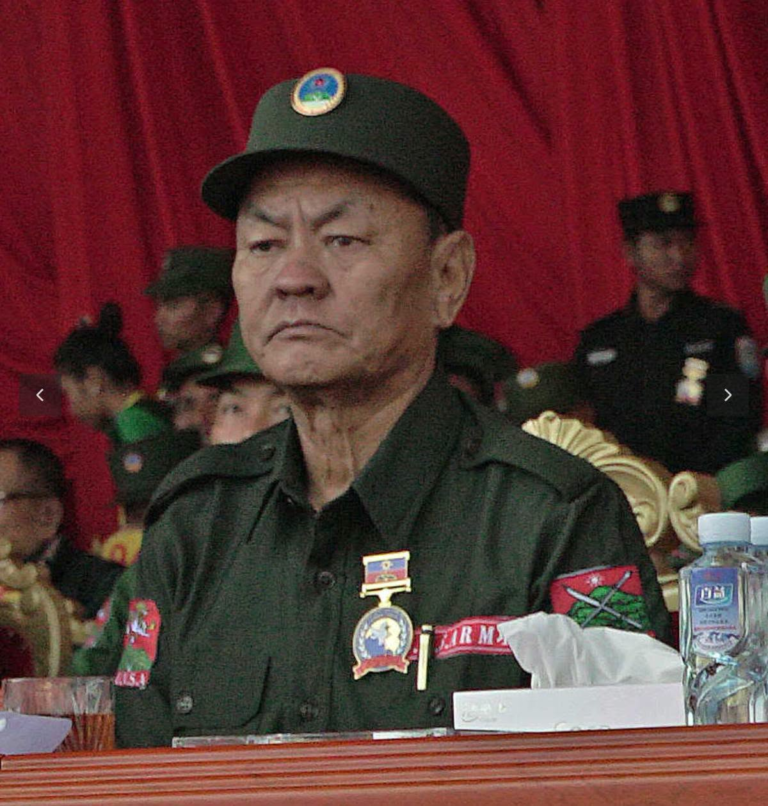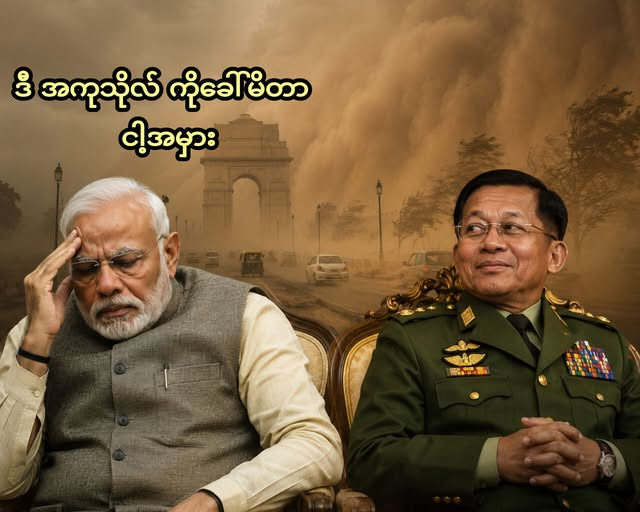
The arrival of Myanmar’s newly minted President Min Aung Hlaing in New Delhi marks a glaring victory for pure realpolitik over democratic idealism. Having shed his military uniform following heavily engineered elections, the former junta chief’s choice of India for his first official foreign trip is a calculated move to break Myanmar’s international isolation.
For India, hosting a leader widely condemned by the West and the exiled National Unity Government (NUG) is a necessary, albeit morally uncomfortable, strategic gamble. New Delhi’s primary driver isn’t the promotion of democracy; it is the protection of its own borders and a desperate bid to prevent Myanmar from slipping entirely into China’s orbit.
The Strategic Lifeline: Kaladan and the Seven Sisters
At the heart of India’s pragmatic embrace is its “Act East” policy and the vulnerable Seven Sister States of its Northeast. For decades, the narrow Siliguri Corridor (the “Chicken’s Neck”) has been a strategic bottleneck connecting Northeast India to the mainland.
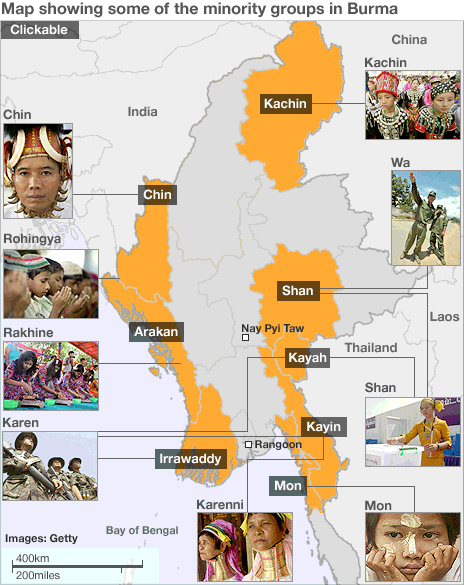
- The Kaladan Multi-Modal Project: This transit network—connecting the eastern Indian port of Kolkata with Myanmar’s Sittwe port, and moving up through Chin State via river and highway to Mizoram—is India’s geopolitical antidote to isolation.
- The Pipeline and Highway Dilemma: While a physical “Highway to the East” through Burma remains a vital infrastructure goal to open overland trade with ASEAN, actual progress is currently frozen by the realities on the ground. Crucial segments of the Kaladan corridor run directly through territory currently heavily contested or outright controlled by anti-junta forces.
Can India Pull Myanmar Out of China’s Orbit?
The short answer is no—not totally. China’s influence in Myanmar is deeply structural, multi-layered, and far ahead of India’s.
Beijing holds a massive leverage advantage through the China-Myanmar Economic Corridor (CMEC), which features deep-sea ports and operational oil and gas pipelines that directly bypass the Malacca Strait to fuel Yunnan province. Furthermore, Beijing maintains backdoor diplomatic relationships with powerful ethnic armed organizations (EAOs) along its own border.
However, India can act as a vital counterweight. Min Aung Hlaing’s trip to New Delhi proves the Burmese regime does not want to become a complete vassal state of Beijing. India’s “second round” offer to Myanmar is highly pragmatic:
- Military/Security: Continued border management, intelligence sharing to clamp down on cross-border insurgencies affecting Manipur and Mizoram, and military hardware supply lines that do not carry the same political strings as Chinese weapons.
- Economics: Securing access to Myanmar’s highly coveted rare earth minerals (vital for technology and defense) and reviving frozen infrastructure investments.
The Quad and the Ethnic Armed Groups: An Unlikely Democratic Alliance
The idea of India, Bangladesh, and the West (via the Quad) actively influencing groups like the Arakan Army (AA), Chin National Army (CNA), or Kachin Independence Army (KIA) to usher in a unified pro-Western democracy faces massive geopolitical roadblocks.
- India’s Policy Paradox: Unlike the West, which views Myanmar through a democracy-vs-dictatorship lens, India deals with whoever holds the guns on the border. New Delhi values stability over revolution. It has chosen to deal pragmatically with the junta in Naypyidaw, making any overt Western-backed collaboration with EAOs to overthrow the regime highly unlikely from India’s side.
- Bangladesh’s Core Interest: Dhaka’s primary geopolitical goal regarding Myanmar is not democratization; it is the safe, sustainable repatriation of over a million Rohingya refugees. Bangladesh will deal with whatever authority can guarantee that outcome—be it the AA in Rakhine state or the central government.
- The Quad’s Role: The Quad (US, Japan, Australia, India) is primarily a maritime security alliance focused on the Indo-Pacific, not an interventionist ground force. While the US passed the BURMA Act to provide non-lethal aid to pro-democracy forces, India’s resistance to destabilizing its neighbor means the Quad will likely remain a background actor, using economic sanctions rather than active border proxy management.
How Will China React?
Beijing will view India’s re-engagement with a mixture of caution and confidence.
China understands that Min Aung Hlaing is playing a classic balance-of-power game, using New Delhi to gain leverage before his inevitable next trip to Beijing to meet Xi Jinping. China will not panic over an Indo-Myanmar thaw because it holds the keys to both sides of Myanmar’s civil conflict. If Naypyidaw leans too close to New Delhi, Beijing has the geopolitical leverage to subtly pull strings with northern EAOs to remind the Burmese president who truly commands the region’s balance of power.
Ultimately, India’s pivot back to Myanmar is not an ideological crusade for freedom. It is a necessary defensive maneuver. By inviting the newly “civilianized” president, Prime Minister Modi is signaling that as long as China is at the gates and the Northeast border is at risk, New Delhi will prioritize stable borders over noble sentiments.