MY DREAMS FOR MYANMAR — REVISITED AFTER FOURTEEN YEARS Edited by Chat GPT
Part 3A — A Dream E-Mail Conversation on Democracy, Pluralism, and the Rule of Law
In the early 2000s, while serving as an English Editor for Burma Digest under the guidance of Chief Editor Dr. Tay Za, I had the unusual opportunity to participate in several e-mail exchanges connected to the office of Malaysian opposition leader Datuk Seri Anwar Ibrahim, who is today the Prime Minister of Malaysia.
At that time, Myanmar was still under strict military rule, and many of us in exile closely followed democratic movements across Asia. Malaysia’s political developments, debates on reform, and discussions on pluralism attracted significant interest among Burmese dissidents and intellectuals.
Using my old Burma Digest e-mail account, I wrote several messages seeking an interview regarding:
- democracy,
- elections,
- rule of law,
- corruption,
- governance,
- pluralism,
- and the future of Asia.
To my surprise, thoughtful replies came back over a series of exchanges.
Whether the replies came directly from Datuk Seri himself, from his legal office, or from members of his team, I cannot say with certainty today. Officially, it was understood that his lawyers or office managed the correspondence. However, some details in the writing style gave me the personal impression that the responses may at times have reflected his own guidance or thoughts.
Still, after so many years, and out of respect for both historical accuracy and propriety, I prefer simply to say that the correspondence came through channels associated with him.
What mattered most was not authorship.
What mattered was the exchange of ideas.
Democracy Beyond Elections
Those conversations left a deep impression on me because they emphasized something often forgotten in Asia:
Democracy is not merely voting.
Elections alone do not guarantee freedom.
True democracy requires:
- rule of law,
- judicial independence,
- freedom of speech,
- pluralism,
- accountable government,
- free media,
- and the protection of dissenting voices.
One recurring theme in the discussions was the importance of pluralism.
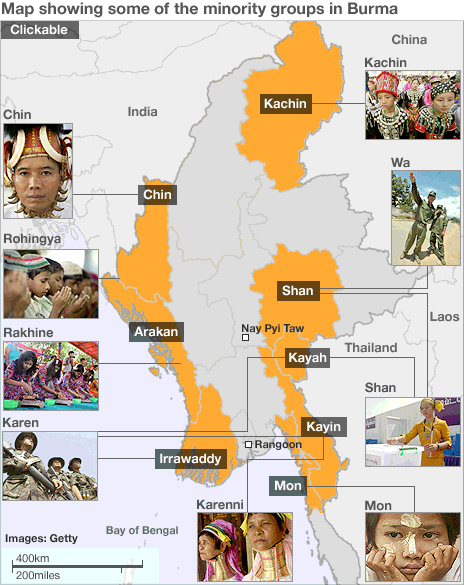
A nation as diverse as Malaysia — with Malays, Chinese, Indians, Muslims, Buddhists, Christians, Hindus, and others — could survive peacefully only if differences were managed with mutual respect rather than domination.
That idea resonated deeply with me as a Burmese Muslim observing Myanmar’s own struggles with race, religion, and nationalism.
Written Words Last Longer
At the time, I published parts of those exchanges in Burma Digest and later reprinted them on my blog as a series of “Dream Interviews.”
I called them “dream interviews” partly because formal face-to-face interviews never materialized.
But over time I came to realize something important:
Written words often survive longer than spoken conversations.
There is an old Chinese proverb:
“The faintest ink lasts longer than the best memory.”
In Burmese, we similarly say:
“Nhote Ta’ Yar, Sarr Ta’ Lone”
A hundred spoken words equal one written word.
Perhaps that is why authoritarian systems fear writers, journalists, historians, and independent thinkers.
Words travel across borders.
Ideas survive prisons.
And written records preserve the spirit of an era long after political storms have passed.
Democracy, Islam, and Asia
Among the most memorable themes in those discussions and speeches was the rejection of the false idea that Islam and democracy are incompatible.
This was especially meaningful during the global atmosphere that followed the “War on Terror,” when many Muslim societies were unfairly portrayed as naturally hostile to freedom or pluralism.
The speeches I later read and quoted argued instead that:
- authoritarianism,
- corruption,
- abuse of religion,
- and suppression of dissent
were the true enemies of democracy.
Examples such as:
- Turkey,
- Indonesia,
- India,
- Japan,
- and South Korea
were presented as evidence that Asian societies could modernize economically while also expanding democratic participation and accountability.
As a Burmese Muslim, this perspective encouraged me greatly.
Because throughout my life, I had witnessed how extremists of many kinds attempted to divide humanity into rigid categories:
- East versus West,
- Islam versus democracy,
- majority versus minority,
- patriot versus traitor.
But real societies are always more complicated — and more human — than slogans.
A Personal Reflection
Looking back today, after so many years, I no longer view those “dream interviews” as merely political exchanges.
They were part of a larger intellectual journey.
For many Burmese dissidents, writers, students, and exiles of that era, democracy was not an abstract theory.
It was hope itself.
We searched everywhere for examples:
- constitutionalism,
- accountable government,
- coexistence,
- moderation,
- and reform without violence.
Some dreams succeeded.
Others failed.
Some nations progressed.
Others regressed.
Myanmar itself continues to struggle painfully with these questions even today.
Yet I still believe that democracy ultimately depends not only on institutions, but also on culture:
- the willingness to tolerate disagreement,
- the humility to accept diversity,
- and the courage to defend justice even for those unlike ourselves.