Adapted from my own post written with the pseudonym, “Shwe Ba” (Burma Digest), revised and updated
One of my favourite books is Animal Farm by George Orwell.
Long ago, there was a farm called Burma, filled with many kinds of animals. Their instincts were strong—and even today, one may feel that some habits have not changed.
The farm was ruled by a master known as “The Empire.” He was not the original owner, but had taken control by force. To maintain power, he practised the classic tactic: divide and rule.
He told the Bama animals they were the true natives, while others were outsiders—”Kalars” and “wild hill animals.” He imported labouring animals from neighbouring lands and kept them separated, ensuring distrust instead of unity.
Ironically, “The Empire” also educated a select group of animals—teaching them language, administration, and governance. But this backfired. The animals became aware.
“Why not run the farm ourselves?” they asked.
The animals revolted. Nationalist animals declared themselves “Thakin,” or masters. With help from eastern “Rising Sun” animals, they briefly pushed out “The Empire”—only to discover that new masters could be just as cruel.
The best leader all the animals loved, the Good White Elephant King (called Saddan Sin Min, DASSK’s father), was assassinated by a big Galon bird (Garuda, Galon U Saw) even before he was officially crowned. The plot was said to have been incited by the deputy of the Sin Min, White Big Boar Master Shoe Maung (Thakin Shu Mg, later General Ne Win), before his vision could be realised. Power struggles followed.
Eventually, after the great 2nd Animal World War, “The Empire” withdrew. The animals finally owned the farm.
But freedom did not bring equality.
Now the animals owned the farm and “The Empire” no longer ruled over them. But not all animals are clever. Some animals simply follow the herd as normal animals do, while some are manipulative and use other animals for their own gain. So the cleverer animals got together and plotted how they could now become just like “The Empire”—getting the other animals to work for them while they rested and enjoyed the fruits of their labour.
Meanwhile, the different animals began quarrelling over their own territories. Some ethnic minority tigers started urinating on tree trunks to mark their own territories. Other ethnic minority lions, foxes, and wolves followed the same practice to mark their own ethnic minority territories.
Numerous animal politicians appeared, but they were all corrupt, continuing to use divide and rule according to animals’ appearances, origins, and beliefs. At last, so-called wild hill nationals wished to divide the country according to their agreement with the founding Saddan Elephant.
Then came the Green Boars. Led by the cunning Wild Boar (Ne Win), they seized control, claiming to “save the farm.” They introduced the “Burmese Animal Way of Socialism”—nationalising everything and concentrating wealth into the hooves of the military pigs.
So the Burma Farm’s Democratic Authority was forcefully taken over. White Wild Boar Master Shoe Maung was very clever and declared a vision for all the animals: “Our Animal’s Belief” and “Burmese Animal’s Way of Socialism.”
“Burmese Animal’s Way of Socialism” was actually a very clever idea. All animals must work hard and they would all receive the same profit. Rich animals’ shops, factories, and properties were “animal-nationalised” and put into the Boar-pigs’ Army pockets. All the animal banks, animal training schools, and animal movie cinemas were taken over by the Wild Boar’s pig association of the army. Because of the cruel Big Animal Socialist Association’s mismanagement, the whole farm became poor—not enough food, no leisure, no luxuries—and there were sporadic outbreaks of animal diseases.
The result?
- Economic collapse
- Hunger and poverty
- Fear and repression
The Boars became more sophisticated. They learned from global powers—from Western Eagles, Northern Communist Bears and Dragons, and even from the God-chosen animals of the Middle East.
The Green Boars and Monitor Lizards controlled:
- Business permits
- Trade routes (legal and illegal)
- Intelligence networks
- The courts and prisons
Animals who protested were imprisoned under ever-changing laws. Unlike the old “Empire,” which at least maintained a façade of justice, the Boars ruled through fear.
Even journalists became parrots—like Squealer in Animal Farm—spinning lies to justify oppression.
The animals revolted again in 1988—but the Green Boars returned in new forms: associated with Monitor Lizards (USDP) and later with other disguises as right-wing extremist orange animals calling themselves nationalists who love their race and religion.
The daughter of the revered Saddan Sin Min, the Fighting Peacock (Peahen/DASSK) princess, was chosen to lead the animal kingdom. But the Boars and the Pigs Army, who had long enjoyed all the privileges, seized the farm again. They renamed themselves the SLORC/SPDC Boar Generals’ Animal Military Government, and they put the famous Peacock Princess into animal jail and later into confinement in her own cage.
All animals were forced into submission and silence. And as everyone knows, cows always follow the herd. This is called herd mentality.
“All Animals Are Equal…”
The famous rule remained:
All animals are equal, but some are more equal than others.
The military animals and their associates became a privileged class. Ordinary animals—farmers, workers, minorities—struggled to survive.
Discrimination persisted:
- Based on race
- Based on religion
- Based on origin
Some animals, though living on the farm for generations, were denied basic rights.
From 1988 to the recent Spring Revolution, the animals repeatedly resisted.
- The Peacock Princess (Daw Aung San Suu Kyi) rose—and was repeatedly caged
- Reform hopes emerged—and were crushed
- New resistance forces (PDFs, EROs) united across species
Yet even among the resistance, cracks appeared—corruption, mistrust, and power struggles.
Today, the farm is no longer controlled by a single master. Instead, it is a battlefield:
- The Boar-Crow alliance clings to power
- Resistance animals fight for a new system
- External powers—the Northern Dragon and the Western Eagle—pull strings from afar
The suffering, however, remains with the ordinary animals.
The story of Myanmar’s Animal Kingdom is not yet over.
Now the animals realised that the cleverer Green Boars and Monitor Lizards, led by a cunning crow, were now worse than “The Empire.” Some of the older animals who still remembered the days when “The Empire” ran the farm actually longed for those good old days again. But it was too late. “The Empire” and their cousin Eagles were now gone and would never return. And anyone who plotted with “The Empire” or the Eagles would be regarded as a traitor, slaughtered, and their meat sold at the market.
In the Burma/Myanmar version of Animal Farm, Ne Win, Than Shwe, Khin Nyunt, and Min Aung Hlaing would be equivalent to the prize Berkshire Boars in George Orwell’s version. NLD’s U Tin Oo corresponds to Snowball, who was expelled from the Army just as Snowball was expelled from Animal Farm.
All the animals who migrated out of Burma/Myanmar now know that once an animal is accepted as an adoptive member of any new farm, they are accorded all the same basic animal rights as the original animals—at least on paper.
In 1967, the Boars slaughtered many Pandas (Chinese) who originated from the Northern Sina Farm, using the minor excuse of their showing support to the Northern Dragon King.
And the Boars repeatedly sacrificed many Camels (Muslims) and destroyed their Bedouin tents, simply to divert the attention of discontented animals who were angry with the Boars.
Most animals wished to avoid bloodshed and hoped the Wild Boars and Pigs would repent in time, owing to the whole world’s animal political pressure. That pressure came from the neighbouring Animal Solidarity group called the Animal Slaughter Ending Animal Nations, or ASEAN, the United States of Animals (U.S.A.), and the United Nations (of Animals), or U.N.
Later, the Peahen’s NLD party was voted for overwhelmingly by Burma’s animals. But the Peahen Princess DASSK was blocked by the Animal Military General Crows. The wise red owl (U Ko Ni), who had created a path for the Peahen to become the de facto President, was assassinated at Mingaladon Airport when he flew back from Garuda Land (Indonesia). But the Crow Ma Ah La carried out a coup once again and locked up the Peahen Princess.
“Panda” Wai Moe Naing, the Monywa protest leader, was rammed by a motorbike and dumped into animal jail for 54 years without any amnesty—because he is a Muslim.
The Bama animals revolted with the Spring Revolution, forming the PDF with the help of their brother EROs.
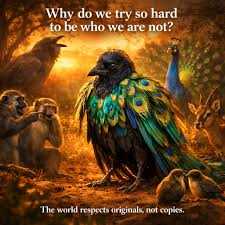
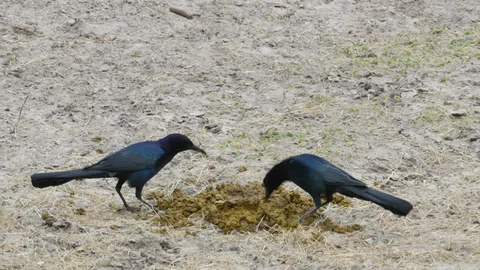
Crow Ma Ah La tried to pretend to be a Peacock by plucking feathers and decorating himself, but Myanmar’s animals knew what he truly was. After all, he could not resist the old habit of crows—picking up dried dung to eat. (Kāka Jātaka, Jataka 395)
But the animal rebel NUG was also corrupted through animal donations, even attacking Captain Dragon (Bo Naga), and at last one faction joined the military crow.
If the Crow-Boar Junta’s new government fails to negotiate a peace deal and refuses to give way to the opposition forces led by the Fighting Peacock Princess, the combined fury of Burma Farm’s animals—together with the pressure of the whole world’s animals—will eventually annihilate all the Boar and Crow Generals. It may not be a happy ending for the Boar Generals themselves, but all the different animals of Burma Farm would at last live happily ever after that great revolution.
The problem, however, remains this: the Northern Sina Dragon continues supporting the Crow government and the Northern Alliance, while the United States of Animals supports the opposition. And so the farm becomes not merely a battlefield of its own animals, but a chessboard for the great powers outside its fences.
The ordinary animals—the ones who plant the fields, carry the loads, and bury the dead—wait, as they have always waited: hoping that one morning they will wake up and find that the rules on the barn wall have finally, truly, changed. Not just the animals named upon them—but the spirit behind them.
Whether that morning comes by negotiation, by revolution, or by the slow exhaustion of tyrants, one thing is certain: the animals of Burma Farm have not forgotten what freedom looks like. They saw it, briefly, and they want it back.
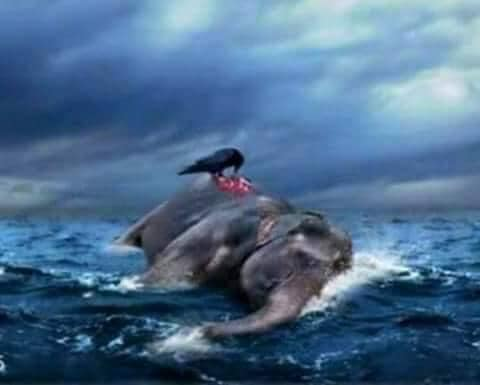
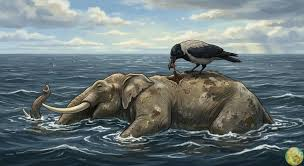
Becareful Crow-Min Aung Hlaing, take the lesson from the greedy crow keep on eating on the dead carcus of an elephant.
The story of Myanmar’s Animal Kingdom is not yet over—but its ending, for the first time in a long while, is being written by the animals themselves.