The Climate of Persecution
For decades, Myanmar’s Muslim communities — including the Rohingyas — have endured a systematic and calculated campaign of hostility. What many observers now recognize is not a series of spontaneous outbursts, but a recurring pattern of orchestrated anti-Muslim violence, deployed at will by successive military regimes. This includes the current junta led by Senior General Min Aung Hlaing, as well as the Arakan Army under General Tun Myat Naing.
Islamophobic propaganda has been disseminated relentlessly through mainstream media, online platforms, monks’ sermons, and freely distributed books and pamphlets. Hate speech has been normalized. Muslims who have attempted dialogue — even engaging directly with prominent monks — have largely been met with continued hostility. Daily life for Myanmar Muslims includes not only verbal abuse but routine physical humiliations, endured in silence and with little recourse.
Veteran journalist Bertil Lintner, during a research visit to Kuala Lumpur, expressed grave concern that the Myanmar government was moving toward committing severe atrocities against Rohingyas and Muslims — a warning that, in the years since, has proven tragically prescient.
A Historical Perspective: Resilience Through Adversity
To those who feel despair, history offers a powerful counternarrative.
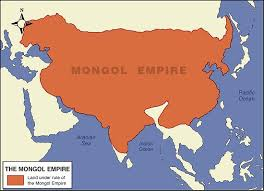
When the Mongol Tartars swept through Iran, Iraq, Turkey, and into Palestine, they killed millions of Muslims and devastated entire civilizations. By all accounts, it appeared to be an irreversible catastrophe for the Muslim world. Yet within generations, the Muslim women who survived those conquests had converted their conquerors. The descendants of those same Mongol warriors became the founders and pillars of Muslim civilizations — from the Central Asian republics and Chechnya, to China’s Muslim communities, to the great Mughal Empire that gave rise to the Muslims of India, Pakistan, Bangladesh, and eventually Myanmar itself.
History does not always move in the direction we expect. What appears to be destruction can, over time, reveal itself as transformation.
The Rohingya Diaspora: Seeds of a Global Community
The Rohingya people are today, in many respects, the Palestinians of Asia — a displaced people whose suffering has drawn international attention and whose diaspora has spread across the globe. While the circumstances of that dispersal are deeply painful, the community that has emerged is far-reaching and resilient.
Rohingyas now live in developed nations, with professionals, scholars, and business people establishing themselves across multiple continents. Communities that were once confined to the underdeveloped townships of Buthidaung and Maungdaw — areas that remained neglected regardless of the prosperity enjoyed in Yangon or Mandalay — have now taken root in countries with greater freedom and opportunity. Though the journey has been one of immense suffering, the seeds of a global community have been sown.
A Personal Testimony
I write this not as an abstract observation, but from lived experience.
Despite an excellent academic record, I was explicitly denied the opportunity to pursue postgraduate studies in Myanmar. The Director General of Medical Education made it unambiguously clear — using a racial slur — that such opportunities were not available to people like me. It was the closing years of the Ne Win era, and discrimination was not merely institutional; it was openly declared.
At the time, it felt like a door slammed shut. Today, I understand it differently.
Had that door remained open, I would likely have spent my career within Myanmar’s system — constrained, silenced, and ultimately complicit in my own diminishment. Instead, the path that was forced upon me led to a life of greater freedom, broader impact, and the ability to speak and write on behalf of those still suffering within Myanmar’s borders. My children and grandchildren carry none of the invisible — and in Myanmar, very visible — glass ceiling that defined my generation.
I would not trade that, even given the chance.
Moving Forward With Faith and Purpose
This essay is addressed to Muslim brothers and sisters who feel confused, discouraged, or without hope.
The lesson of history — and of personal experience — is not that suffering is without meaning, but that the outcomes of our struggles are not always ours to determine. We plan, we strive, and we act with good conscience. The rest is beyond our hands.
The Muslim communities of Myanmar have demonstrated extraordinary endurance. The Rohingya people, in particular, have carried a burden that the international community is only beginning to fully reckon with. That burden is not the end of the story.
May Allah protect all Muslims in Myanmar, and grant them health, education, security, and peace. Ameen.
This essay reflects the views of Dr Ko Ko Gyi @ Abdul Rahman Zafrudin and has been written in solidarity with Myanmar’s Muslim communities.