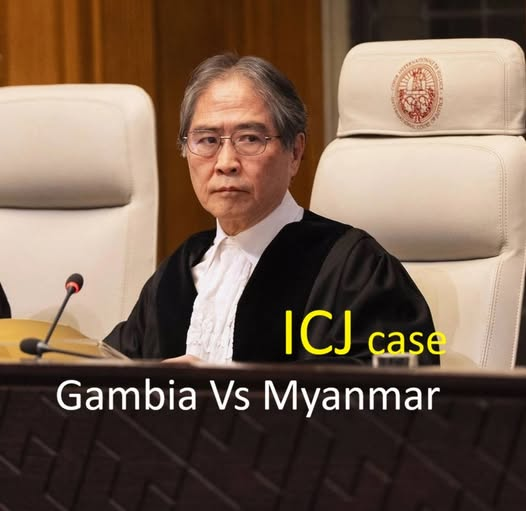
Dr Ko Ko Gyi
A Two-Part Legal Commentary Based on the Analysis of Zayar Aye Cho
Originally written in Burmese by Zayar Aye Cho, identified as a Township Judge and Assistant Director of the Supreme Court of the Union of Myanmar. English translation, editing and additional legal references by MMNN.
PART ONE: What Did the Six Dissenting Judges Actually Disagree With?
1. An introduction: Understanding the judgment before drawing conclusions
Before discussing the judgment of the International Court of Justice (ICJ) in The Gambia v. Myanmar, it is important to clarify the purpose of this article.
This is not an attempt to make political predictions, prescribe what any particular political organization should do, or turn a complicated legal matter into an emotional debate.
Instead, it is an effort to explain, as far as possible, the legal reasoning behind the ICJ judgment and the different opinions expressed by its judges.
The full judgment, delivered on 19 November 2026, is a lengthy legal document. It must be distinguished from the Court’s shorter press release and its unofficial summary.
Readers unfamiliar with legal English and the structure of international court judgments may find the full document difficult to follow. Nevertheless, understanding its essential findings and the reasons behind the judges’ disagreements is important for anyone interested in justice and accountability in Myanmar.
2. The 9–6 division: What was the disagreement?
On 19 November 2026, the ICJ delivered its judgment in the case brought by The Gambia against Myanmar under the 1948 Convention on the Prevention and Punishment of the Crime of Genocide.
By nine votes to six, the Court found that Myanmar had committed genocide against the Rohingya group in northern Rakhine State, in violation of its obligations under the Convention.
The six judges who dissented from this principal finding were:
- Vice-President Julia Sebutinde
- Judge Peter Tomka
- Judge Nawaf Salam Abraham
- Judge Xue Hanqin
- Judge Georg Nolte
- Judge ad hoc Kress
The majority consisted of President Yuji Iwasawa, seven other judges and Judge ad hoc Navanethem Pillay.
It is important to understand that the six dissenting judges did not deny the terrible suffering endured by the Rohingya. Their joint dissent expressly acknowledged the violence, displacement, destruction of homes and other grave abuses suffered by the community.
Their principal disagreement was whether the evidence established the specific intention to destroy the Rohingya group, in whole or in substantial part, as required by the legal definition of genocide.
In other words, the central disagreement concerned the legal requirement known as genocidal intent, rather than whether the Rohingya had suffered serious abuses.
3. The position of Chinese Judge Xue Hanqin
Among the six dissenting judges was Chinese Judge Xue Hanqin.
She had also opposed the ICJ’s jurisdiction to hear the case in the 2022 preliminary-objections proceedings.
In the 2026 merits judgment, she dissented from the principal finding of genocide and submitted her own separate dissenting opinion, in addition to participating in the joint dissent.
Her position deserves examination because it demonstrates that the judges’ disagreements involved substantive questions of international law and evidence.
However, it would be inaccurate to suggest that every judge who dissented necessarily shared every argument made by Judge Xue.
4. Did the dissenting judges deny the suffering of the Rohingya?
No.
This is an especially important point because some political commentators may attempt to portray the six dissenting judges as having declared Myanmar’s security forces innocent.
That is not what their joint dissent says.
The six judges expressly acknowledged the terrible suffering experienced by the Rohingya through violence, displacement, destruction of homes and other grave abuses.
They disagreed with the majority’s conclusion concerning the legal requirement of genocidal intent.
The joint dissent focused on whether the evidence established that Myanmar acted with the specific intention to physically or biologically destroy the protected group, or a substantial part of it.
The dissenting judges considered that this particular intention had not been established to the required standard of proof.
This distinction is essential.
Serious human rights violations, war crimes, crimes against humanity and genocide are distinct legal categories. They may overlap in particular circumstances, but they do not have identical legal elements.
A finding that an atrocity occurred does not automatically establish genocide. The specific intent required by the Genocide Convention must also be proved.
5. What exactly is genocidal intent?
The 1948 Genocide Convention defines genocide in Article II.
It involves certain prohibited acts committed with the intention to destroy, in whole or in part, a national, ethnical, racial or religious group, as such.
The prohibited acts include:
- Killing members of the group.
- Causing serious bodily or mental harm to members of the group.
- Deliberately inflicting conditions of life calculated to bring about the group’s physical destruction, in whole or in part.
- Imposing measures intended to prevent births within the group.
- Forcibly transferring children of the group to another group.
The crucial legal element is the specific intention to destroy the protected group, in whole or in part.
This is commonly described as dolus specialis.
In the Myanmar case, the ICJ majority found that the evidence established genocide through acts falling under Article II (a), (b) and (d): killings, serious bodily or mental harm, and measures intended to prevent births.
The Court did not find that the evidence established the separate allegation under Article II (c) concerning deliberately inflicted conditions of life calculated to bring about physical destruction.
The Court’s finding under Article II (e) was not at issue in the case.
6. What did the dissenting judges actually argue?
The six dissenting judges accepted that the Rohingya had suffered terrible abuses. They also accepted that the acts and circumstances examined by the Court raised grave concerns.
Their disagreement concerned the inference of genocidal intent.
In their view, serious abuses, discriminatory policies, forced displacement and the destruction of villages did not, without sufficient additional evidence, necessarily establish the specific intention to physically or biologically destroy the Rohingya group.
They were particularly concerned that the majority had attached considerable evidentiary significance to discrimination, hate speech, expulsion and the destruction of the foundations of the community’s social life when inferring genocidal intent.
The dissenters considered that the distinction between physically or biologically destroying a group and forcibly removing it from a territory must remain legally clear.
The majority, however, examined the totality of the evidence, including killings, sexual violence, attacks on children, selective targeting, systematic destruction and the historical context of discrimination.
It concluded that the evidence, taken together, established genocidal intent.
Thus, the difference was not simply about whether atrocities occurred. It concerned how the evidence should be evaluated and whether the alternative explanations offered by Myanmar could reasonably explain the overall pattern of conduct.
7. What about war crimes and crimes against humanity?
This requires particular legal care.
The original Burmese commentary suggests that all 15 ICJ judges unanimously agreed that Myanmar’s security forces had committed war crimes and crimes against humanity.
That statement should not be reproduced as an established ICJ finding.
The ICJ’s jurisdiction in this case was based on Article IX of the Genocide Convention. It was not asked to deliver a separate judgment establishing individual criminal responsibility for war crimes or crimes against humanity.
The joint dissent did acknowledge grave abuses and discussed serious violations of international law. The judgment also referred to the findings of Myanmar’s own Independent Commission of Enquiry, which reported reasonable grounds to believe that members of the security forces were involved in war crimes and serious human rights violations.
However, that is different from saying that the ICJ unanimously convicted or judicially established all those separate crimes.
The distinction does not diminish the seriousness of the documented abuses. It simply ensures that we describe the Court’s actual legal findings correctly.
8. Why does this judgment matter for future accountability?
Although the ICJ did not prosecute individual military officers or political leaders, its finding of State responsibility for genocide has major legal and political significance.
The judgment also addresses Myanmar’s obligations to prevent and punish genocide, enact the necessary implementing legislation, investigate suspected perpetrators and provide reparation to the Rohingya.
Individual criminal responsibility may be pursued through other appropriate legal mechanisms, including the International Criminal Court (ICC), where jurisdictional requirements are satisfied.
The ICJ and ICC are different institutions:
- The ICJ deals primarily with legal disputes between States and State responsibility.
- The ICC prosecutes individuals accused of genocide, crimes against humanity, war crimes and the crime of aggression, within its jurisdiction.
Therefore, the ICJ judgment should be understood as a major step towards accountability, not the end of all possible legal proceedings.
Conclusion to Part One
The most important lesson from the 9–6 division is that disagreement over the legal classification of genocide must not be confused with denial of the victims’ suffering.
The six dissenting judges did not declare the Rohingya’s suffering imaginary or Myanmar’s conduct acceptable. They disagreed with the majority’s assessment of whether the specific intention required for genocide had been established.
The majority’s judgment nevertheless stands as the decision of the Court.
Understanding this distinction is essential to an informed discussion of international justice.
Part Two examines the more technical legal disagreements concerning the burden of proof, the assessment of evidence, Myanmar’s non-cooperation with UN investigative mechanisms and the ‘only reasonable inference’ test.
PART TWO: Burden of Proof, Myanmar’s Non-Cooperation and the Only Reasonable Inference Test
1. Introduction
In Part One, we examinedPART TWO: Burden of Proof, Myanmar’s Non-Cooperation and the Only Reasonable Inference Test why nine judges found that Myanmar had committed genocide against the Rohingya, while six judges dissented from that conclusion.
In this second part, we examine the legal principles behind their disagreement.
According to Zayar Aye Cho’s analysis, two particularly important issues deserve attention:
- The burden of proof (Burden of Proof) and the assessment of evidence.
- The principle known as the Only Reasonable Inference test.
These are technical legal concepts, but they have important practical consequences for international justice.
2. What does Burden of Proof mean?
The burden of proof is a fundamental principle of law.
Generally, the party making an allegation must establish the facts supporting that allegation.
For example, if Person A accuses Person B of stealing chickens, Person A normally has the responsibility to prove that the theft occurred.
In the Gambia v. Myanmar case, The Gambia accused Myanmar of violating the Genocide Convention. Therefore, The Gambia had the burden of establishing the facts necessary to prove the alleged violations.
This is the general principle recognized by the ICJ.
However, there is an important qualification.
The burden of proof does not operate mechanically in every situation. The Court has recognized that there may be circumstances in which one party has substantially better access to particular evidence than the other.
This is especially relevant when the evidence is located within the territory and under the control of the respondent State.
3. An everyday example: The missing chickens
To explain this principle, consider a hypothetical village dispute.
A man named Maung Phyu accuses another man, Maung Ma, of stealing chickens from his home.
Nobody actually catches Maung Ma stealing the chickens.
However, several circumstances raise suspicion:
- Someone repeatedly saw Maung Ma watching Maung Phyu’s house.
- Another person saw him leaving the area carrying a chicken.
- Neighbours noticed that chicken was frequently being cooked at his home.
- Chicken feathers were discovered near his rubbish disposal area.
When the village elders question Maung Ma, he denies stealing anything.
They ask him whether they may inspect the relevant rubbish area, but he refuses.
They also ask him where he purchased the chicken meat, but he provides no explanation.
The village elders must still evaluate the available evidence fairly. Maung Ma is not automatically guilty simply because he refuses to cooperate.
However, his refusal may become relevant when the elders assess the evidence, particularly if the missing information is something that only he could reasonably explain.
This hypothetical example illustrates an important distinction:
Refusing to provide information does not automatically establish guilt, but it may affect the evaluation of other available evidence in appropriate circumstances.
The same general issue arose in the ICJ proceedings.
4. Myanmar’s non-cooperation with UN investigative mechanisms
The Gambia relied on evidence from various sources, including:
- The Independent International Fact-Finding Mission on Myanmar (FFM).
- The Independent Investigative Mechanism for Myanmar (IIMM).
- Reports from the UN Office of the High Commissioner for Human Rights.
- Witness statements and survivor testimonies.
- Satellite imagery and fire-detection data.
- Reports from human rights organizations.
Myanmar refused to cooperate with the FFM and IIMM and did not permit these mechanisms to enter its territory to obtain evidence and interview witnesses.
According to paragraph 128 of the ICJ judgment, the IIMM sent 26 requests for information to Myanmar’s authorities, including requests for potentially exonerating information. Myanmar did not respond to those requests.
The Court also examined Myanmar’s failure to conduct effective investigations into the alleged crimes.
It is important to understand the different roles of these UN mechanisms.
The FFM was established to investigate and report on alleged human rights violations.
The IIMM, established in 2018, has a different mandate: to collect, preserve, analyse and prepare evidence of serious international crimes so that it can facilitate criminal proceedings in national, regional or international courts.
The IIMM is not itself a criminal court and cannot convict anyone.
5. What did the ICJ say about non-cooperation?
Paragraph 79 of the judgment is particularly important.
The Court reaffirmed that The Gambia carried the burden of proving its allegations.
However, the Court also explained that this general principle is not absolute in every circumstance.
Where one State has exclusive or substantially better access to information and the other State cannot obtain direct evidence because of the first State’s lack of cooperation, the Court may take that situation into account when assessing the evidence.
Paragraph 130 refers to the Court’s earlier decision in the Corfu Channel case.
The Court explained that where one party has exclusive control over a territory, leaving the other party unable to provide direct proof of facts relevant to responsibility, the latter should be allowed a more liberal recourse to factual inferences and circumstantial evidence.
The judgment therefore allowed the Court to draw appropriate inferences concerning matters largely or wholly within Myanmar’s knowledge, particularly where Myanmar had not provided a satisfactory and convincing explanation.
However, this does not mean that the Court could simply assume that every allegation was true.
The Court still had to assess the available evidence and reach its own conclusions.
6. Did the majority reverse the burden of proof?
This was one of the central disagreements between the majority and the six dissenting judges.
The majority maintained that the burden of proof remained with The Gambia.
Nevertheless, the majority considered that Myanmar’s non-cooperation could affect the assessment of evidence that was difficult for The Gambia to obtain.
The dissenting judges were concerned that the majority’s approach, although formally maintaining The Gambia’s burden of proof, could have the practical effect of shifting that burden to Myanmar.
In other words, the dissenters considered that Myanmar’s failure to cooperate should not be allowed to compensate for deficiencies in the evidence presented by The Gambia.
The majority disagreed with that interpretation.
This distinction is important.
There is a difference between:
- Formally transferring the burden of proof to the respondent State; and
- Taking a respondent State’s exclusive control of relevant evidence and failure to provide an explanation into account when evaluating the evidence.
The ICJ majority adopted the second approach.
7. An important distinction: Burden of Proof versus Standard of Proof
These two legal expressions are sometimes confused.
Burden of Proof asks: Which party has the responsibility to establish the facts?
Standard of Proof asks: How convincing must the evidence be before the Court can accept the allegation?
In paragraph 80, the ICJ reaffirmed that it must be fully convinced that allegations concerning genocide or other acts enumerated in Article III of the Convention have been clearly established.
For obligations to prevent and punish genocide, the Court requires proof at a high level of certainty appropriate to the seriousness of the allegation.
Thus, the fact that Myanmar did not cooperate did not remove the need for The Gambia to satisfy the applicable standard of proof.
The majority considered that the evidence, evaluated as a whole, met that standard.
The dissenters considered that it did not establish genocidal intent to the required degree of certainty.
8. The evidentiary value of FFM and IIMM reports
Another important disagreement concerned the weight that should be given to reports produced by investigative mechanisms.
The six dissenting judges raised concerns about relying on reports produced by bodies that did not conduct judicial proceedings in which Myanmar could fully challenge the evidence.
They also questioned whether certain investigative findings and methodologies could satisfy the evidentiary requirements applicable to the ICJ.
The majority, however, did not simply accept all the reports without examination.
It considered several factors, including:
- The independence and qualifications of the investigators.
- The methodology used to collect information.
- The reliability of witnesses.
- Whether witness accounts were corroborated by independent sources.
- The quality and completeness of the reports.
- The availability of other supporting evidence.
For example, in paragraph 119, the Court considered the IIMM’s reports to have considerable evidentiary weight because of the demanding standard and methodology applied in collecting the evidence.
Paragraph 120 further explained that the Court independently assessed the factual information contained in the FFM and IIMM reports.
This means that the ICJ did not simply adopt the conclusions of the UN mechanisms. It evaluated the evidence for itself.
Satellite imagery and fire-detection data also played an important role in corroborating witness testimony and demonstrating the destruction of Rohingya villages.
9. The Only Reasonable Inference test
The second major issue identified by Zayar Aye Cho is the legal principle known as the Only Reasonable Inference test.
This principle is particularly important when a court must determine whether a person or State acted with a specific intention based on circumstantial evidence.
In genocide cases, proving the existence of genocidal intent can be difficult because perpetrators do not always openly announce their intentions.
Therefore, courts may examine a combination of circumstances and infer intent from the overall pattern of conduct.
However, the ICJ has established a demanding requirement.
Where genocidal intent is inferred from circumstantial evidence, it must be the only reasonable inference that can be drawn from the evidence.
This principle was discussed in paragraph 438 of the judgment.
The Court then examined the alternative explanations advanced by Myanmar.
10. Why is this principle controversial?
Consider another hypothetical example.
A person is found dead in a house. Another person is discovered nearby holding a knife.
There are several possibilities:
- He committed murder.
- He was attempting to defend himself.
- He arrived after the incident.
- He was involved in an entirely different event.
The court must examine all available evidence before deciding which explanation is reasonable.
The mere presence of a knife does not automatically establish murder.
Likewise, in a genocide case, the Court must examine whether the evidence establishes the specific intention to destroy a protected group, rather than merely showing that serious violence or forced displacement occurred.
The dissenting judges considered that the majority had not adequately eliminated other reasonable explanations.
In particular, they considered that forcible displacement or collective punishment could remain alternative explanations for Myanmar’s conduct.
The majority, however, examined the totality of the evidence and concluded that those alternative explanations could not reasonably account for the full pattern of conduct.
11. The majority’s response: Looking at the totality of the evidence
The majority’s approach is particularly important.
The Court did not examine individual incidents in isolation.
Instead, it considered the broader historical and factual context, including:
- Decades of discriminatory laws and policies against the Rohingya.
- Anti-Rohingya hate speech and propaganda.
- Previous military operations targeting the community.
- The selective targeting of Rohingya villages and civilians.
- The destruction and burning of villages.
- Sexual violence against women and girls.
- Violence against children.
- The systematic nature and scale of the operations.
- The attacks on civilians fleeing towards Bangladesh.
The Court also examined whether Myanmar’s proposed alternative explanations could account for all these circumstances.
In paragraphs 451–467, it considered the arguments concerning counter-insurgency operations, forced displacement and punishment of the civilian population.
The Court concluded that these alternative explanations did not adequately explain the totality of the evidence.
In paragraph 468, it stated that it was fully convinced that Myanmar had committed acts falling under Article II (a), (b) and (d) of the Genocide Convention with the intent to destroy a substantial part of the Rohingya population of Myanmar.
This was the basis for the majority’s finding of genocide.
12. Why the six dissenting judges disagreed
The joint dissenting opinion considered that the majority had not applied the established legal standard sufficiently strictly.
The dissenters were particularly concerned about the way the majority used evidence of discrimination, hate speech, expulsion and destruction of the foundations of Rohingya social life to infer an intention to destroy the group physically or biologically.
They also considered that the possibility of forced displacement had not been adequately excluded as an alternative explanation.
Their concern was that the majority’s approach might weaken the distinction between genocide and other grave international crimes.
This is a serious legal disagreement and deserves to be studied carefully.
However, it must also be remembered that the majority examined the evidence as a whole, rather than treating forced displacement and genocidal intent as mutually exclusive.
Indeed, the Court explained that the intention to displace a population and the intention to destroy that population can coexist.
13. What should ordinary readers take away from this legal debate?
There are several important lessons.
First, genocide is not established merely because many people have been killed or displaced. The specific intention required by the Genocide Convention must also be established.
Second, the absence of direct evidence of intent does not necessarily prevent a court from establishing genocidal intent through circumstantial evidence.
Third, a State’s failure to cooperate with investigations may have consequences when a court evaluates evidence that is largely within that State’s control.
Fourth, a dissenting opinion does not cancel or invalidate the majority judgment.
Finally, the existence of different legal opinions does not mean that the victims’ suffering should be minimized or that justice should be postponed indefinitely.
Conclusion: Respect the judgment and pursue accountability through lawful means
The ICJ judgment of 19 November 2026 is a historic legal development for the Rohingya and for Myanmar.
The nine-to-six decision established Myanmar’s responsibility for genocide under the Genocide Convention.
The six dissenting judges disagreed with the majority’s assessment of genocidal intent, the evidentiary approach and the application of the relevant legal standards.
Their opinions are important for legal scholarship, but the majority judgment remains the binding decision of the Court in this case.
The judgment also requires Myanmar to fulfil its obligations under the Convention, including investigating and, where warranted, prosecuting and punishing persons reasonably suspected of committing prohibited acts.
The next important challenge is ensuring that the judgment is implemented, that victims receive appropriate reparation and that those individually responsible for international crimes are held accountable through competent legal institutions.
Justice must be based on evidence, law and due process.
It should not depend on a person’s religion, ethnicity, political affiliation or position of power.
Justice for the Rohingya should be part of a wider commitment to equal rights, accountability and lasting peace for all the people of Myanmar.
REFERENCES:
1. ICJ – Full Judgment, 19 November 2026. The primary legal document, including the Court’s findings, evidentiary assessment and separate opinions.
Read the full ICJ judgment.
2. ICJ – Summary of the Judgment, 19 November 2026. An unofficial summary prepared by the Court’s Registry. Particularly useful for ordinary readers.
Read the ICJ summary.
3. ICJ – The Joint Dissenting Opinion. The opinions of Vice-President Sebutinde, Judges Tomka, Abraham, Xue, Nolte and Judge ad hoc Kress.
Read the joint dissenting opinion summary.
4. ICJ – Questions of Proof, paragraphs 79–131. Covers burden of proof, standard of proof, evidentiary weight, the FFM, IIMM and Myanmar’s non-cooperation. See particularly paragraphs 79, 80, 119, 128, 130 and 131. Refworld+2.
5. ICJ – The Only Reasonable Inference, paragraphs 438–468. Explains the legal standard for inferring genocidal intent from circumstantial evidence. Refworld+1.
6. Independent Investigative Mechanism for Myanmar (IIMM). Background on its role in preserving and analysing evidence for future criminal proceedings.
IIMM: The Gambia v. Myanmar.
7. International Criminal Court – Bangladesh/Myanmar Situation. Details the ICC investigation and the Prosecutor’s November 2024 application for an arrest warrant against Senior General Min Aung Hlaing. The application was pending before the Pre-Trial Chamber according to the ICC’s published information. This is an application, not an issued arrest warrant or a conviction.
ICC official case information.
8. Myanmar Ministry of Foreign Affairs – Statement of 20 November 2026. An example of the Myanmar authorities’ response to the judgment and their objections concerning the evidentiary standard and the division among judges.
Read Myanmar’s official response.
1. Do not let the 9–6 division become an excuse to reject the judgment.
International courts frequently deliver judgments with dissenting opinions. A divided judgment is still a judgment.
The majority’s decision is the Court’s operative decision. The six dissenting opinions provide important legal arguments for academic discussion, but they do not invalidate the judgment.
2. Do not confuse State responsibility with individual criminal responsibility.
This is especially important for Myanmar readers.
The ICJ has found Myanmar responsible for genocide under the Genocide Convention. That does not automatically mean that every member of the military, police or government has been individually convicted.
Individual responsibility must be established through appropriate criminal proceedings, with evidence, due process and the applicable jurisdictional requirements.
The ICC investigation is an important parallel avenue, particularly because Bangladesh is a party to the Rome Statute, although Myanmar is not.
3. Justice should extend beyond one community.
The Rohingya deserve justice, recognition of their suffering, appropriate reparation and the restoration of their rights.
At the same time, all victims of atrocities in Myanmar, irrespective of ethnicity, religion or political affiliation, deserve protection and justice.
This is consistent with MMNN’s longstanding principle:
EQUAL RIGHTS FOR ALL, WITH ADDITIONAL SAFEGUARDS FOR ETHNIC NATIONALITIES.
A country cannot build lasting peace through denial, collective punishment, revenge or impunity.
It must build peace through justice, accountability, equality and mutual respect.
One final suggestion: Please do not allow the six dissenting votes to be exploited by Islamophobic groups as proof that the Rohingya were not victims of genocide. Equally, we should not misrepresent the dissenting judges’ legal arguments. Accuracy and fairness are our strongest protection against misinformation.
May Allah SWT grant justice to all innocent victims and guide the people of Burma towards lasting peace.
Gambia Vs Myanmar ရဲ့ ICJ စီရင်ချက်အကြောင်း [၁]
ကြိုပြီးပြောချင်တာက ဒီစာဟာ ဒီ Case ကိုအခြေခံပြီး နိုင်ငံရေးဟောကိန်းထုတ်မဲ့စာမျိုးမဟုတ်သလို ဘယ်အဖွဲ့အစည်းကတော့ ဘာလုပ်သင့်တယ်ဆိုတဲ့ ဆုံးမစာလည်းမဟုတ်ပါဘူး။ Emotion တွေထည့်ထားတဲ့ ဒရမ်မာတစ်ပုဒ်လည်းမဟုတ်ပါဘူး။
ICJ ရဲ့ စီရင်ချက်နဲ့ တရားသူကြီးတွေရဲ့ သုံးသပ်ပုံအကြောင်းကို ဥပဒေရှုဒေါင့်ကနေ ဉာဏ်မှီသလောက် တို့ထိထားတဲ့စာသာဖြစ်ပါတယ်။
ICJ ရဲ့မူရင်းစီရင်ချက်ဟာ စာမျက်နှာ ၁၉၀ ကျော်ရှိပါတယ်။ သူ့ကိုပြန်အကျဉ်းချုပ်ထားတဲ့ unofficial summary တောင် ၅၇ မျက်နှာရှိပါတယ်။ Legal English နဲ့ စီရင်ချက်တွေ ဘယ်လိုရေးသားလေ့ရှိတယ် ဆိုတာ အခြေခံလောက်မသိထားရင် ဒါတွေကိုသေချာဖတ်ဖို့ ခက်ပါတယ်။ Press Release ကတော့ ၆ မျက်နှာလောက်ရှိပြီး တိုတိုတုတ်နဲ့ အားလုံးနားလည်အောင်ရေးထာတာမျိုးပါ။
Press Release ဖတ်လိုက်တယ်ဆိုရင် အမှုကဘယ်လိုဖြစ်လာတယ်။
တရားရုံးက ဘယ်လိုအမိန့်ချတယ် ဆိုတာရယ်နဲ့ ဘယ်ဆုံးဖြတ်ချက်တွေကို တရားသူကြီးဘယ်သူတွေကတော့ သဘောတူပြီး ဘယ်သူတွေက ကန့်ကွက်တယ် ဆိုချက်ချင်းသိသွားမှာပါ။
ဘာ့ကြောင့်ဒီအမိန့်ကိုချတယ် တရားရုံးက ဘယ်လိုတွေသုံးသပ်တယ် ဆိုတာကို ကျယ်ကျယ်ပြန့်ပြန်သိချင်ရင်တော့ Full Judgment နဲ့ Summary (unofficial) တွေကိုဖတ်မှသိနိုင်မှာပါ။ Legal English နဲ့ပတ်သက်ပြီး အခြေခံလောက်မသိထားဘူး၊ စီရင်ချက်တွေကို ဘယ်လို organize လုပ်ထားတယ်ဆိုတာနဲ့ မရင်းနှီးနေဘူးဆိုရင်တော့ ဖတ်ရတာ နည်းနည်းခက်ခဲနေလိမ့်မယ်ထင်ပါတယ်။ [စိတ်ဝင်စားတယ်ဆိုရင်တာ့ Comment မှာ Legal English အကြောင်းနဲ့ စီရင်ချက်တွေကိုဘယ်လို Organize လုပ်ထားတယ် ဆိုတာကိုရေးထားတဲ့ Post တွေရဲ့ Link တွေချပေးထားပါတယ် ဝင်ဖတ်လို့ရပါတယ်။]
ဒီ Post မှာတော့ ICJ ရဲ့စီရင်ချက်အရ Genocide ကျူးလွန်ကြောင်း စီရင်ချက်ကို တရားသူကြီး ၁၅ ဦးထဲက ၉ ဦးပဲ ထောက်ခံပြီး ၆ ဦးကကျတော့ ဘာ့ကြောင့်မထောက်ခံတာလဲ ? ဘယ်လိုမျိုးမထောက်ခံတာလဲ ? ဆိုတာပါ။
မြန်မာဟာ Genocide မကျူးလွန်ဘူးလို့ ကန့်ကွက်တဲ့ တရားသူကြီး (၆) ဦးရှိပါတယ်။ အဲ့ဒီထဲမှာ တရုတ်တရားသူကြီးဖြစ်တဲ့ ရှဲ့ဟန်ချင် (Judge Xue Hanqin) လည်းပါပါတယ်။ ရှဲ့ဟန်ချင်ဟာ တရားရုံးဆုံးဖြတ်ချက် ၁၃ ခုထဲမှာ ဂမ်ဘီယာနဲ့ အခြားတောင်းဆိုမှုတွေကို ငြင်းပယ်လိုက်သည် (Reject) ဆိုတဲ့ အချက်ကလွဲပြီးကျန်တဲ့အချက်တွေကို ကန့်ကွက်ခဲ့သူပါ။ ပြောရရင် မြန်မာကိုအသာမရစေတဲ့ ဆုံးဖြတ်ချက်တွေအကုန်လုံးကို ငြင်းခဲ့တဲ့ တရုတ်တရားသူကြီးပါ။ ပြီးတော ရှဲ့ဟန်ချင်ဟာ ၂၀၂၂ တုန်းကလည်း ဒီအမှုကို ICJ က လက်ခံပြီး ကြားနာခွင့်ရှိတယ်ဆိုတာကို ကန့်ကွက်ခဲ့တဲ့ တစ်ဦးထဲသော တရားသူကြီးပါပဲ။
သို့သော် သူတို့ ၆ ဦးက ဘာကိုငြင်းကြတာလဲဆိုတာကို အဲ့ဒီ ၆ ဦးပေါင်းပြီးရေးထားတဲ့ “သဘောထားကွဲလွဲသည့်အမြင် (Joint Dissenting Opinion)” နဲ့ ရှဲ့ဟန်ချင် တစ်ဦးထဲရဲ့ “သဘောထားကွဲလွဲသည့်အမြင်” ကိုဖတ်ကြည့်လို့ရပါတယ်။ ICJ ရဲ့ website မှာသဘောထားကွဲလွဲတဲ့တရားသူကြီးတွေရဲ့ သဘောကွဲလွဲကြောင်းရေးထားတတွေ ဖတ်လို့ရပါတယ်။
သူတို့ ၆ ဦးသဘောထားကွဲလွဲတယ်ဆိုတာ စီရင်ချက်တစ်ခုလုံး တရားရုံးရဲ့ တွေ့ရှိချက် သုံးသပ်ချက်တွေ အကုန်လုံးကို မဟုတ်ပါဘူး။
ကန့်ကွက်သူ ၆ ဦးရဲ့ Joint Dissenting Opinion အဖွင့်မှာတင်အတိအလင်းဒီလိုရေးထားပါတယ်။
“We have no doubt that Myanmar’s security forces committed serious human rights violations against the Rohingya during the clearance operations in 2016 and 2017 in northern Rakhine State.
အဓိပ္ပါယ်ကတော့ လုံခြုံရေးတပ်ဖွဲ့တွေဟာ အလွန်ဆိုးရွားတဲ့ လူ့အခွင့်အရေးချိုးဖေါက်မှုတွေကို ကျူးလွန်ခဲ့တယ်ဆိုတာကို ကျွန်ုပ်တို့ သံသယရှင်းစွာဖြင့် ယုံကြည်သည်တဲ့။ ….
နောက်ပြီး ….
**** no doubt that member of Myanmar’s security forces committed serious violations of the law of armed conflict at several locations, which may amount to war crimes ****
လုံခြံရေးတပ်ဖွဲ့ဝင်တွေဟာ စစ်ရာဇဝတ်မှု (war crime) မြောက်တဲ့ အလုပ်တွေလည်း အများကြီးလုပ်ခဲ့တယ်ဆိုတာ အထင်အရှားပဲတဲ့။
Possiable**** widespread and/or systematic attack directed against a civilian population and accordingly that crimes against humanity were committed.*****
လူသားမျိုးနွယ်ပေါ်ကိုကျူးလွန်တဲ့ ရာဇဝတ်မှု (crime against humanity) လည်း ပါတယ်တဲ့။
ဒါအပြင် တရုတ်တရားသူကြီးတစ်ဦးထဲကနေ သီးခြား “သဘောထားကွဲလွဲသည့်အမြင်” (Dissenting Opinion) လည်းရေးပါသေးတယ်။ အဲ့ဒီထဲမှာလည်း
“there is no doubt that the Myanmar security forces, in carrying out the 2016-2017 clearance operations, committed serious human rights violations against Rohingya civilians, including women and children, which should be categorically and unequivocally condemned.” လုံခြုံရေးတပ်ဖွဲ့တွေလုပ်ဟာ အလွန်ဆိုးရွားတဲ့လူ့အခွင့်အရေးချိုးဖေါက်မှုတွေလုပ်ခဲ့တယ်ဆိုတာ မြင်သာကြောင်းနဲ့ ရှုံ့ချကြောင်း ရေးထားပါသေးတယ်။
ပြောရရင်….
မြန်မာဘက်ကပါတယ်လို့ပြောတဲ့ တရုတ်တရားသူကြီး ရှဲ့ဟန်ချင်အပါအဝင် တရားသူကြီး ၁၅ ဦးစလုံးအနေနဲ့ လုံခြုံရေးတပ်ဖွဲ့ဝင်ဟာ အလွန်ဆိုးရွားတဲ့ လူ့အခွင့်ရေးချိုးဖောက်မှုတွေ၊ စစ်ရာဇဝတ်မှု (war crime) တွေ လူသားမျိုးနယ်အပေါ်ကျူးလွန်တဲ့ ရာဇဝတ်မှု (Crime against Humanity) တွေကျူးလွန်ကြောင်း တညီတညွတ်ထဲ သဘောတူကြတယ်ဆိုတာပါပဲ။
ဒါဆိုရင် ဘာကိုသဘောထားကွဲလွဲတာလဲဆိုတော့…..
ဒီလုပ်ရပ်တွေဟာ Genocide မြောက်တယ်/ မမြောက်ဘူး ဆိုတာကိုပဲ သဘောကွဲလွဲတာဖြစ်ပါတယ်။
တိတိကျကျဆိုရင် Genocide Convention လို့ခေါ်တဲ့ Convention on the Prevention and Punishment of the Crime of Genocide, 1948.” ရဲ့ Article II မှာပါတဲ့ Genocide အဓိပ္ပါယ်သတ်မှတ်ချက်ထဲ က လူ့အစုအဖွဲ့တစ်ခုခုကို ဖျက်စီးရန်ရည်ရွယ် “Intent to Destroy” နဲ့လုပ်တဲ့လုပ်ရပ်တွေ ဟုတ်/ မဟုတ် ဆိုတာကိုပဲ သဘောမတူတာပါ။
လုံခြုံရေးတပ်ဖွဲ့ဝင်တွေရဲ့ ကျူးလွန်မှုတွေဟာ ရိုဟင်ဂျာလူ့အဖွဲ့အစည်းကို ဖျက်စီးရန်ရည်ရွယ်ချက် “Intent to Destroy” ရှိတယ်ဆိုတဲ့ တရားသူကြီး အများစုက သုံးသပ်တဲ့အတွက် Genocide လို့ ICJ ကအမိန့်ချပါတယ်။
ကန့်ကွက်တဲ့ တရားသူကြီး ၆ ဦးကတော့ လုံခြုံရေးတပ်ဖွဲ့ ဝင်တွေဟာ ဆိုးရွားတဲ့လူအခွင့်ရေး ချိုးဖေါက်မှုတွေ၊ War Crime တွေ၊ Crime Against Humanity အပေါ် ကျူးလွန်မှုရှိနေသော်လည်းပဲ ဒီလုပ်ရုပ်တွေကို ကြည့်ပြီး ရိုဟင်ဂျာလူ့အဖွဲ့အစည်းကို ဖျက်စီးရန်ရည်ရွယ်ချက် (Intent to Destroy) နဲ့လုပ်တယ်လို့ တစ်ထစ်ချ မကောက်ယူနိုင်ဘူး ဒါ့ကြောင့် Genocide ကျူးလွန်တယ်လို့သူတို့ကတော့ မမြင်ဘူးပြောတာပါ။
အမိန့်ချတဲ့တရားသူကြီး (၉) ဦးနဲ့ ကန့်ကွက်တဲ့ တရားသူကြီး (၆) ဦးတို့ အခြေတင်အငြင်းပွားတဲ့ ဥပဒေသဘောတရားက သက်သေပြရန်တာဝန် (Burden of Proof) ဆိုတဲ့ သဘောတရားပါပဲ။ ဒီသဘောတရားပေါ်မှာ နှစ်ဘက် ဘယ်လိုမြင်ကြလဲဆိုတာ အလွန်စိတ်ဝင်စားဖို့ကောင်းပါတယ်။ အရမ်းသည်သိမ်မွေ့ပါတယ်။ ရှင်းပြမယ်ဆိုရင် အရှည်ကြီးထပ်ရေးရမှာမှို့ အပိုင်း (၂) မှာပဲ သေချာရေးပါတော့မယ်။
ဒီ Post မှာအဓိက ပြောချင်တာကတော့ ….
ICJ စီရင်ချက်ကို ကန့်ကွက်တဲ့တရားသူကြီး ၆ ဦးဟာ Security Force တွေက အပြစ်ကင်းတယ်၊ လုပ်သင့်တာလုပ်တာဖြစ်တယ် လို့ပြောတာ မဟုတ်ပါဘူး။ သူတို့ဟာ ဆိုးရွားတဲ့ လူ့အခွင့်အရေးချိုးဖေါက်မှုတွေ၊ စစ်ရာဇဝတ်မှု War crime တွေ၊ လူသားမျိုးနွယ်ပေါ် ကျူးလွန်တဲ့ပြစ်မှုတွေ ကိုကျူးလွန်ထားတာ ထင်ရှားသော်လည်း ဒါကိုကြည့်ပြီး လူမျိုးတုံးtတ်ဖြတ်မှု (Genocide) မြောက်တယ် မဆိုနိုင်ဘူးလို့ပဲ သဘောကွဲလွဲတာပါ။
War Crime နဲ့ Crime Against Humanity ကို ကျူးလွန်ကြောင်း ICJ တရားသူကြီးအကုန်လုံးက သဘောတူထားတာမျိုးဖြစ်တဲ့အတွက် ဒီကိစ္စဟာ ICC က အမှုပေါ်မှာ သက်ရောက်မှု (Impact) ကြီးကြီးမားမား ဖြစ်လိမ့်မယ်လို့ ကျွန်တော်တော့ ထင်ပါတယ်။
တရားတေကြီးတွေ ဟာ သက်သေပြရန်တာဝန် (Burden of Proof) နဲ့ပတ်သက်ပြီး ဘယ်လိုအငြင်းပွားကြတယ်ဆိုတာ အပိုင်း (၂) မှာဆက်ပြီး ရေးပေးပါမယ်ခင်ဗျ။
Gambia Vs Myanmar ရဲ့ ICJ စီရင်ချက်အကြောင်း [၂]
ဒီအမှုကို ကိုင်တွယ်တဲ့ တရားသူကြီး ၁၅ ဦးမှာ ၉ ဦးက Genocide ကျူးလွန်တယ်သတ်မှတ်ပြီး ကျန် ၆ ဦးက မကျူးလွန်ဘူးလို့ မြင်ကြသော်လည်း မြန်မာလုံခြုံရေးတပ်ဖွဲ့ဝင်တွေဟာ ဆိုးရွားတဲ့လူ့အခွင်အရေးချိုးဖေါက်မှုတွေ၊ War Crime တွေနဲ့ Crime Against Humanity တွေကျူးလွန်ခဲ့တယ်ဆိုတာ တစ်သဘောထဲရှိကြောင်း အပိုင်း (၁) မှာရေးခဲ့ပါတယ်။
ဒီအပိုင်း (၂) မှာတော့ တရားသူကြီးတွေ ဘယ်လိုသဘောကွဲလွဲကြလဲ ဆိုတာကို အတတ်နိုင်ဆုံးနားလည်အောင် ရှင်းလင်းရေးသားပေးပါမယ်။
နိုင်ငံရေး၊ ဘာသာရေးတွေမပါ၊ Emotion တွေဖယ်ပြီး ဥပဒေရှုဒေါင့်ကနေပဲ အတတ်နိုင်ဆုံးဆွေးနွေးပေးသွားမှာပါ။
ဒီအမှုမှာ တရားသူကြီးတွေအချင်းချင်း အမြင်ကွဲတဲ့အချက်တွေအများကြီးရှိပါတယ်။ စုပေါင်းကွဲလွဲတာရှိသလို သီးခြားကွဲလွဲသဘောမတူတာတွေလည်း ရှိပါတယ်။ သို့သော်လည်း အဓိက ကွဲလွဲချက်ကတော့ (၂) ခုပဲရှိတယ်လို့ ကျွန်တော်မြင်ပါတယ်။ [ကျွန်တော့်အမြင်သက်သက်ပါ]
(က) သက်သေပြရန်တာဝန် Burden of Proof
——————————————–
ဥပဒေနယ်ပယ်က ပုဂ္ဂိုလ်တွေအတွက် သက်သေပြရန်တာဝန် (Burden of Proof) ဆိုတာရင်းနီးပြီးသားပါ။ သို့သော်အခြားသူတွေက် အတွက်ကတော့နည်းနည်းစိမ်းနေ ပါလိမ့်မယ်။
သက်သေပြရန်တာဝန်ဆိုတာ တရားရုံးရှေ့ရောက်လာရင် တစ်ခုခုကို စွပ်စွဲတဲ့သူဟာ သူစွပ်စွဲတာမှန်ကြောင်း သက်သေပြဖို့တာဝန်ရှိတယ် ဆိုတဲ့သဘောတရားဖြစ်ပါတယ်။
ဂမ်ဘီယာက မြန်မာကို Genocide လို့ပြောရင် Genocide လုပ်ကြောင်း ဂမ်ဘီယာက သက်သေပြရမယ်ဆိုတာမျိုးပါ။ သာမာန်အားဖြင့်တော့အမှုတော်တော်များများမှာ ဒီသဘောတရားကို ဒီအတိုင်းပဲ တိတိကျကျ ကျင့်သုံးကြတယ်။
လူသတ်တယ်ဆိုရင်သတ်ကြောင်း၊ မုဒိမ်းကျင့်ရင်ကျင့်ကြောင်း၊ ဒါးပြတိုက်ရင် တိုက်ကြောင်း စွပ်စွဲသူ တရားလိုတွေက သက်သေပြဖို့ တာဝန်ရှိပါတယ်။ သို့သော် ဒီအမှုမှာတော့နည်းနည်းကွဲပြားပါတယ်။
ဒါကိုရှင်းပြဖို့အတွက် …….
ဖြစ်ရပ်လေးတစ်ခုနဲ့ အရင်ဆုံးဥပမာပေးချင်ပါတယ်။
“မောင်မဲ”ဟာ “မောင်ဖြူ” အိမ်ကကြက်တွေကို ခိုးယူချက်စားတယ်ဆိုပြီး မောင်ဖြူက စွပ်စွဲတယ်။ ကြက်ခိုးတာကိုလက်ပူးလက်ကြပ်တော့မမိဘူး။
သို့သော်…. မောင်မဲဟာ မောင်ဖြူအိမ်ကိုအမြဲအကဲခတ်နေတာကို တွေ့တဲ့လူရှိတယ်။ မောင်မဲ ကြက်တစ်ကောင်ကို ဆွဲပြီးမောင်ဖြူအိမ်ရှေ့ကနေ ထွက်သွားတာမြင်တဲ့သူလည်းရှိတယ်။ ဘေးအိမ်တွေကလည်း မောင်မဲအိမ်က ကြက်သားဟင်းနံ့ရတယ်လို့ပြောတယ်။ မောင်မဲအိမ်နားကအမှိုက်ပုံမှာလည်း ကြက်မွေးတွေတွေ့တယ်။
ရွာလူကြီးကမောင်မဲကိုခေါ်မေးတော့ ကျွန်တော်မခိုးဘူးပြောတယ်။ ဒါဆိုငါတို့မင်းအိမ်ဝင်ရှာမယ်ကွာ အမှိုက်တွေထဲ ကြက်မွေးသဲလွန်စလေးရချင်လည်းရမှာပေါ့ ဆိုတော့လည်း ဝင်အရှာမခံဘူးတဲ့။ ဒါဆိုမင်း ဟင်းအိုးထဲက ကြက်သားကို ဈေးထဲမှာ ဘယ်ဆိုင်ကဝယ်တာလဲ ဆိုတော့လည်း မပြောပြနိုင်ဘူးတဲ့။
သူပြောတာတစ်ခွန်းပဲ “ခင်ဗျားတို့ ကျုပ်ကိုစွပ်စွဲတာ ခင်ဗျားတို့ဖါသာသက်သေပြ ကျုပ်ဆီက ဘာအထောက်အထားမှ လာမတောင်းနဲ့ မပေးနိုင်ဘူးတဲ့”
ဒီအခါမှာ ရွာလူကြီးက ….. မင်းကိုလက်ပူးလက်ကြပ်မိတာလည်းမဟုတ်ဘူး။ မင်းဟာကြက်မခိုးပါဘူးလို့ သက်သေပြဖို့လည်း တာဝန်တော့မရှိဘူး။ ဒါပေမဲ့လည်း ငါတို့ရရှိထားတဲ့ အချက်အလက်တွေနဲ့ သက်သေတွေအရ မင်းကို ကြက်ခိုး၊ မခိုး ကောက်ချက်ချတဲ့နေရာမှာ တော့မင်းက အိမ်ထဲပေးမဝင်ဘူး၊ ဘယ်ဆိုင်ကကြက်သားဝယ်ခဲ့တယ်ဆိုတာ မပြောဘူး ဆိုတဲ့အချက်တွေကိုတော့ ထည့်ပြီးစဉ်းစားရလိမ့်မယ်လို့ပြောတယ်။….
ဒီဖြစ်စဉ်နဲ့ Gambia Vs Myanmar အမှုက ဖြစ်စဉ်ကနည်းနည်းဆင်တူပါတယ်။
ဂမ်ဘီယာနဲ့ မြန်မာအမှုမှာလည်း ဂမ်ဘီယာကမြန်မာကို Genocide နဲ့စွပ်စွဲတယ်။ ဒီဒေသက မူစလင်လူ့အဖွဲ့အစည်းထဲကလူတွေ အလုံးအရင်းနဲ့ ဘင်္ဂလားဒေရှ့်ဘက်ကို ထွက်ပြေးလာတယ်။ လူအခွင့်ရေးချိုးဖောက်မှုတွေ၊ ရွာမီးရှို့တာတွေရှိတယ်။ လူသတ်တာ၊ မုဒိမ်းကျင့်တာတွေလည်းရှိတယ်။
သို့သော် …… ကြက်ခိုးတဲ့ကိစ္စမှာ မောင်မဲက သူ့အိမ်ကိုဝင်အရှာမခံသလိုပဲ UN ရဲ့အချက်အလက်ရှာဖွေရေး မစ်ရှင်တွေဖြစ်တဲ့ FFM တို့ IIMM တို့ကို မြန်မာနိုင်ငံက အခင်းဖြစ်နေရာကို ပေးသွားဖို့ခွင့်မပြုဘူး၊ IIMM ကအချက်အလက်တွေတောင်းတာ ၂၆ ကြိမ်ရှိရှိသော်လည်း တခါမှ အချက်အလက်တွေမပေးဘူး။ ဒီဖြစ်စဉ်ကို စုံစမ်းစစ်ဆေးဖို့ မြန်မာကိုယ်တိုင်လည်း ဘာမှမလုပ်ခဲ့ဘူး။
အဲ့အတွက် တရားသူကြီးတွေက မြန်မာသည် Genocide ကျူးလွန်ခြင်းရှိ/မရှိ ပတ်ဝန်းကျင်သက်သေခံချက် (Circumstantial evidence) တွေနဲ့သုံးသပ်တဲ့နေရာမှာ မြန်မာနိုင်ငံရဲ့ အဲ့ဒီလိုမျိုးပူးပေါင်းပါဝင်မှုမရှိခြင်းဟာ သက်ရောက်မှုရှိကြောင်း စီရင်ချက်မှာအတိအလင်းရေးပြီး သက်အထောက်အထား (Evidence) တွေရဲ့ တန်ဖိုးကို စိစစ်ခဲ့ကြပါတယ်။
စီရင်ချက်အပိုဒ် (၇၉) ဟာ ဒီအမှုဆုံးဖြတ်ရာမှာ တရားသူကြီးတွေကျင့်သုံးတဲ့ သက်သေပြရန်တာဝန် (Burden of Proof) ဆိုင်ရာမူသဘောတရားဖြစ်ပါတယ်။
အဲ့အပိုဒ်မှာရေးထားတာက စိတ်ဝင်စားစရာကောင်းပါတယ်။
ရေးထားတာက……
“သက်သေပြရန်တာဝန် (Burden of Proof) သည် ဂမ်ဘီယာမှာပဲရှိတယ်။ ဒါပေမဲ့ ဒီအမှုမှာတော့ ဒီသဘောတရားဟာ တရားသေကြီးမဖြစ်နိုင်ဘူး။ နည်းနည်း Flexible ဖြစ်ရမှာဖြစ်တယ်။
တချိုကိစ္စတွေကို မြန်မာနိုင်ငံကပိုပြီး ကောင်းအောင်သက်သေပြနိုင်ပါလျှက်နဲ့ မြန်မာနိုင်ငံရဲ့ ပူးပေါင်းပါဝင်မှုမရှိခြင်းကြောင့် မြန်မာနိုင်ငံထဲမှာ ရှိတဲ့သက်သေအထောက် အထားတွေကို ဂမ်ဘီယာက လက်မလှမ်းမမှိတဲ့အခြေအနေမျိး ဆိုရင်တော့ …… ဒီကိစ္စတွေနဲ့ပတ်သက်ပြီး သက်သေအထောက်အထား (Evidence) တွေရဲ့တန်ဖိုးကို အကဲဖြတ်တဲ့နေရာမှာ သက်ရောက်မှုရှိပါလိမ့်မယ်ဆိုပြီး ရေးထားတယ်။
ပြီးတော့ Myanma’s non-co-operatoin လို့ခေါင်းစဉ်တပ်ပြီး UN ရဲ့ စုံးစမ်းစစ်ဆေးရေး ဖွဲ့တွေဖြစ်တဲ့ IIMM ၊ FFM တို့နဲံ့ ပူးပေါင်းဆောင်ရွက်မှုမရှိဘူး IIMM ကနေ ၂၆ ကြိမ်တိတိအချက်အလက်တွေ တောင်းတာလည်း မပေးခဲ့ဘူး။ မြန်မာဟာ သူကိုယ်တိုင်လည်းဒီကိစ္စနဲ့ပတ်သက်လို့သေချာစုံးစမ်းစစ်ဆေးတာ မလုပ်ခဲ့ဘူး၊ စုံစမ်းရေးအဖွဲ့တွေကိုလည်း ခွင့်မပြုဘူး၊ အချက်အလက်တောင်းတို့လည်းမပေးဘူး။
ဒါ့ကြောင့် မြန်မာနိုင်ငံတစ်ခုပဲသိနိုင်တဲ့ အချက်အလက်တွေနဲ့ပတ်သက်လို့ ပိုမိုကျယ်ပြန့်စွာ အဓိပ္ပါယ်ကောက်ယူနိုင်တယ် (more liberal recourse) ဆိုပြီး အပိုဒ် ၁၃၁ မှာရေးထားပါတယ်။
အရပ်စကားနဲ့ပြောရင်တော့… မင်းတို့မပူးပေါင်းထားလို့ မင်းတို့ပဲသိနေတဲကိစ္စတွေနဲ့ ပတ်သက်ရင် ငါတို့အဆင်ပြေသလို ကောက်ချက်ချမှာပဲ ဆိုတာပါပဲ။
ကျန်တဲ့တရားသူကြီး (၆) ယောက်ကလက်မခံတာက အဲ့ဒီ မူသဘောပါ။ သူတို့ကဒီလိုမျိုးလုပ်တာဟာ ……
သက်သေပြရန်တာဝန်က တရားလိုဂမ်ဘီယာ ဘက်မှာရှိတယ်လို့ စီရင်ချက်မှာရေးသော်လည်းပဲ လက်တွေအားဖြင့်တော့ မြန်မာဘက်ကိုသက်သေပြရန်တာဝန်ပြောင်းလိုက်တဲ့လုပ်ရပ် (de facto shift) ဆိုပြီးမြင်တယ်။
သူတို့ရဲ့အမြင်က ဂမ်ဘီယာဘက်သည် တရားလိုဖြစ်တဲ့အတွက် မြန်မာ Genocide ကျူးလွန်ကြောင်းသူပဲသက်သေပြရမယ်။ မြန်မာက မပေးလို့ ခွင့်မပြုလို့ ပြည်တွင်းက အချက်အလက်ကို လက်လှမ်းမမီရုံနဲ့ မြန်မာဘက်ကို သက်သေပြရန်တာဝန် (Burden of Proof) ပြောင်းမသွားဘူးလို့မြင်တယ်။
မောင်ဖြူ နဲ့မောင်မဲ ကြခိုးတဲ့ ဖြစ်ရပ်နဲ့ ချိန်ထိုးကြည့်ရင်
မောင်မဲကအသူ့အိမ်ကိုအရှာမခံတာ၊ ဘယ်ဆိုင်က ကြက်သားဝယ်သလဲမပြောတာက သူ့ကိစ္စပဲ၊ အဲ့ဒါစဉ်းစားစရာမလိုဘူး၊ အဲ့လိုမလုပ်လို့ မောင်ဖြူတင်ပြတဲ့ သက်သေတွေကို ပိုမိုအားကောင်းခိုင်မာသွားစေတာမဟုတ်ဘူး၊ မောင်မဲကြက်ခိုး/မခိုး ဆုံဖြတ်တဲ့နေရာ အိမ်ရှာမခံတာ၊ ဘယ်ဆိုင်ဝယ်လဲမပြောပြတာ ဆိုတဲ့ကိစ္စတွေကို ထည့်ပြီးစဉ်းစားစရာ မလိုဘူးဆိုတဲ့အဓိပ္ပါယ်ပဲဖြစ်ပါတယ်။ ဒါကသဘောကွဲလွဲသူ တရားသူကြီး (၆) ဦးရဲ့အမြင်ပါ။
ICJ တရားရုံးရဲ့စီရင်ချက်ထဲမှာကတော့ ဘယ်မြန်မာရဲ့မပူးပေါင်းမှုကြောင့် ဘယ်အထောက်အထားတွေ (Evidence) ကိုတော့ ခိုင်မယ်တယ်လို့ ကောက်ယူတယ်။ ဘယ်ဖြစ်ရပ်တွေကိုတော့ တကယ်ဖြစ်ခဲ့တယ်လို့ မှတ်ယူလိုက်မယ် ဆိုတာမျိုး အတိအကျရေးထားတာမရှိပါဘူး။
သို့သော်လည်း FFM နဲ့ IIMM တို့ရဲ့ Report တွေမှာပါတဲ့ သက်သေအထောက်အား (Evidence) ကို တန်ဖိုးဖြစ်တဲ့နေရာမှာတော့ တရားရုံးဟာ တော်တော်လေး Flexible ဖြစ်ခဲ့တယ်လို့ပြောနိုင်ပါတယ်။ အပိုဒ် (၇၉) မှာရေးထားသလို …..မြန်မာနိုင်ငံတစ်ခုကပဲသိနိုင်တဲ့ အချက်အလက်တွေနဲ့ပတ်သက်လို့ ပိုမိုကျယ်ပြန့်စွာ အဓိပ္ပါယ်ကောက်ယူမှု(more liberal recourse) ပြုနိုင်တယ်ဆိုတဲ့ မူသဘောကိုသုံးခံပုံရပါတယ်။
စီရင်ချက်ကိုသဘောမတူတဲ့ တရားသူကြီး (၆) ဦးထောက်ပြတဲ့အထဲမှာလည်း။ FFM လိုမျိုးအဖွဲ့တွေဟာ “ကောက်ချက်ချရန်အတွက် ကျိုးကြောင်းဆီလျော်ကသော အခြေအနေများရှိသည်” (reasonable grounds to conclude) ဆိုတဲ့စံနှုန်းမျိုးနဲ့ report တွေကိုရေးရတာဖြစ်ပြီး ICJ လိုတရားရုံးက “လုံးဝ ယုံကြည်ထိုက်သော သက်သေအထောက်အထား” (fully conclusive evidence) ဆိုတဲ့ စံနှုန်းတွေသုံးရတာဖြစ်တဲ့အတွက် ဒီအစီရင်ခံစာတွေပေါ်မှာပါတဲ့ အချက်တွေကို အားကိုးအားထားပြုတဲ့နေရာမှာ စဉ်းစားစရာဖြစ်နေတယ်ဆိုတာမျိုး ပါ ပါတယ်။
[နှစ်ဘက်စံလုံးကတော့ သူတို့ယူဆတဲ့ဥပဒေအယူအဆမှန်ကန်ကြောင်း အကိုးအကား Case တွေ အရင်ဆုံးဖြတ်ခဲ့တဲ့အမှုဟောင်းတွေမှာပါတဲ့ ဥပဒေမူသဘောတရားတွေနဲ့ ချိန်ထိုးပြီး ပြောခဲ့ပါတယ်။ စာလေးမှာစိုးလို့ အဲ့ Case အဟောင်းတွေတော့ ထည့်မရေးတော့ပါဘူး]
နောက်ထပ်သဘောကွဲလွဲချက်တစ်ခုက…
(ခ)တစ်ခုတည်းသော ကျိုးကြောင်းဆီလျော်သည့် ကောက်ချက် (Only Reasonable Inference) ဆိုတဲ့ ဥပဒေမူသဘောတရားဖြစ်ပါတယ်။
အဲ့ဒီအကြောင်းရှင်းရင် တရားသူကြီးတွေ အမြင်မတူကြတဲ့ ဥပဒေသဘောတရားကို ဥပမာတွေနဲ့ ပြည့်ပြည့်စုံစုံ အရှည်ကြီးရှင်းပြရမှာပါ။
ဒီ Post ကလည်း စာတော်တော်ရှည်နေပြီဖြစ်လို့။
အဲ့ဒီအကြောင်းကို အပိုင်း (၃) မှာဆက်ရေးပေးပါမယ်။
[Zayar Aye Cho]