By adapting the reflections of Lwin Oo (Yankin) and supplementing them with historical context by Dr Ko Ko Gyi for MMNN
This is not a “Chinese versus Burmese,” but “How ideology, economic collapse, and geopolitical rivalries turned neighbors against one another and transformed Myanmar’s conflict landscape for generations.
The anti-Chinese riots that erupted in Burma in June 1967 remain one of the most consequential yet often overlooked episodes in modern Myanmar’s history. Although the violence lasted only a few days, its effects reverberated for decades, transforming relations between Burma and the People’s Republic of China, intensifying the country’s civil war, and reshaping the lives of Burma’s Chinese community.
For many Burmese who were children at the time, the riots were remembered not through diplomatic communiqués or newspaper headlines, but through personal memories of fear, confusion, and violence.
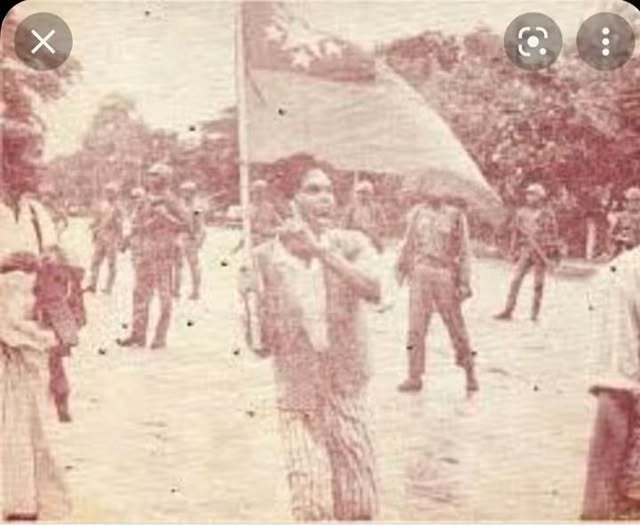
Lwin Oo of Yankin recalls that when he had only recently entered primary school, classes were suddenly suspended for an extended period. Looking toward nearby neighborhoods, he could see houses burning in the distance. Crowds gathered in the streets. Shops belonging to ethnic Chinese families were looted or attacked, and property was piled up and set ablaze.
He remembers hearing angry slogans being shouted by groups carrying photographs of General Aung San while marching through Rangoon. The atmosphere was chaotic, tense, and unpredictable. Many ordinary residents feared that mobs might mistakenly target innocent families merely because they appeared Chinese.
One particularly vivid memory involved neighbors desperately shouting from an upstairs house:
“We are not Chinese. We are Shan. We are Shan!”
The terrified occupants hoped to persuade approaching crowds not to attack them.
Similar scenes unfolded across the country. Chinese-owned grocery stores, tea shops, businesses, cinemas, beauty salons, and private homes became targets of mob violence. Although some communities reportedly attempted to protect their Chinese neighbors, many others witnessed extensive destruction.
Roots of the Crisis
To understand the riots, it is necessary to examine the broader political circumstances of the 1960s.
Following General Ne Win’s military coup in 1962, Burma adopted the “Burmese Way to Socialism.” Major sectors of the economy were nationalized, private businesses faced severe restrictions, and economic conditions deteriorated. Shortages of rice and other basic goods became increasingly common.
At roughly the same time, China was entering one of the most turbulent periods in its history: Mao Zedong’s Cultural Revolution.
During the Cultural Revolution, Beijing sought to spread revolutionary enthusiasm beyond China’s borders. Among overseas Chinese communities throughout Southeast Asia, Mao badges, copies of the “Little Red Book,” and Cultural Revolution slogans became symbols of political loyalty.
In Burma, some ethnic Chinese students began wearing Mao badges and carrying Mao’s quotations in schools. Burmese authorities viewed these activities as a challenge to national sovereignty and prohibited their display. According to historical studies, Chinese students’ defiance of the government’s ban became the immediate trigger for escalating tensions. [jstor.org], [cambridge.org]
What began as disputes in schools soon expanded into wider confrontations between Burmese students and Chinese students of Burmese nationality.
The situation was further aggravated by the perception that the Chinese Embassy in Rangoon was encouraging or supporting Cultural Revolution activities among overseas Chinese residents. This intensified suspicions within the Burmese government and among segments of the public. [en.wikipedia.org], [cambridge.org]
The Violence of June 1967
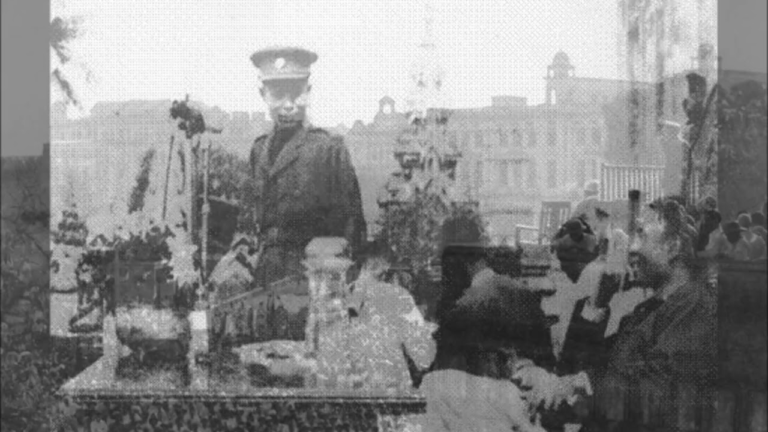
The riots exploded in Rangoon on 26 June 1967.
Mobs attacked Chinese-owned homes and businesses, looted shops, and set buildings on fire. Martial law was eventually imposed to restore order. Historical sources generally record at least 31 deaths and numerous injuries, although some Chinese sources later claimed the true toll was considerably higher. [en.wikipedia.org]
The unrest spread beyond Rangoon to other urban areas where Chinese communities had established businesses.
At the human level, the tragedy was especially painful because many victims were not foreign nationals but Burmese-born Chinese families whose roots in Burma extended back generations. Many considered Burma their homeland and had little direct involvement in international ideological conflicts.
Collapse of the “Pauk-Phaw” Era
The riots marked the dramatic end of what had previously been called the Pauk-Phaw (fraternal) relationship between China and Burma.
Ironically, Burma had been the first non-communist country to recognize the People’s Republic of China after its establishment in 1949. Throughout the 1950s, leaders of both countries had promoted peaceful coexistence and maintained unusually cordial relations. [en.wikipedia.org], [cambridge.org]
After the riots, however, relations deteriorated sharply.
Diplomatic exchanges became hostile. Ambassadors were recalled. Bilateral trade suffered severely. Beijing launched fierce propaganda attacks against the Ne Win government and accused Rangoon of failing to protect ethnic Chinese residents. [en.wikipedia.org], [en.wikipedia.org]
China’s Turn Toward the Burmese Communist Party
Perhaps the most significant long-term consequence was China’s decision to provide extensive support to the Communist Party of Burma (CPB).
Historical research indicates that following the collapse of Sino-Burmese relations in 1967, Beijing’s policy shifted toward openly assisting communist insurgents operating against the Burmese state. [jstor.org], [cambridge.org]
Chinese aid included weapons, training, logistical support, and sanctuary along the China-Burma frontier.
This support dramatically strengthened the Communist Party of Burma and intensified armed conflict in the country’s borderlands. The resulting warfare contributed to the prolongation of Myanmar’s internal conflicts for decades.
Many of the ethnic armed organizations now operating along the China-Myanmar border trace part of their institutional history to territories once controlled by the Communist Party of Burma before its collapse in 1989.
Competing Interpretations
The causes of the riots remain debated among historians and political observers.
One interpretation emphasizes Beijing’s export of the Cultural Revolution and the provocative political behavior encouraged among overseas Chinese communities. This view argues that China’s ideological activism created tensions that ultimately exploded into violence. [cambridge.org], [jstor.org]
Another interpretation points to domestic economic frustrations under the Burmese Way to Socialism. By 1967, shortages, inflation, and declining living standards had generated widespread public anger. Some scholars and commentators have suggested that anti-Chinese sentiment became a convenient outlet for broader social frustrations. [Anti-Chine…ademic.com], [jstor.org]
A third interpretation argues that both factors interacted: domestic economic grievances merged with fears of foreign ideological interference, creating conditions for violence.
A Human Tragedy Beyond Ideology
Looking back, one uncomfortable reality becomes clear.
The conflict was often portrayed as a struggle between “Chinese communists” and “Burmese nationalists,” yet the people who paid the highest price were ordinary civilians.
Many victims were Burmese-born Chinese who had known no other homeland. At the same time, ordinary Burmese citizens were themselves struggling under economic hardship and political restrictions.
Meanwhile, the larger geopolitical struggle between Ne Win’s socialist military government and the Communist Party of Burma was fundamentally a conflict among Burmese political actors pursuing different ideological visions for the country.
The decision to resolve political disputes through armed confrontation rather than democratic competition helped lay the foundations for the prolonged cycle of civil war that Myanmar continues to struggle with today.
Gradual Normalization
By 1970-71, Sino-Burmese relations began to improve once again. Diplomatic normalization resumed, ambassadors returned, and tensions gradually eased. [en.wikipedia.org], [cambridge.org]
China’s priorities were changing as its international relationships evolved, and support for the Communist Party of Burma became less central to Beijing’s foreign policy over time.
Nevertheless, the memory of 1967 continued to shape mutual perceptions on both sides of the border.
Lessons for the Present
The 1967 anti-Chinese riots offer a powerful lesson for contemporary Myanmar.
They demonstrate how economic hardship, political manipulation, ethnic tensions, and international rivalries can combine to produce explosive consequences. What began as disputes over political symbols worn by students quickly escalated into deadly communal violence and a diplomatic crisis that altered the strategic landscape of the region.
Nearly six decades later, China’s influence in Myanmar is vastly greater than it was in 1967. China is now one of the world’s largest economic and military powers and Myanmar’s most important neighboring partner. The relationship remains complex, involving trade, infrastructure, border security, armed conflicts, and regional geopolitics.
Yet the central lesson endures: when nationalism, ethnic resentment, and great-power competition are allowed to feed each other, ordinary people are often the first victims and peace becomes the ultimate casualty.
Sources and Historical References
- “1967 Anti-Chinese Riots in Burma” (historical overview and chronology). [en.wikipedia.org]
- The 1967 Anti-Chinese Riots in Burma and Sino-Burmese Relations, Hongwei Fan, Journal of Southeast Asian Studies (2012). [jstor.org], [cambridge.org]
- Historical analyses of Sino-Burmese relations and the impact of the Cultural Revolution. [cambridge.org]
- Contemporary accounts regarding subsequent Chinese support for the Communist Party of Burma.