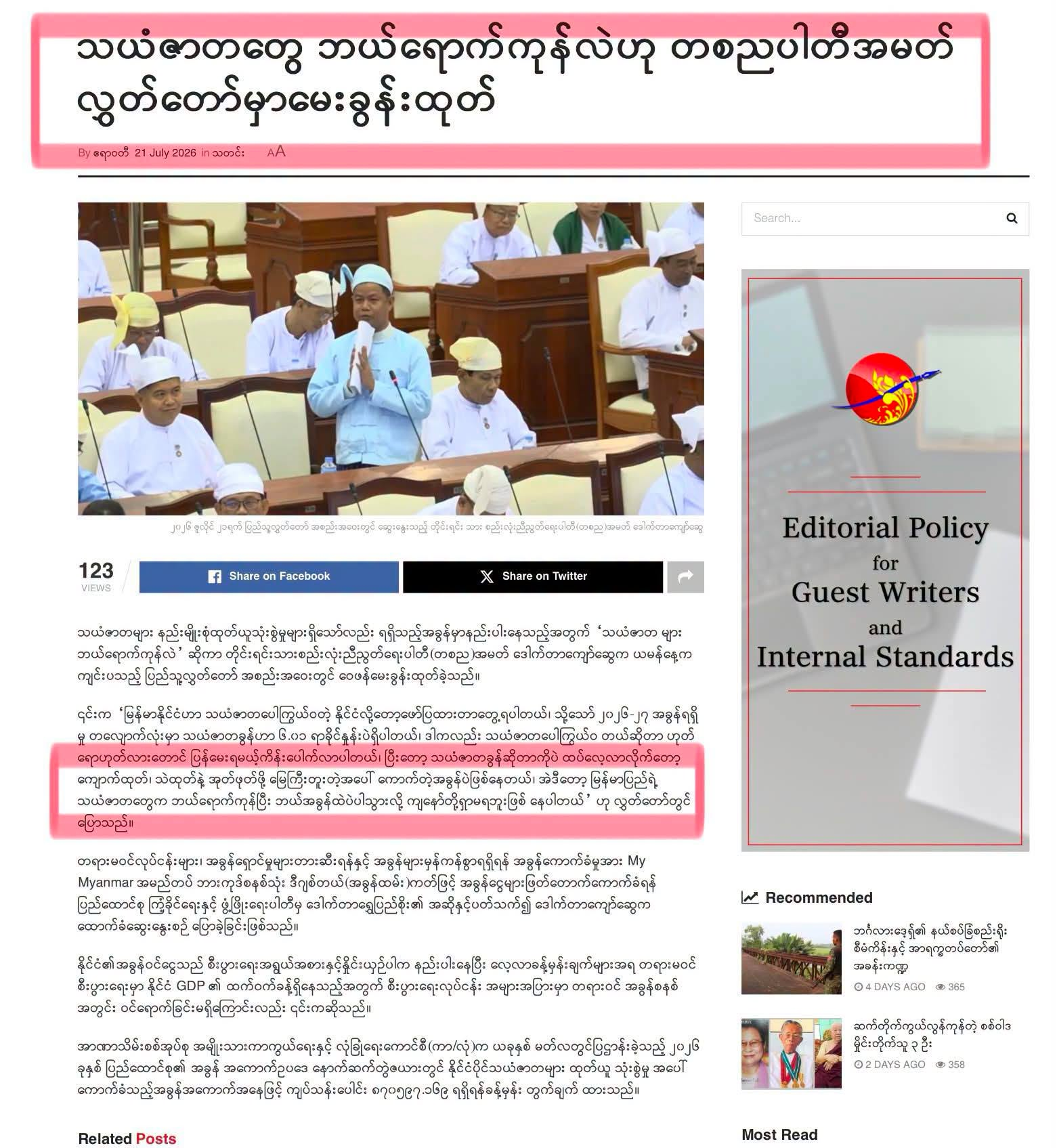
MP Dr. Kyaw Swe’s Question (NUP Party)
“Where is Myanmar’s Natural Resource Tax?”
When examining the natural resource tax accounts, it turns out they only consist of taxes from quarrying stone, dredging sand, and digging soil to make bricks. Missing entirely are tax revenues from jade, ruby, sapphire, gold, copper, rare earths, petroleum, natural gas, and forestry. Have these vanished completely? Has it become a 100% loss?
U Aung Tin’s Post & Commentary
“I read a joke recently:
A Myanmar crony went to visit a foreign crony at his luxurious mansion. Amazed, the Myanmar crony asked how he could afford such grandeur. The foreign crony pointed out the window to a massive river-crossing bridge nearby and replied, ‘10%.’
Later, when the foreign crony visited Myanmar, the Myanmar crony hosted him in a far more extravagant, luxurious palace. The foreign crony, astonished, asked, ‘How on earth did you afford this? Is it 10% too?’ The Myanmar crony pointed out the window to where a bridge was supposed to be. The foreign crony looked out and saw nothing at all—no bridge whatsoever. He asked, ‘Where is the bridge?’ The Myanmar crony replied, ‘100%.'”
U Aung Tin’s Remarks:
Remember: When Lee Kuan Yew began transforming a poor Singapore into a top-tier global power, his primary, top-priority agenda was systematically eradicating corruption root and branch. Corruption is THE mother of all crimes.
Because no era or government in Myanmar has successfully uprooted corruption, the country remains impoverished and morally degraded. Eliminating bribery and corruption ought to be considered the number one critical task for President Min Aung Hlaing.
(Note: In Myanmar, there are only two types of cronies: military cronies, and cronies who collaborate with military officers to feed off the state. Nevertheless, under current realities for nation-rebuilding, the help of patriotic cronies is necessary. Since they know every trick in the book regarding bribery and graft—much like how London police caught a counterfeit ring whose fake bills were so superior that the Bank of England hired them—these major cronies have a duty to help build a corrupt-free, prosperous society. Having made more than enough wealth for themselves, they must join hands to feed and clothe our citizens. Otherwise, international society will continue to view Myanmar entrepreneurs simply as thieves, and your dignity will continue to plunge.)
Analysis: Combating Systemic Corruption in Developing Regions
The “100% bridge” metaphor highlights the shift from incidental bribery (a percentage skimmed off public works) to extractive/ghost state capture (where entire public revenues or infrastructure funds disappear without delivering any assets).
To effectively combat corruption in resource-rich developing regions across Asia, Latin America, and Africa, standard anti-corruption policies must be reinforced with systematic governance frameworks:
1. Mandatory Beneficial Ownership Registers & EITI Integration
- The Issue: Extractives like jade, rare earths, gold, and timber are frequently funneled through opaque shell companies to hide true ownership.
- The Remedy: Full implementation of standards established by the Extractive Industries Transparency Initiative (EITI). Countries must mandate public registers of beneficial ownership so the ultimate human beneficiaries of mining rights, oil concessions, and forestry permits are fully disclosed.
2. Digital Tax Systems and Revenue Automation
- The Issue: Manual tax collection and discretionary off-budget accounts (“Other Accounts” or military-controlled funds) allow state revenue to bypass the central treasury.
- The Remedy: Transitioning to end-to-end digital tax systems, integrated customs tracking, and mandatory electronic invoicing prevents off-the-books revenue leakage in high-value resource transactions.
3. Open Contracting and Infrastructure Auditing
- The Issue: Infrastructure corruption (“ghost projects” or inflated subcontracts) bleeds national budgets dry.
- The Remedy: Mandating the Open Contracting Data Standard (OCDS) across all government procurement. Making public tender documents, bid evaluations, contract milestones, and independent satellite/physical audit verifications accessible to civil society and watchdog organizations ensures projects exist in reality, not just on paper.
4. Judicial Independence & Institutional Integrity
- The Issue: Anti-corruption agencies that report directly to the executive branch or military junta are selectively weaponized against political rivals while shielding favored cronies.
- The Remedy: Establishing constitutionally protected anti-corruption commissions with independent prosecutorial powers, secure tenures, and transparent asset-declaration mandates for all high-ranking civil, military, and judicial officials.
U Aung Tin
မြန်မာပြည်က သယံဇာတခွန်ဘယ်မှာလဲ တစညအမတ် ဒေါက်တာကျော်ဆွေ မေးခွန်းထုတ်
သယံဇာတခွန်ဆိုပြီး ကြည့်လိုက်တော့၊ ကျောက်ထုတ်၊ သဲထုတ်နဲ့ အုတ်ဖုတ်ဖို့ မြေကြီးတူးတဲ့ အခွန်တွေဖြစ်နေတယ်တဲ့။
ကျောက်စိမ်း၊ ပတ္တမြား၊ နီလာ၊ ရွှေ၊ ကြေးနီ၊ မြေရှား၊ ရေနံ၊ သဘာဝဓါတ်ငွေ့၊ သစ်တောအခွန်တွေ မတွေ့ရဘူး။
အစပျောက်သွားပြီလား။
၁၀၀%ဖြစ်သွားပြီလား။
ဟာသတစ်ခု ဖတ်မိတာရှိတယ်။
မြန်မာပြည်က ခရိုနီကြီးက နိုင်ငံခြားခရိုနီကြီးအိမ် အလည်သွားတော့ သူ့ရဲ့ခမ်းနားလှတဲ့အိမ်ကြီးမှာ ဧည့်ခံတယ်တဲ့။
ဒီလောက်ကြီးကျယ်တဲ့အိမ်ကြီးကို ဘယ်လိုပိုင်သလဲလို့မေးတော့ နိုင်ငံခြားခရိုနီကြီးက သူ့အိမ်ဘေးက မြစ်ကူးတံတားကြီးကို လက်ညှိုးထိုးပြပြီး ၁၀%လို့ ဖြေသတဲ့။
နိုင်ငံခြားခရိုနီကြီးက မြန်မာခရိုနီ အလည်လာတဲ့အခါ မြန်မာခရိုနီကြီးကလည်း သူ့ရဲ့ ကြီးကျယ်ခမ်းနားတဲ့အိမ်ကြီးမှာ ဧည့်ခံပြန်တယ်။
နိုင်ငံခြားခရိုနီက ဒီလောက်ကြီးကျယ်တဲ့ ဇိမ်ခံအိမ်ကြီး ဘယ်လိုပိုင်ခဲ့သလဲ၊ ပြောပါအုံး။ ဆယ်ရာခိုင်နှုံးပဲလားလို့ မေးတယ်။
မြန်မာခရိုနီက ဟိုက တံတားကြီးကို လှမ်းကြည့်လိုက်လို့ ပြူတင်းပေါက်ကနေ လက်ညှိုးထိုးပြတယ်။
နိုင်ငံခြားခရိုနီက ကြည့်တဲ့အခါ ဘာတံတားမှ မတွေ့တော့ ဘယ်မှာလဲ တံတားလို့ မေးတော့
မြန်မာခရိုနီက ၁၀၀%လို့ ဖြေသတဲ့။
မှတ်ထားပါ။ ဆင်းရဲလှတဲ့ စက်ာပူကို ကမ္ဘာ့ထိပ်သီးနိုင်ငံဖြစ်အောင် စတင်တည်ထောင်တော့ လီကွမ်ယူးရဲ့ ပထမထိပ်တန်း ဦးစားပေး လုပ်ငန်းစဉ်က လာဘ်ပေးလာဘ်ယူမှုကို အမြစ်ပြတ်သွားအောင် စနစ်တကျ လုပ်ယူခဲ့ခြင်းဖြစ်တယ်။
Corruption is THE mother of all crimes.
ဘယ်ခေတ် ဘယ်အစိုးရလက်ထက်ကမှ အမြစ်မပြတ်ခဲ့လို့ တိုင်းပြည်မွဲတေ အကျင့်ပျက်နေတာဖြစ်လို့၊ လာဘ်ပေးလာဘ်ံယူမှု ကင်းစင်ရေးကို သမ္မတဦးမင်းအောင်လှိုင်က နံပါတ်တစ် အရေးကြီးလုပ်ငန်းစဉ်အဖြစ် ထည့်သွင်းစဉ်းစားသင့်တယ်။
မှတ်ချက်
မြန်မာပြည်မှာ ခရိုနီနှစ်မျိုးပဲရှိတယ်။
တစ်မျိုးက စစ်ဗိုလ်ခရိုနီ။
နောက်တစ်မျိုးက စစ်ဗိုလ်တွေနဲ့ပေါင်းစားတဲ့ ခရိုနီ။
မည်သို့ပင်ဆိုစေကာမူ တိုင်းပြည်ပြန်လည်ထူထောင်ရေးမှာ ယနေ့လက်တွေ့အခြေအနေတွေအရ တိုင်းချစ်ပြည်ချစ် ခရိုနီတွေရဲ့ ကူညီမှုလိုပါတယ်။ နည်းမျိုးစုံသော လာဘ်ပေးလာဘ်ယူတွေကို ၁၂ကြိုးကုန်အောင် တတ်ထားသူတွေဖြစ်ကြလို့ အဂ်လန်မှာ ငွေတုဂိုဏ်းကိုဖမ်းမိတဲ့အခါ အတုက အစစ်ထက်သပ်ရပ်နေလို့ အဂ်လန်ဘဏ်မှာ အလုပ်ခန့်လိုက်သလို လာဘ်ပေးလာဘ်ယူမှု ကင်းစင်တဲ့ တိုးတက်ချမ်းသာသော လူ့အဖွဲ့အစည်းဖြစ်လာအောင် ခရိုနီကြီးတွေ ကူညီဖို့တာဝန်ရှိတယ်။ ကိုယ်လည်း ချမ်းသာသင့်သလောက် ချမ်းသာပြီးပြီမို့ ကိုယ့်နိုင်ငံသားတွေ ဝမ်းဝခါးလှရေးကို ဝိုင်းလုပ်ကြဖို့လိုတယ်။
အဲလိုမှ မဟုတ်ရင် မြန်မာပြည်က Entrepreneurs စီးပွါးရေးလုပ်ငန်းရှင်တွေဆိုရင် နိုင်ငံတကာက သူခိုးတွေလို့ပဲမြင်နေမှာဖြစ်လို့ ခင်ဗျားတို့လည်း သိက္ခာဆက်ကျနေပါလိမ့်မယ်။
From Wikipedia:
The Extractive Industries Transparency Initiative (EITI) is a Norwegian-based organization that seeks to establish a global standard for the governance of oil, gas and mineral resources. It seeks to address key governance issues in the extractive sectors.
The EITI Standard requires information along the extractive industry value chain from the point of extraction, to how the revenue makes its way through the government and its contribution to the economy. This includes how licenses and contracts are allocated and registered, who the beneficial owners of those operations are, what the fiscal and legal arrangements are, how much is produced, how much is paid, where the revenue is allocated, and its contributions to the economy, including employment.
The EITI Standard is implemented in 55 countries around the world. Each of these countries is required to publish an annual EITI Report to disclose information on: contracts and licenses, production, revenue collection, revenue allocation, and social and economic spending.
Every country goes through a quality-assurance mechanism, called Validation, at least every three years. Validation serves to assess a country’s compliance with the EITI Standard and promote dialogue and learning at the country level. It also safeguards the integrity of the EITI by holding all EITI implementing countries to the same global standard.
Each implementing country has its own national secretariat and multi-stakeholder group made up of representatives from the country’s government, extractive companies and civil society. The multi-stakeholder group makes decisions on how the EITI process is carried out in the country.
The EITI Standard is developed and overseen by an international multi-stakeholder Board, consisting of representatives from governments, extractives companies, civil society organisations, financial institutions and international organisations.
The current Chair of the EITI Board is Helen Clark, Former Prime Minister of New Zealand and former UNDP Administrator. The previous chairs have been Fredrik Reinfeldt, former Prime Minister of Sweden, Clare Short (2011-2016), former UK Secretary of State for International Development and Peter Eigen (2009-2011). The EITI International Secretariat is located in Oslo, Norway and is headed by Mark Robinson.
READ ALL HERE @ WIKI@ Extractive Industries Transparency Initiative (EITI)
Anti-corruption (or anticorruption) comprises activities that oppose or inhibit corruption. Just as corruption takes many forms, anti-corruption efforts vary in scope and in strategy.[1] A general distinction between preventive and reactive measures is sometimes drawn. In such framework, investigative authorities and their attempts to unveil corrupt practices would be considered reactive, while education on the negative impact of corruption, or firm-internal compliance programs are classified as the former.
Read all in Wiki @ Anti-corruption