As we commemorate Hijrah and reflect upon the stories of the prophets, perhaps we should ask ourselves a few uncomfortable questions.
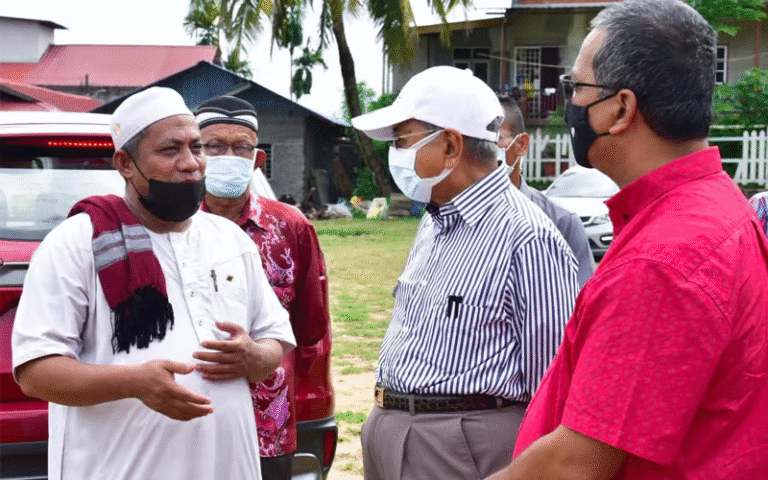
FMT Reporters picture: Inhabitants are largely nomadic Malays that have migrated to Thailand and Myanmar over the years, says former PM
If Prophet Adam (AS) arrived among us today, burdened by his mistakes yet seeking forgiveness and a new beginning, would we welcome him or reject him?
If the Ark of Prophet Nuh (AS), carrying survivors of a great catastrophe, appeared upon our shores, would we offer refuge—or turn it away?
If Prophet Musa (AS) led a persecuted people across the sea in search of safety, would we see them as fellow human beings fleeing oppression, or merely as strangers crossing a border?
If Prophet Yunus (AS), exhausted and helpless after his ordeal, emerged upon our coast, would compassion be our first response?
If Prophet Yusuf (AS), after suffering imprisonment through no fault of his own, arrived seeking a chance to rebuild his life, would we help him begin again?
These are not questions about governments alone. They are questions for all of us. They challenge our understanding of mercy, justice, and human dignity.
The stories of the prophets are not merely tales of the past. They are mirrors in which every generation may examine its own conscience.
As Muslims across Malaysia and the wider Muslim world celebrate Maal Hijrah 1448H, many speeches and sermons rightly focus on the spiritual lessons of Hijrah: personal transformation, moral renewal, stronger leadership, and the building of a united ummah.
These are indeed noble and important themes.
However, while reflecting on Hijrah, it may also be worthwhile to remember another dimension of the event that is sometimes overlooked: Hijrah was also a migration undertaken by people fleeing persecution.
The word Hijrah itself means migration. The Prophet Muhammad ﷺ and his followers did not leave Makkah merely as travellers. They departed because they faced hostility, economic boycotts, persecution, torture, and threats to their lives. The migration from Makkah to Madinah was both a spiritual journey and a physical movement of vulnerable people seeking safety and dignity.
The Prophet ﷺ himself was a migrant.
His companions were migrants.
The Ansar of Madinah became remembered in history because they welcomed migrants.
This raises an important question for our modern age:
What lessons should contemporary Muslims draw from this aspect of Hijrah?
Migration Throughout Sacred History
The story of migration is not limited to the Prophet Muhammad ﷺ.
Throughout Islamic tradition, many prophets and righteous people experienced displacement, exile, refuge, or journeys in search of safety.
We remember Prophet Adam (AS), who sought Allah’s forgiveness after his descent to earth.
We remember Prophet Nuh (AS), whose Ark survived a devastating flood and came to rest after a long journey.
We remember Prophet Musa (AS), who led an oppressed people to safety from tyranny.
We remember Prophet Yunus (AS), rescued after hardship and despair.
We remember Prophet Yusuf (AS), who endured imprisonment before eventually finding justice and honour.
We remember Prophet Isa (AS), whom Allah elevated according to Islamic belief.
And during Muharram, Muslims especially remember the martyrdom of Imam Hussain (RA), whose sacrifice remains a timeless symbol of resistance against injustice and oppression.
These stories differ in many ways, yet they share common themes: struggle, displacement, patience, refuge, mercy, and divine justice.
A Reflection for Our Times
Today, millions of people around the world continue to move across borders because of war, conflict, persecution, famine, economic collapse, natural disasters, or political instability.
Every nation faces practical challenges. No country possesses unlimited resources, and every government must balance humanitarian concerns with national responsibilities.
Nevertheless, the Hijrah reminds us that migrants and refugees are not merely statistics. They are human beings with hopes, fears, families, and dignity.
Many of them resemble the vulnerable people described throughout sacred history: individuals seeking safety, opportunity, and a chance to rebuild their lives.
The Qur’anic Perspective
The Qur’an repeatedly speaks about migration undertaken to escape oppression.
Allah says:
“Indeed, those who believed and those who emigrated and strove in the cause of Allah – those expect the mercy of Allah. And Allah is Forgiving and Merciful.” (Qur’an 2:218)
In another passage, Allah asks concerning those who remained under oppression:
“Was not the earth of Allah spacious enough for you to emigrate therein?” (Qur’an 4:97)
These verses remind believers that migration is not merely an economic or political issue. It can also be a response to injustice, persecution, and the search for human dignity.
Leadership as a Moral Trust
Islam places great responsibility upon leaders.
Classical Islamic teachings emphasize justice (adl), mercy (rahmah), and trust (amanah) as foundations of governance.
A leader’s success is measured not only by economic growth or political stability but also by how society treats the weak, the vulnerable, the stranger, and the oppressed.
This principle applies universally.
The treatment of migrants, refugees, and displaced persons is therefore not simply a policy question. It is also a moral question that challenges the conscience of individuals, communities, and nations.
Every country must make decisions according to its circumstances and capacities. Yet the values of compassion, fairness, and human dignity should never be forgotten.
The Enduring Lesson of Hijrah
Perhaps the most enduring lesson of Hijrah is that today’s migrant may become tomorrow’s contributor.
The Muhajirun who arrived in Madinah were not a burden upon history. They became builders of civilisation.
Throughout human history, migrants have enriched societies through their labour, knowledge, skills, culture, and resilience.
As we celebrate Maal Hijrah, let us remember both dimensions of this great event:
the migration of the soul toward righteousness,
and the migration of human beings seeking safety, dignity, and hope.
May Allah guide humanity toward greater justice, compassion, wisdom, and understanding.
And may we never forget that one of the most honoured titles in Islamic history remains this:
Al-Muhajirun – The Migrants.