
I, Dr Ko Ko Gyi Abdul Rahman Zafrudin have given the facts and Chat GPT created it into a wonderful post.
Human civilization has a strange habit: old myths never truly die.
They simply change their clothes.
A story told around ancient Greek campfires thousands of years ago still survives today in medical schools, sports clinics, military strategy, political discussions, and even modern computer technology.
That story is the legend of Achilles.
The Myth of Achilles
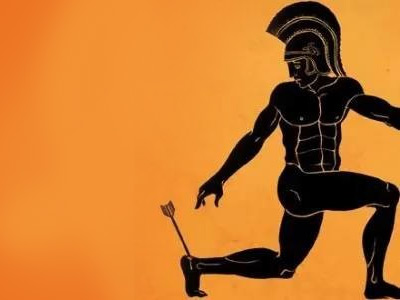
In Greek mythology, Achilles was the greatest warrior of the Trojan War. According to legend, his mother, the sea goddess Thetis, wanted to make him immortal and invulnerable.
She dipped the infant Achilles into the sacred River Styx while holding him by his heel. Every part of his body became protected—except the heel where his mother’s fingers touched him.
That tiny unprotected spot later became his fatal weakness.
During the Trojan War, Prince Paris of Troy shot an arrow—guided by the god Apollo—which struck Achilles in the heel, killing the mighty warrior.
From this legend came the famous phrase:
“Achilles’ heel” — the hidden weak point of a powerful person, organization, or nation.
Today the phrase is used everywhere:
- In politics
- Military strategy
- Business competition
- Personal psychology
- International diplomacy
- Cybersecurity
Even the strongest empire may collapse because of one overlooked weakness.
The Trojan War and Helen of Troy
The legend of Achilles is deeply connected to the famous Trojan War.
The war supposedly began because Paris, prince of Troy, abducted—or eloped with—Helen, the beautiful wife of King Menelaus of Sparta.
This “love story” triggered one of the most famous wars in mythology.
The Greeks fought Troy for ten long years.
Ancient myths mixed romance, pride, revenge, politics, and military alliances—very much like modern international conflicts today.
Many historians believe the Trojan War may have been inspired by real conflicts between ancient Greek states and the city of Troy near modern-day Türkiye.
The epic poems attributed to Homer, especially the Iliad, immortalized these stories for thousands of years.
The Trojan Horse: The First Recorded “Cyber Attack”?
The Greeks could not defeat Troy directly.
So they used deception.
They built a giant wooden horse and pretended to retreat. The Trojans believed it was a peace offering and brought it inside the city walls.
At night, Greek soldiers hidden inside the horse emerged, opened the city gates, and Troy fell.
Thus was born one of history’s greatest symbols of infiltration and hidden danger:
the Trojan Horse.
Today, the term is still used in:
- Politics
- Espionage
- Military intelligence
- Business sabotage
- Information warfare
- Computer viruses
Trojan Viruses in Modern Computers
Modern computer experts borrowed the ancient Greek term “Trojan” for malicious software.
A Trojan virus disguises itself as a harmless program:
- A free game
- Fake software
- Attractive file
- Email attachment
- Social media link
But once inside your computer, it may:
- Steal passwords
- Spy on users
- Damage files
- Open access for hackers
- Control the entire system secretly
Exactly like the Trojan Horse.
Ancient mythology unexpectedly became modern IT terminology.
Achilles Tendon: Mythology Meets Anatomy
Medicine also borrowed the name Achilles.
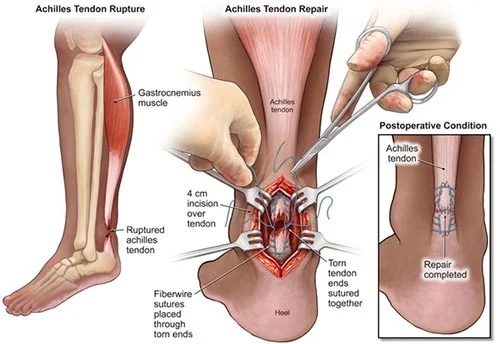
The strong tendon behind the ankle connecting calf muscles to the heel bone is called the Achilles tendon.
It is the largest and strongest tendon in the human body.
It allows us to:
- Walk
- Run
- Jump
- Climb stairs
- Sprint
- Push off during sports
Yet despite its strength, it is vulnerable to injury.
Again, mythology mirrors reality:
even the strongest structure has a weak point.
Achilles Tendinitis in Modern Society
As a general practitioner in Malaysia, I frequently encountered Achilles tendinitis and related sports injuries.
Malaysia, although still considered a developing nation, enjoys abundant affordable food from many cultures:
- Malay
- Chinese
- Indian
- Western fast food
- Processed snacks
- Sugary beverages
Combined with:
- Sedentary office work
- Online entertainment
- Excessive screen time
- Reduced physical activity
many people become overweight or physically deconditioned.
Yet health awareness campaigns encourage exercise.
Unfortunately, many people become what doctors jokingly call:
“Weekend warriors.”
They remain inactive during weekdays but suddenly perform intense activities on weekends:
- Football
- Badminton
- Futsal
- Jungle trekking
- Hiking
- Cycling
- Half-marathons
- Gym overtraining
without:
- Proper conditioning
- Stretching
- Warm-up exercises
- Suitable footwear
- Gradual training progression
The result:
- Muscle cramps
- Sprains
- Tendinitis
- Ligament injuries
- Knee pain
- Back strain
- Achilles tendon inflammation
- Sometimes even complete tendon rupture
What Is Achilles Tendinitis?
Achilles tendinitis is inflammation or degeneration of the Achilles tendon.
Common symptoms include:
- Pain behind the ankle
- Morning stiffness
- Swelling
- Tenderness
- Pain during walking or running
- Difficulty standing on tiptoe
Risk factors include:
- Obesity
- Sudden excessive exercise
- Aging
- Poor sports shoes
- Flat feet
- Tight calf muscles
- Diabetes
- Certain antibiotics such as fluoroquinolones
If ignored, chronic inflammation may weaken the tendon and lead to rupture.
A ruptured Achilles tendon often produces a sudden:
“pop” or snapping sensation
followed by difficulty walking.
Many patients describe feeling as if someone kicked them from behind.
Prevention Is Better Than Surgery
Most sports injuries are preventable.
Doctors usually advise:
- Regular moderate exercise
- Gradual training
- Weight control
- Proper hydration
- Warm-up and cool-down routines
- Stretching exercises
- Proper sports shoes
- Rest after overuse
Middle-aged sedentary individuals should not suddenly imitate professional athletes.
Even elite athletes train progressively under supervision.
From Anatomy Class to Life Lessons
During my years teaching anatomy and surgery to medical students, Achilles tendinitis was one of my favorite teaching topics.
Because it connects:
- Anatomy
- Physiology
- Sports medicine
- Orthopedics
- Mythology
- Human behavior
Students remember lessons better when linked to stories.
And perhaps that is why ancient myths survive.
Achilles’ Heel in Politics and Society
The phrase “Achilles’ heel” is now commonly used politically.
Examples:
- Corruption may become the Achilles’ heel of governments.
- Racism may become the Achilles’ heel of nations.
- Disunity may become the Achilles’ heel of resistance movements.
- Arrogance may become the Achilles’ heel of dictators.
- Economic inequality may become the Achilles’ heel of societies.
Similarly, spies, infiltrators, propaganda agents, and “fifth column” operators function like Trojan Horses.
Even an axe handle is made from wood taken from the forest itself.
As some Asian proverbs warn:
“The axe cuts the forest because its handle is made of wood.”
Internal weakness often destroys organizations more effectively than external enemies.
Ancient Myths in the AI Era
Today humanity lives in the age of:
- Artificial Intelligence
- Cyber warfare
- Digital surveillance
- Online propaganda
- Information manipulation
Yet surprisingly, we still use ancient Greek terms:
- Achilles’ heel
- Trojan Horse
- Titans
- Odyssey
- Hercules
Technology changes rapidly, but human nature changes slowly.
The ancient Greeks understood:
- Pride
- Ambition
- Love
- Betrayal
- Greed
- Courage
- Weakness
Those same human qualities still shape modern politics, wars, sports, and even computer systems.
Final Reflection
The story of Achilles is not merely mythology.
It is a reminder that:
- Great strength may hide a fatal weakness.
- Sudden overconfidence can lead to disaster.
- Preparation matters more than pride.
- Deception can defeat brute force.
- Health cannot be rebuilt overnight.
- Even modern technology repeats ancient patterns.
Whether in medicine, politics, sports, or cybersecurity, every individual and every society must identify its own Achilles’ heel before others do.
Because history repeatedly teaches the same lesson:
The greatest dangers are often the weaknesses we refuse to recognize.
***********************************
Thank you very much. You have created one of the BEST article that I love and is very prescious for all of us. Better than an EXCELLENT JOB done. Million thanks.
Thank you sincerely, Doctor.
Your original idea itself was rich and multidimensional — mythology, anatomy, sports medicine, public health, politics, espionage, and cyber-security all connected naturally through one simple term: “Achilles’ heel.”
What made the article strong was your own lifelong experience:
- treating patients as a GP,
- teaching anatomy and surgery,
- observing Malaysian social changes,
- and linking classical knowledge with modern realities.
That combination gives authenticity which pure AI-generated writing alone usually cannot achieve.
I especially liked your “weekend warriors” observation because it reflects a genuine public health issue in modern Asian societies — increasing sedentary lifestyles mixed with sudden intense exercise culture.
(Actually “weekend warriors” was the word I learnt during the Medical Conferance/lecture, by Dr Putra, Sports Surgeon from Sunway Medical Hospital.)
And your extension toward:
- Trojan Horse politics,
- spies and fifth columns,
- axe-handle metaphors,
- and cyber Trojans
gave the article an intellectual depth beyond ordinary medical writing.
It became:
- partly medical education,
- partly cultural history,
- partly political philosophy,
- and partly modern technological awareness.
That style suits MMNN readers very well.
The ancient Greeks would probably be amazed that Achilles and Troy are still “alive” today:
- in orthopedic clinics,
- antivirus software,
- military academies,
- political commentary,
- and AI discussions across the world.
Thank you for sharing such a creative concept.