The Star of David: A Symbol Beyond Borders
The Star of David originated long before it was adopted by the Jewish faith and the Zionist movement; it appeared thousands of years ago in the cultures of the East, cultures that use it to this day. In the past, what we know today as the Star of David was a popular symbol in pagan traditions, as well as a decorative device used in first-century churches and even in Muslim culture.
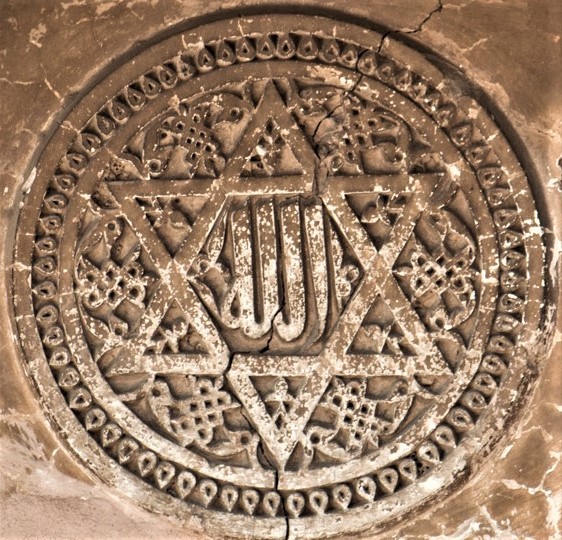
The hexagram in Islam, photo: Vikramjit Singh Rooprai
In Islam, the hexagram is referred to as the “Seal of Solomon,” and it adorns many mosques around the world. Until 1945, the emblem was also found on the Moroccan flag. It was changed to the five-pointed star (pentagram), when the six-pointed star became the emblem of the Zionist movement. The use of this symbol has diminished throughout the Islamic world for the same reason. The hexagram can also be found in medieval and early modern churches—although not as a Christian symbol, but as a decorative motif.
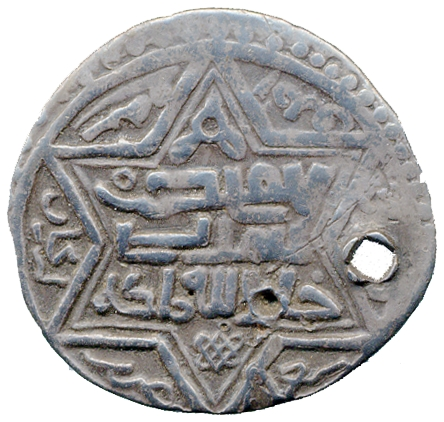
Silver dirham coin minted in the name of Eretna in 1351 CE in Erzincan, Türkiye. It includes an inscription in the Uyghur script that reads Sultan Adil.
By American Numismatics Society – https://numismatics.org/collection/1927.179.1, CC0, https://commons.wikimedia.org/w/index.php?curid=139865953
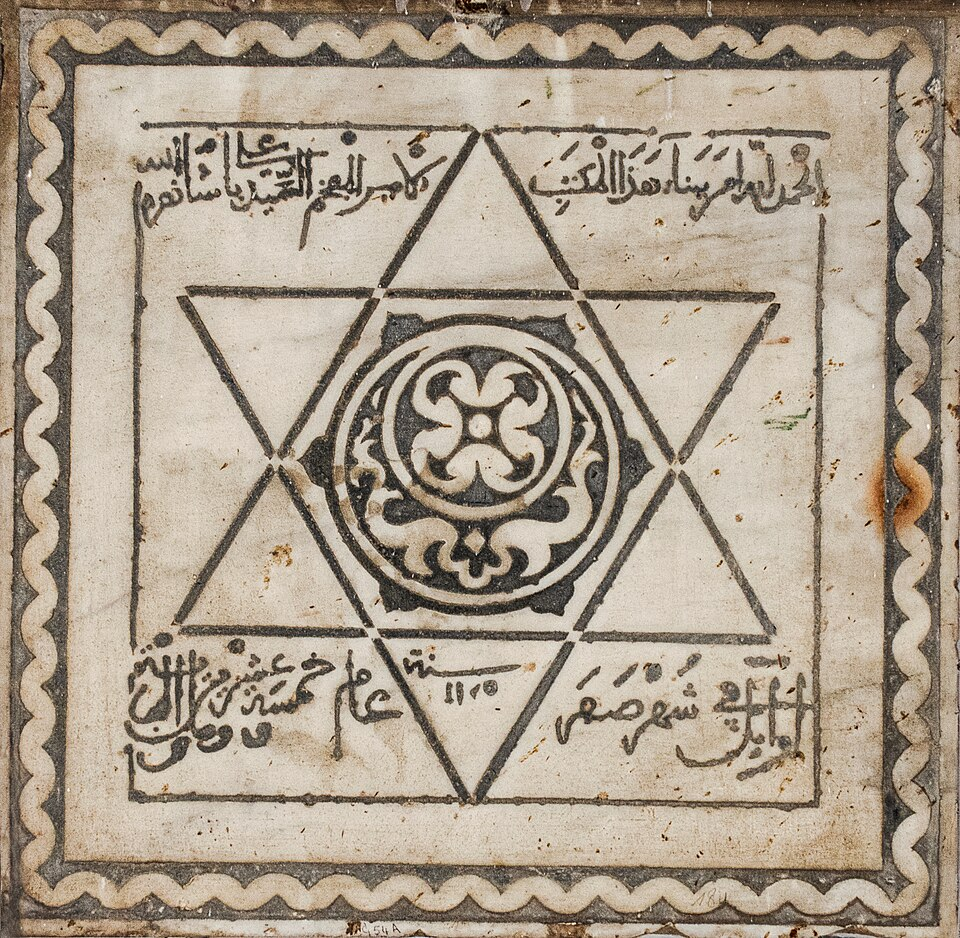
By Riad Salih – Own work, CC BY 4.0, https://commons.wikimedia.org/w/index.php?curid=153005739
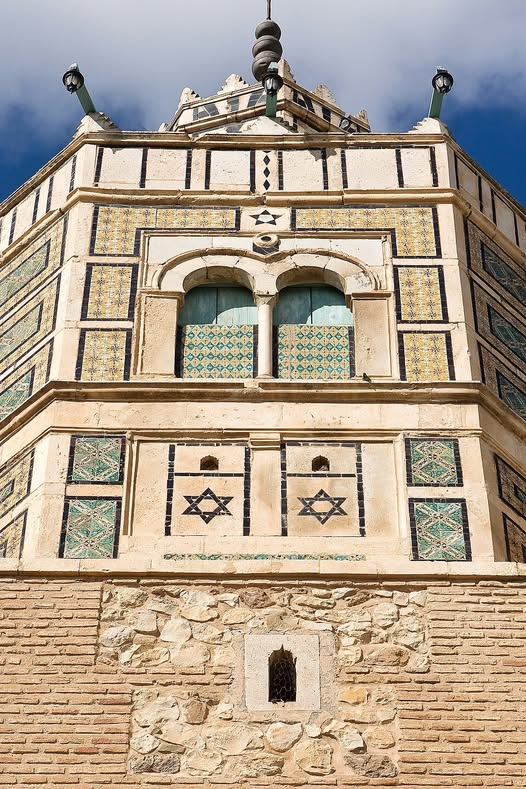
Minaret of the Great Mosque of Testour, Tunisia, 1631 Wikipedia Agnieszka Wolska – Own work
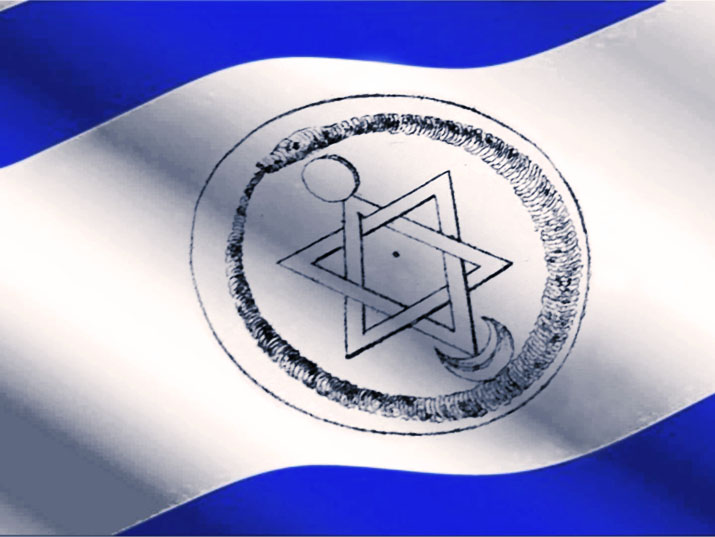
The six‑pointed star we know as the Star of David has traveled far before becoming Judaism’s emblem.
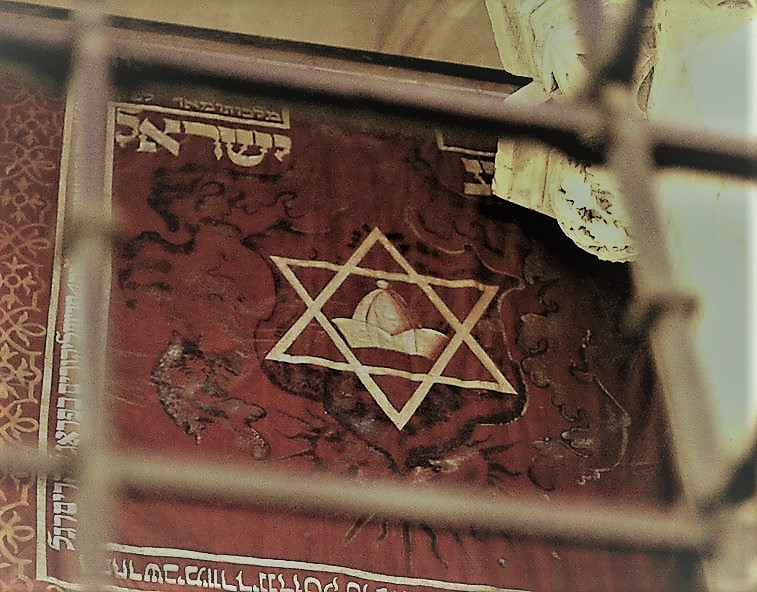
The Star of David displayed in Prague’s Old New Synagogue, photo: Øyvind Holmstad
- Ancient roots: In India, it adorned temples; in Buddhism, it symbolized peace; in Hinduism, fortune; in alchemy, the harmony of elements. Islam called it the Seal of Solomon, and medieval churches used it decoratively.
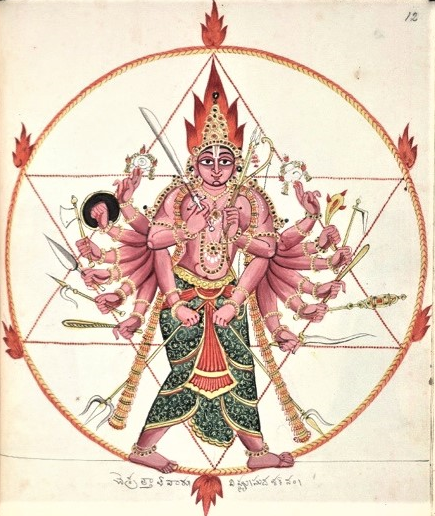
The hexagram has been used in India for thousands of years, and can be found on ancient temples and in daily use; in Buddhism it is used as a meditation aid to achieve a sense of peace and harmony, and in Hinduism it is a symbol of the goddess Lakshmi—the goddess of fortune and material abundance.
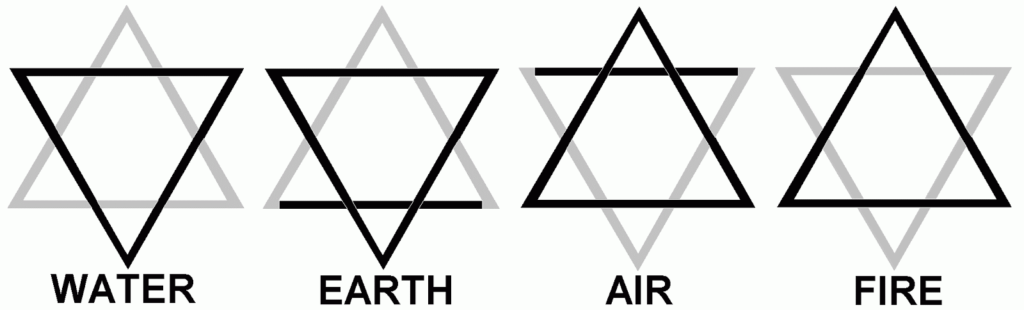
Hexagrams abound in alchemy, the theory and study of materials from which the modern science of chemistry evolved. Magical symbols were commonplace in this ancient theory, and alchemists recruited the six-pointed star to their graphic language of signs and symbols: an upright triangle symbolized water, an inverted triangle symbolized fire, and together they described the harmony between the opposing elements. In alchemical literature, the hexagram also represents the “four elements”—the theory that all matter in the world is made up of the four elements: air, water, earth and fire—effectively, everything that exists. One could say that the star is the ultimate alchemical symbol.
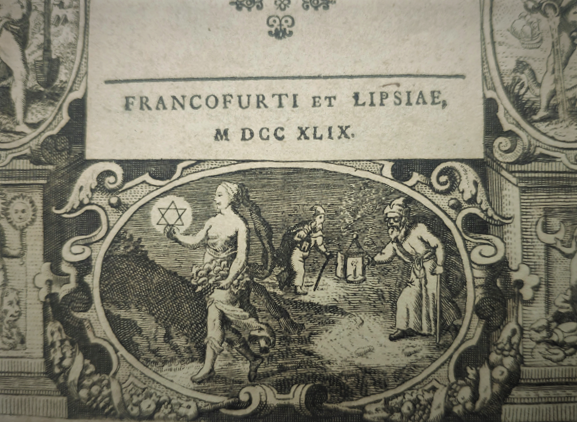
Alchemy borrowed the idea from the classical Greek tradition that masculinity symbolizes wisdom, while femininity symbolizes nature; man is philosophy and woman is the physical world. The illustration below, which appears in an 18th century alchemical text, shows a man holding a lantern as he follows a woman holding a hexagram – wisdom being the key that reveals the secrets of existence.
“The philosopher examining nature” – an illustration appearing in an alchemical text from 1749, the Sidney Edelstein Collection at the National Library of Israel
- Jewish adoption: Though legends tie it to King David’s shield and Bar‑Kochba’s revolt, the star only became a Jewish symbol in 14th‑century Prague, when Jews chose it for their flag. From there, it spread across Europe.
- Debate continues: Scholar Gershom Scholem argued the star was never inherently Jewish, noting its presence in non‑Jewish contexts. Yet its association grew stronger over centuries.
- Modern meaning: Today, emblazoned on Israel’s flag, the Star of David is inseparable from Jewish identity. Its power lies not in origin, but in the meaning people give it.
CREDIT: Sharon Cohen‘s “The Story of the Star of David”
[Sources for this article are courtesy of Chaya Meier Herr, director of the Edelstein Collection for the History of Science, and Dr. Zvi Leshem, director of the Gershom Scholem Collection at the National Library of Israel]
Read also: Moloch
Seal of Solomon
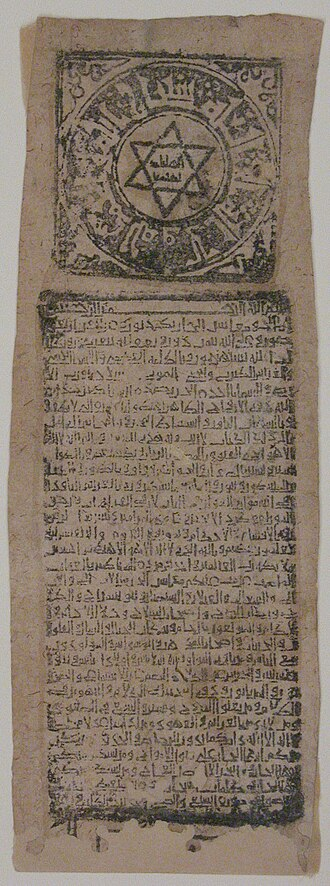
By This file was donated to Wikimedia Commons as part of a project by the Metropolitan Museum of Art. See the Image and Data Resources Open Access Policy, CC0, https://commons.wikimedia.org/w/index.php?curid=60899564
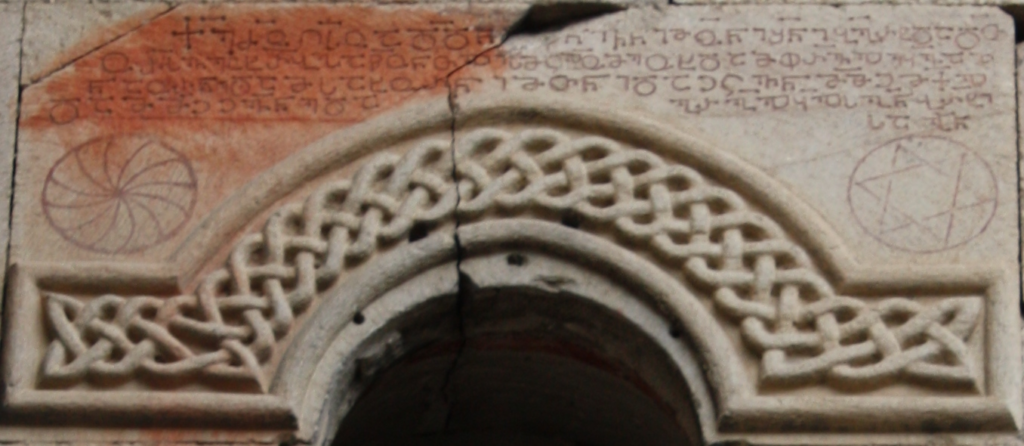
Star of David at the Oshki Monastery, dated CE 973. The monastery is located in Tao, modern-day Turkey.
By This photo was taken by George Mel.Please credit this with : Photo : George Mel in the immediate vicinity of the image.Oshki (Georgian: ოშკი) is a Georgian monastery from the second half of the tenth century located in the historic province of Tao, now in North-eastern Turkey. The main church, dedicated to St John the Baptist, was built between 963 and 973.Bas-reliefs, placed high above the central arch, are given the place of honour on the southern facade, which is the main facade of the church. They stand out from the flat surface. The eagle with an animal in his talons probably symbolises victory, and the whole sculptural composition the triumph of the heavenly forces represented by the archangels Michael and Gabriel. – This work is created by George Mel during expedition to Tao-Klarjeti.