Dr Ko Ko Gyi Abdul Rahman Zafrudin with the help of Chat GPT
Myanmar’s current conflict is often viewed as a purely domestic struggle. In reality, it is also part of a wider regional contest involving neighboring powers, particularly India and China.
To understand India’s likely behavior today, it is useful to examine how New Delhi responded to major security crises in Burma/Myanmar and elsewhere during the past seventy-five years.
India’s Support for the Rangoon Government in the 1950s
Following independence in 1948, the government of Prime Minister U Nu faced perhaps the greatest existential crisis in Burmese history.
Communist insurgents, Karen forces, various ethnic armed organizations, and later Kuomintang incursions challenged the authority of the central government. At times, the government exercised effective control over only limited areas outside major cities.
For India, the survival of an independent and unified Burma was a strategic necessity.
New Delhi feared that state collapse could destabilize its eastern frontier and create opportunities for foreign intervention. Consequently, India provided diplomatic support and practical assistance to the Rangoon government during those difficult years.
The lesson was clear: regardless of ideological differences, India preferred a functioning central government in Burma over fragmentation and prolonged instability.
This principle continues to influence Indian policy today.
The Sri Lankan Precedent
An even more revealing example emerged in Sri Lanka.
The Tamil population of India’s state of Tamil Nadu shared deep linguistic, cultural, and emotional ties with Sri Lankan Tamils. Public sympathy for Tamil grievances was widespread in southern India.
However, when the conflict escalated into an armed separatist struggle led by the LTTE (Tamil Tigers), the Indian central government ultimately prioritized state sovereignty and territorial integrity.
Ironically, India initially became involved with Tamil militant groups during the Cold War era. Yet after the assassination of former Prime Minister Rajiv Gandhi in 1991, Indian policy changed dramatically.
New Delhi thereafter viewed the LTTE as a security threat and eventually provided intelligence, surveillance, and naval cooperation that contributed to the Sri Lankan government’s military victory in 2009.
The key lesson is that India’s federal system allows regional opinions to be expressed, but national security policy remains firmly under the control of the central government.
Even strong public support in Tamil Nadu did not alter New Delhi’s ultimate strategic calculations.
Why Myanmar Matters to India
Myanmar occupies a unique position in Indian strategic thinking.
It serves as:
- India’s land bridge to Southeast Asia.
- A buffer between India and China.
- A gateway to the Bay of Bengal.
- A connection to India’s northeastern states.
The stability of Myanmar directly affects India’s northeastern frontier, where ethnic, cultural, and historical ties cross modern borders.
For this reason, India is unlikely to support the permanent fragmentation of Myanmar, regardless of its views toward the current military government.
The Kaladan Project and Rakhine State
One of India’s most important investments in Myanmar is the Kaladan Multi-Modal Transit Transport Project.
The project aims to connect India’s northeastern states to the Bay of Bengal through Rakhine State and Chin State.
If instability continues in these regions, several consequences may follow:
Potential Risks
- Delays and increased costs.
- Security threats to infrastructure.
- Reduced investor confidence.
- Greater opportunities for competing regional powers.
Potential Opportunities
If a future political settlement emerges, the project could:
- Enhance trade between India and Myanmar.
- Create employment opportunities.
- Improve regional transportation networks.
- Reduce economic isolation in border areas.
China’s Expanding Influence
China also views Myanmar as strategically vital.
Through pipelines, roads, ports, and the China-Myanmar Economic Corridor, Beijing seeks direct access to the Indian Ocean.
Consequently, both India and China desire stability in Myanmar, though they often pursue different approaches and maintain relationships with different actors.
Neither country wants uncontrolled chaos along its borders.
At the same time, neither country wishes to see the other gain overwhelming influence.
Possible Future Scenarios
Scenario 1: Continued Conflict
Pros:
- Resistance groups maintain pressure on the military.
- Local populations retain some autonomy in contested regions.
Cons:
- Humanitarian suffering continues.
- Economic collapse deepens.
- Foreign investment remains limited.
- Infrastructure projects stagnate.
Scenario 2: Military Reconsolidation
Pros:
- Improved security in some regions.
- Infrastructure projects may proceed more quickly.
- Neighboring countries gain a predictable partner.
Cons:
- Political grievances remain unresolved.
- Resistance movements may continue underground.
- International isolation could persist.
Scenario 3: Negotiated Federal Settlement
Pros:
- Long-term stability becomes possible.
- Ethnic aspirations receive constitutional recognition.
- Economic recovery accelerates.
- Foreign investment increases.
- Refugees and displaced persons may return home.
Cons:
- Difficult negotiations.
- Risk of disagreements over power-sharing.
- Potential disputes regarding natural resources and taxation.
Despite these challenges, a negotiated federal arrangement offers the greatest opportunity for durable peace.
The Promise of Regional Connectivity
Should Myanmar eventually achieve peace and stability, the country could become a central economic corridor linking South Asia and Southeast Asia.
Road and rail connections could eventually connect:
India → Myanmar → Thailand → Laos → Cambodia → Vietnam.
Such networks could transform Myanmar from a battlefield into a bridge between some of the world’s fastest-growing economies.
Regional cooperation involving ASEAN members, India, Japan, Australia, the United States, and other partners could support reconstruction, infrastructure development, education, healthcare, and economic modernization.
Conclusion
History suggests that India consistently favors stability, territorial integrity, and functioning governments over fragmentation, whether in Burma during the 1950s or Sri Lanka during the Tamil conflict.
Myanmar’s future, however, will ultimately be decided by Myanmar’s own peoples and political actors.
The greatest challenge is not merely ending the current war, but creating a political system in which all communities feel secure, respected, and represented.
Only then can Myanmar fully realize its enormous potential as a bridge between South Asia and Southeast Asia rather than remaining a battleground between competing interests.
Many political articles focus only on personalities—whether one supports or opposes a particular leader. What caught my attention was that the article indirectly forces us to think about a larger issue:
What does India actually want in Myanmar?
That question is far more important than whether a particular claim about Modi or Min Aung Hlaing is true.
Looking at history, there is a pattern:
- In the 1950s, India supported the survival of the Rangoon government against multiple insurgencies.
- In Sri Lanka, India eventually supported the preservation of Sri Lanka’s territorial integrity despite strong emotional support for Sri Lankan Tamils among many people in Tamil Nadu.
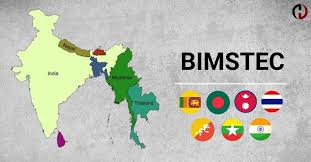
- In Nepal, Bangladesh, Bhutan, and Myanmar, India has generally preferred stable neighboring states rather than fragmentation.
This does not necessarily mean India supports every government. Rather, India tends to support state continuity and strategic stability.
The more interesting question for Myanmar’s future is whether a genuinely federal Myanmar can satisfy both:
- The aspirations of ethnic nationalities.
- The strategic concerns of neighboring countries such as India, China, and Thailand.
Historically, many countries have discovered that these goals are not mutually exclusive.
Examples include:
- India itself.
- Canada.
- Switzerland.
- Germany.
Another point worth considering is that both India and China face similar dilemmas.
India has:
- Nagas,
- Mizos,
- Manipuris,
- Kashmiris.
China has:
- Tibetans,
- Uyghurs,
- Inner Mongolians.
Therefore neither India nor China is naturally enthusiastic about secessionist movements anywhere. Both powers usually prefer autonomy arrangements within existing states rather than the creation of new states.
That is why many analysts believe that the most realistic long-term outcome for Myanmar may be some form of federal arrangement rather than either complete military reconquest or complete fragmentation.
As a student of history, I find another fascinating parallel.
After World War II, Europe was devastated by war, refugees, ethnic conflicts, and economic collapse. Few people imagined that former enemies would eventually cooperate through institutions such as the European Union.
Similarly, if peace eventually comes to Myanmar, one can imagine a future in which highways, railways, ports, and trade corridors connect:
- India,
- Myanmar,
- Thailand,
- Laos,
- Cambodia,
- Vietnam,
turning regions that are now conflict zones into commercial corridors.
That may sound idealistic today, but many historical transformations once seemed impossible until they happened.