By Aung San Oo (Edited and Expanded for MMNN by Ko Ko Gyi with the help of Chat GPT)
Artificial Intelligence (AI) has become one of the most transformative technologies in human history. Like electricity, the internet, and smartphones before it, AI is rapidly changing the way we study, work, communicate, and make decisions.
Recently, Dr. Helmy Haja Mydin warned that companies relying too heavily on AI may unintentionally destroy the traditional pathway through which junior employees develop into experienced professionals. His concern deserves serious attention.
However, the story is more complicated than simply saying AI is replacing human beings.
AI Does Not Necessarily Eliminate Junior Staff
The concern is based largely on the traditional model of career development, where junior employees spend years performing routine tasks before gradually acquiring the experience needed to become senior professionals.
Yet AI also offers an entirely different possibility: instead of replacing junior staff, it can empower them.
1. AI Eliminates Tedious Work
In the past, junior employees spent countless hours searching for information, typing reports, formatting documents, debugging simple code, or performing repetitive administrative tasks.
These activities, although necessary, often required little creativity or critical thinking.
Today, AI can complete many of these repetitive tasks within minutes.
This allows young professionals to spend far more time learning higher-level skills such as critical thinking, strategic planning, creative problem-solving, communication, and decision-making.
Rather than climbing every rung of the ladder one step at a time, AI can help them reach meaningful learning opportunities much earlier.
2. AI Has Become a 24-Hour Mentor
Many junior employees hesitate to ask senior colleagues too many questions because their supervisors are busy.
AI changes this completely.
Students, programmers, engineers, lawyers, writers, researchers, and even doctors now have access to a patient assistant available twenty-four hours a day.
AI can explain concepts repeatedly, review essays, analyse code, simulate interviews, suggest improvements, and answer follow-up questions without becoming tired or impatient.
This dramatically accelerates the learning curve.
Of course, AI should never replace experienced human mentors—but it can become an excellent assistant to both teachers and learners.
3. The Required Skills Are Changing
The greatest misunderstanding is assuming that future professionals only need to accept whatever AI says.
Quite the opposite.
The new generation must learn entirely new competencies:
- Writing effective prompts.
- Asking intelligent questions.
- Evaluating AI-generated answers.
- Fact-checking information.
- Detecting hallucinations and bias.
- Combining AI assistance with independent reasoning.
These are advanced skills that previous generations never needed to master.
The value of future professionals will lie not in memorising facts, but in judging whether AI’s answers are correct.
The Real Problem Is Human Resource Strategy
The real danger is not AI itself.
The danger lies in how organisations choose to use it.
If companies simply dismiss interns and junior employees because AI appears cheaper, they may save money today but create a severe shortage of experienced professionals tomorrow.
A company cannot continuously hire senior experts if nobody is given the opportunity to become one.
The talent pipeline eventually dries up.
On the other hand, if organisations use AI to accelerate training rather than eliminate trainees, the future workforce could become more capable than any previous generation.
AI should be viewed as an amplifier of human potential—not a replacement for human development.
Dr. Helmy’s Warning Should Not Be Ignored
Dr. Helmy’s concern remains valid.
Research from Poland showed that doctors who routinely depended on AI-assisted colonoscopy experienced a measurable decline in their ability to detect abnormalities independently once the AI system was removed.
This illustrates an important principle:
Skills that are never practised gradually deteriorate.
Technology should assist human judgment—not replace it.
Elon Musk’s Vision
Entrepreneur Elon Musk has suggested that if AI and intelligent robots eventually perform nearly all productive work, governments may introduce a form of Universal Basic Income (UBI) so that citizens continue receiving an income even without traditional employment.
Some futurists even imagine a society where people enjoy comfortable lives while machines perform most labour.
Whether such a future becomes reality remains uncertain.
Even if it does, humanity will still need purpose, creativity, ethics, scientific curiosity, compassion, and wisdom—qualities that cannot simply be downloaded into a machine.
My Personal Concerns
While AI offers enormous benefits, I also have several concerns.
Learning by Automation
Today many young people first learn to drive automatic transmission cars.
Quite a number have never learned to operate manual gearboxes.
Automatic cars are easier and more convenient.
However, should circumstances require them to drive a manual vehicle, many would struggle.
This simple example illustrates a wider issue: convenience can gradually weaken fundamental skills.
What If Technology Suddenly Disappears?
Imagine a future where AI manages nearly every aspect of life.
AI tutors educate children.
AI doctors diagnose disease.
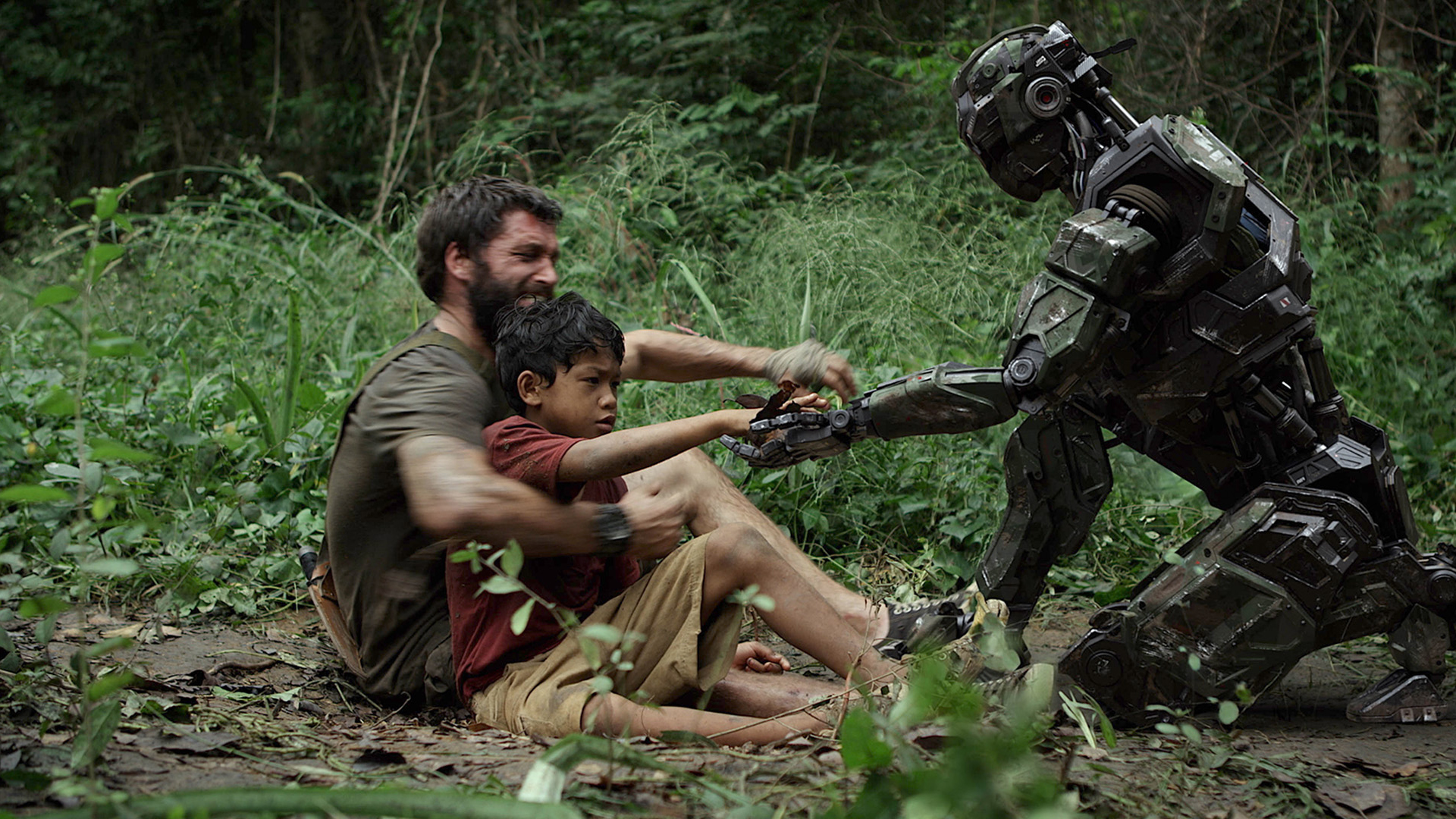
AI robots build houses.
AI neural implants instantly retrieve information.
People no longer need to remember facts or develop practical survival skills because intelligent machines perform almost everything.
Now imagine a catastrophic global event.
A massive cyberattack.
A malicious computer virus.
A worldwide power-grid failure.
A nuclear accident.
Or even a nuclear war.
If computers, cloud storage, communication satellites, AI systems, and intelligent robots suddenly became unavailable, would humanity still possess the knowledge required to survive independently?
Could future generations grow food?
Repair machines?
Build shelters?
Navigate without GPS?
Generate electricity?
Produce clean drinking water?
Start a fire?
Fish?
Hunt?
Or would many people find themselves almost as helpless as our distant Stone Age ancestors, forced to relearn forgotten skills from the beginning?
Perhaps this scenario sounds like science fiction.
Yet history repeatedly reminds us that civilizations can become surprisingly fragile when they depend too heavily on a single technology.
A Balanced Future
The debate should never be framed as “AI versus humans.”
The real question is whether humans will continue developing their own intelligence while using AI as a tool.
If we use AI wisely, it may become one of humanity’s greatest educational partners.
If we become mentally dependent upon it, however, we risk allowing our own abilities to slowly fade.
As with every powerful technology—from fire to electricity to the internet—the outcome depends not on the technology itself, but on the wisdom of those who use it.
The Original Concern
The following commentary inspired this discussion:
The AI Trap: Why Bypassing Junior Staff is a Ticking Time Bomb
In the race for efficiency, companies are increasingly replacing interns and junior graduates with AI. It’s faster, cheaper, and the output is “good enough.” But this short-term win hides a massive long-term crisis: if juniors never do the baseline work, how do they ever learn to become leaders?
A study from Poland showed that doctors who had become accustomed to AI-assisted colonoscopy experienced a decline in their unaided detection rates once AI support was removed. The lesson is clear: when humans stop exercising judgment, those skills gradually weaken.
The solution is not to reject AI but to use it responsibly. Companies should invest in developing junior talent while using AI to accelerate learning rather than replace it.
As one technology executive warned, replacing junior staff with AI may become one of the costliest mistakes organisations ever make because the seniors of tomorrow can only emerge if the juniors of today are given opportunities to grow.
Based on the original commentary by Dr. Helmy Haja Mydin: “The juniors we don’t train today are seniors who’ll fail us tomorrow.”
I would add one final thought from the perspective of history.
Every major technological revolution has sparked fears that human skills would disappear. When the printing press spread, some feared people would stop memorizing knowledge. When calculators became common, many worried arithmetic skills would vanish. When the internet arrived, there were concerns that libraries would become obsolete. In each case, some skills became less central, but new ones emerged. AI is likely to follow the same pattern: it will diminish the importance of certain routine tasks while increasing the value of judgment, ethics, creativity, and interdisciplinary thinking.
For professionals—including physicians —AI should be regarded as a powerful assistant, not an infallible authority. Ultimately, responsibility for decisions, compassion toward patients, and moral accountability remain human responsibilities. Those qualities cannot simply be delegated to a machine.