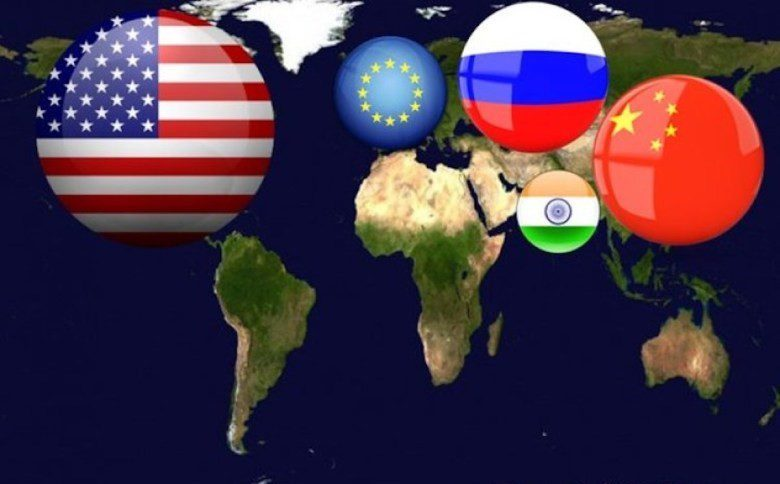
A Multipolar World in Transition (2025–2030)
The overarching shift is already happening. The era of American global primacy was not going to last forever, but its downfall has been accelerated by leaders in Washington. Notably, even senior US officials acknowledge this — Secretary of State Marco Rubio has argued that a unipolar world “was an anomaly, a product of the end of the Cold War,” and that a return to a multipolar world was inevitable.
The highest likelihood outcome for world order in the decade ahead is not a unipolar order or a Cold War-style bipolar competition, but a loose multipolarity.
Trump’s tariffs on NATO allies, the EU, Canada, Australia, and the UK have done serious structural damage to the trust architecture the US built over 80 years. Washington built international institutions — the UN, NATO, the WTO, the IMF, and other bodies — that were designed to lock in American power long after the United States started to decline. Trump’s dismantling of these relationships is effectively handing back that long-term leverage for short-term wins.
Prediction: Europe will accelerate its strategic autonomy. Germany’s military build-up is already underway. The EU is struggling to position itself in the new geopolitical order — it lacks military power and is reliant on other countries for key resources, and will either continue to influence Trump for damage control or push through economic, fiscal, and political reforms. Within 2–3 years, expect a more independent European defence posture, less reliant on American security guarantees.
Trump’s visa bans on Muslim-majority countries and mass deportation campaigns via ICE are destroying America’s most potent — and often underestimated — instrument of influence: soft power. The US built decades of goodwill through education, culture, and openness. That reservoir is draining fast.
Prediction: The US will lose the competition for global talent and diplomacy in the developing world. Countries like Malaysia, the UAE, Canada, the UK, and Australia will absorb displaced students, scholars, and professionals — gaining intellectual capital at America’s expense. Muslim-majority nations (57 OIC countries with 1.8 billion people) will increasingly pivot toward China and Russia for trade, investment, and diplomatic alignment.
The world is currently experiencing a record number of armed conflicts, with researchers observing an increasing internationalization of internal conflicts driven by heightened great-power competition and more assertive foreign-policy stances.
Trump’s unconditional support for Israel’s military campaigns and repeated UNSC vetoes are accelerating a crisis of legitimacy in the rules-based international order. Rather than strengthening international law, multipolarization is moving the world away from an order with standards — even if inconsistently applied — toward an order without any standards at all.
Prediction: The Global South, already skeptical of Western double standards, will further reject US moral authority. The International Criminal Court, the ICJ, and UN mechanisms will gain alternative legitimacy centres — with support from the EU, African Union, and non-aligned nations — even as the US boycotts or undermines them.
The weaponization of the dollar — through sanctions, tariff threats, and financial exclusions — is backfiring. The weaponization of global finance has prompted a surge in local-currency settlements and the development of alternative financial infrastructures. The world is not just geopolitically diversified; it is financially fragmented as well.
BRICS nations are actively pursuing de-dollarization. Countries like India have proposed the idea of de-dollarization by commencing regional trade among BRICS nations in their local currencies, with the fundamental objective of countering what they see as the abrasive and threatening attitude of US President Trump.
Prediction: The dollar will not collapse in 2–3 years — it remains structurally dominant — but its share of global reserves will continue declining from ~58% toward 50%. US inflation and fiscal deficits will erode purchasing power. Countries will increasingly use CNY, INR, and local currency swap arrangements for bilateral trade, especially in energy and commodities.
Since Trump took power, it has become evident that raw power — control over minerals, energy, and food — and military strength are what counts. Multipolarity is one of the most unstable political systems because it assumes a high degree of uncertainty about the intentions of other states, increasing miscalculations, competition, and leading to frequently shifting alliances.
However, it’s crucial to be precise about what the “competing bloc” actually is:
- China is the most consequential rising power — economically, technologically, and militarily. It is filling the vacuum left by US retreat in Africa, Southeast Asia, Latin America, and the Middle East.
- Russia remains a major disruptor, particularly in Europe and the Middle East, but its economy is severely constrained by sanctions and war costs.
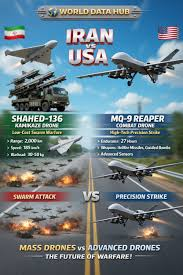
- Iran has survived decades of sanctions and, with Chinese and Russian technological support, has developed asymmetric military capabilities — drones, missiles, and proxy networks — that give it strategic depth.
- BRICS+ (now including Saudi Arabia, UAE, Egypt, Ethiopia, and Iran) represents a formidable economic coalition — collectively surpassing the G7 in purchasing power parity.
No single nation will lead across every issue area. While the US might retain security allies, China might dominate as a trading partner; the EU could shape climate rules; while Global South nations will draw support from a variety of partners depending on issue areas — from the UK, Germany, India, Turkey, South Africa, Brazil, and Saudi Arabia.
The UN is a vast and complex system, not a singular entity. While some institutions, such as the WTO, may be moribund, specialized agencies such as the IMF and UNESCO are still going to matter in managing financial crises and cultural preservation.
Trump’s attacks on UN agencies (UNHCR, WHO, UNRWA, UNESCO) will weaken these bodies’ funding but also galvanize alternative donors — the EU, China, Gulf states — to fill the gap and gain influence. The UNSC will remain gridlocked, but regional bodies (African Union, ASEAN, Arab League) will grow in diplomatic importance.
This is the most underappreciated factor. Countries across Africa, Latin America, and Asia are making it clear: they do not wish to pick sides in a new Cold War. Their reluctance to join sanctions regimes or geopolitical blocs is not rooted in anti-Western sentiment but a rational calculation to maximize agency and extract the best deal from competing great powers.
India is the pivotal swing state — too large to be dominated, too important to be ignored by either Washington or Beijing. It will continue its strategic balancing act, benefiting from both.
The world you’re describing is not a Chinese or Russian “replacement” of America — the US is likely to remain the most powerful nation, especially militarily, financially, and technologically but it is genuinely a “multiplex” world, where no single nation can dictate outcomes, and where the Global South has unprecedented leverage to extract concessions from competing great powers.
The American people’s willingness to accept the burden of international leadership is shifting — polling shows 52% of Americans now say the US should pay less attention to overseas problems and concentrate on issues at home, including 67% of Republicans. This internal retreat, combined with the external pushback from allies and adversaries alike, means the transition is not just inevitable — it is already well underway.
The gravest risk is not a clean power transition, but a disorderly interregnum — a period where the old rules no longer apply but new ones haven’t been established, creating dangerous opportunities for miscalculation, regional wars, and economic shocks. That is the world we are likely entering.