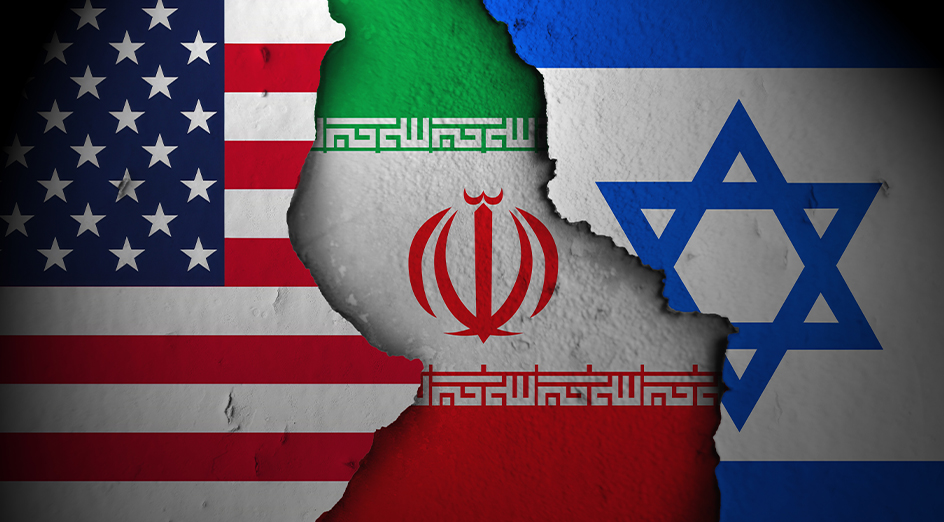
In history, there are ordinary wars—and then there are “do or die” wars, where defeat does not simply mean loss of territory, but the collapse of a nation’s identity, ideology, and future.

Today, the escalating confrontation between Israel, backed by the United States, and Iran increasingly resembles such a decisive struggle.
For Iran, this is not just another geopolitical conflict. It is existential.
If Iran were to lose, the consequences could be profound: the fall of its leadership, the erosion of its Islamic political identity, the loss of control over its vast petroleum resources, and even the risk of fragmentation into smaller states.
For Israel, the stakes are equally grave. A defeat would not merely be military—it could shatter long-held strategic ambitions and raise real fears about the survival of the state itself in a hostile region.
For the United States, the implications go beyond the Middle East. A failure to secure its objectives would damage its global standing as a superpower and embolden a loose but significant alignment of rivals—Iran, Russia, China, and North Korea.
Meanwhile, the Gulf states watch anxiously. Their wealth, security, and even sovereignty could be at risk depending on how this conflict unfolds.
This is why the current war is not just another regional crisis—it carries the unmistakable character of a “do or die” moment for multiple actors.
Lessons from History: When Retreat Is Impossible
History offers us powerful examples of such moments.
In Burmese history, the legendary king Bayinnaung demonstrated this spirit at the Battle of Naungyo. Facing an enemy far superior in number, he crossed the river with his troops—and then ordered the rafts destroyed.
When his officers protested, warning of certain death, he replied in essence:
If we lose, we die here—so who is left to punish us?
With no path of retreat, his army fought with total commitment—and won.
To this day, in Myanmar, people still speak of the “Naungyo spirit”—the courage to fight when there is no turning back.
A similar story echoes in Islamic history.
The Muslim general Tariq ibn Ziyad, who led the conquest of Hispania in 711, is said to have burned his ships after landing at Gibraltar—a name derived from Jabal Tariq (the Mountain of Tariq).
He famously told his soldiers:
“Behind you is the sea, before you the enemy… you have only your courage and your constancy.”
Like Bayinnaung, he removed all possibility of retreat.
The result was a decisive victory that changed the course of history.
A Dangerous Parallel
Such stories are often told to inspire courage—but they also carry a warning.
When leaders believe they are in a “no retreat” situation, conflicts tend to escalate without compromise. Diplomacy weakens. Risks multiply. Miscalculations become more likely—and more dangerous.
The present Middle East crisis increasingly shows these characteristics. Each side perceives the stakes as existential. Each believes that failure is not an option.
History teaches us that such moments can produce extraordinary victories—but also catastrophic consequences.
Final Reflection
The spirit of Naungyo and the resolve of Tariq ibn Ziyad remind us of human courage under extreme pressure. But in today’s interconnected world, a “do or die” war between powerful states is not just about bravery—it is about survival on a much larger scale.
The real question is not who will win.
It is whether humanity can avoid turning yet another conflict into a point of no return.
Reference:
1/ Motivation speech of Muslim General Tariq ibn Ziyad who conquest Spain and Portugal