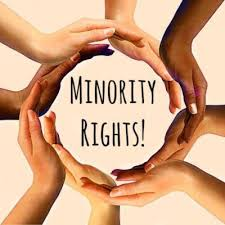
Safeguarding Democracy: A Charter for Majority–Minority Relations
“The measure of a democracy is not in how it empowers its majority, but in how it protects its minorities.”
This is a suggestive model for federal democracies that want to blend international law with social welfare.
This is a short reflection on why majority–minority relations are the true test of democracy.
Introduction The true strength of a democracy is not measured by the will of the majority alone, but by how it treats its minorities. In federal democracies, where diverse ethnic and religious groups coexist under one constitutional umbrella, the challenge is to balance majority rule with minority rights. International law, human rights conventions, and the guiding principles of institutions like the International Court of Justice (ICJ) and International Criminal Court (ICC) offer a framework. But to make democracy meaningful, nations must embed these principles into their own systems — reinforced by social welfare and democratic socialist values.
At the heart of this vision lies equality. Every citizen, regardless of ethnicity or religion, must be guaranteed dignity and protection under the law. Federal structures should ensure that minority groups are not sidelined but actively represented in legislative assemblies, whether through proportional representation or reserved seats. This is not charity; it is justice.
Without strong protections, minorities risk marginalization, and without social nets, democracy risks inequality.
Religious freedom and cultural autonomy must be safeguarded. Minorities should be free to preserve their languages, traditions, and places of worship without interference. Secular neutrality is essential — the state must remain impartial in matters of faith, ensuring that no religion is privileged over another.
Democracy also requires strong social foundations. A welfare system that guarantees healthcare, education, housing, and social security is not a luxury but a necessity. Progressive taxation and redistributive policies can reduce inequality, ensuring that no community is left behind. In this way, democratic socialism complements federal democracy, weaving a safety net that protects the vulnerable and empowers the marginalized.
Conflict resolution mechanisms must be built into the system. Independent ombudsmen, constitutional courts, and avenues for international oversight provide minorities with recourse when domestic remedies fail. Justice should emphasize reconciliation and dialogue, fostering unity rather than division.
Conclusion A federal democracy that embraces international law, protects minority rights, and invests in social welfare is not only more just — it is more resilient. By embedding these principles into a constitutional framework, nations can ensure that majority–minority relations are not a source of conflict but a foundation for harmony. In the end, democracy is not simply about counting votes; it is about guaranteeing that every voice, no matter how small, is heard and valued.
NOTE: “Democracy is not complete until every voice, however small, is heard.”
Democratic socialism and human rights together can create a fairer, more inclusive society.
Dear readers…I hereby cordially invite you to reflect on their own society’s treatment of minorities and whether social welfare is truly inclusive.