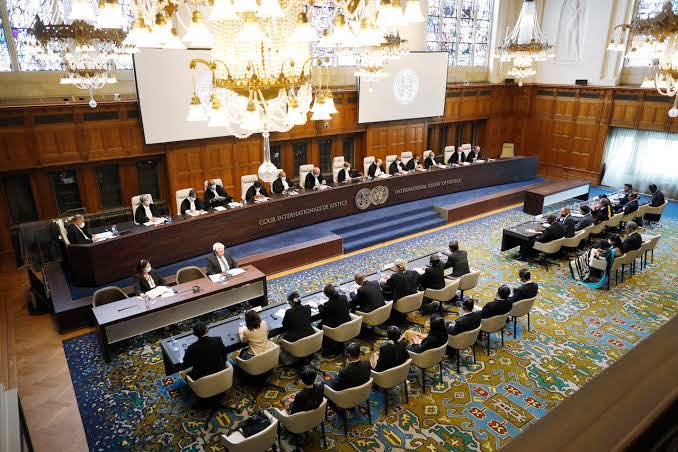
The case brought by The Gambia against Myanmar at the International Court of Justice (ICJ), concerning the prevention of genocide, has become one of the most closely watched international issues worldwide.
If, based on strong and credible evidence, Myanmar were to lose this case, it would not be an ordinary legal defeat. Rather, it could amount to Myanmar being formally and legally ostracized from the international community.
From a legal perspective, the first unavoidable reality is that an ICJ judgment is final and binding, with no right of appeal.
If Myanmar loses, the Court would issue what is known as a Declaratory Judgment, officially stating that Myanmar has violated the Genocide Convention. This declaration by the world’s highest judicial body would carry profound consequences. These would likely include obligations to restore citizenship to victims, ensure their dignified and voluntary return, and provide financial reparations for damages suffered.
Although the ICJ rules only on state responsibility, such a judgment would serve as powerful legal groundwork for individual criminal investigations by the International Criminal Court (ICC). It could strengthen cases against perpetrators and even lead to the issuance of arrest warrants.
The second consequence would be Myanmar’s designation by the international community as a “genocidal state.” This would severely erode diplomatic trust, leading to isolation and pushing the country deeper into a shadow economy.
As Western nations and international institutions expand economic sanctions, Myanmar would increasingly be forced to rely on countries such as China and Russia—states driven primarily by their own strategic and economic interests.
These countries are known to exploit Myanmar’s natural resources at unfairly low prices. Partnering with states that show little regard for international legal norms poses a serious risk: domestic natural resources and the environment could be sacrificed not for national development, but to sustain the short-term survival of an authoritarian elite.
When a country loses this case and faces international isolation, it is ordinary citizens—especially those from lower-income backgrounds—who suffer the most severe consequences. The suspension of international investment, foreign aid, and loans would lead to shrinking job opportunities and runaway inflation, forcing the public to bear an even heavier economic burden.
In particular, if Myanmar falls into economic dependency on countries like China and Russia, domestic resources may be extracted cheaply for foreign profit rather than national benefit, while environmental destruction accelerates. Over time, the national economy could deteriorate beyond recovery. As a result, education, healthcare, and overall social well-being would collapse to the lowest levels, effectively destroying the future of coming generations.
Furthermore, reliance on protection from veto-wielding powers in the UN Security Council would inevitably expand their influence over Myanmar’s sovereignty and decision-making, far beyond previous levels.
The third major point is that if Myanmar refuses to comply with an ICJ ruling, the matter would be referred to the UN Security Council. Under Article 94(2) of the UN Charter, enforcement measures may be discussed. While China and Russia could use their veto power to shield Myanmar, such protection would come at an enormous cost—requiring Myanmar to surrender valuable natural resources and strategic advantages in return.
In conclusion, losing at the ICJ would not only result in diplomatic, economic, and social isolation by the international community. It would also expose Myanmar to economic exploitation by powerful states that disregard international law, while pushing its people into even deeper poverty. In this sense, the ICJ case is a warning bell—signaling grave consequences for the country’s future if the path remains unchanged.
Aung San Oo – MMNN