The Dutch Disease: When Natural Wealth Becomes a Curse
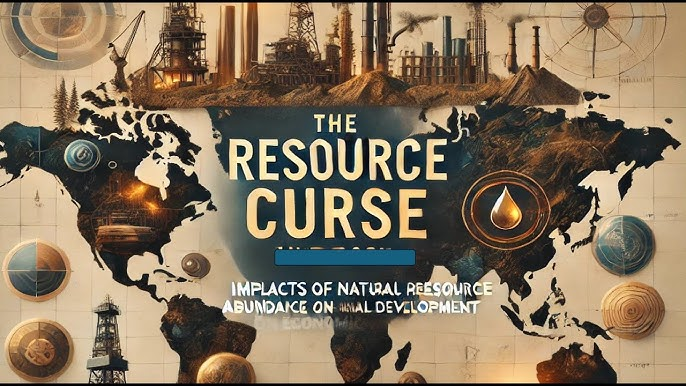
The Parallel Between Nations and Individuals
The resource curse teaches us a lesson that applies far beyond national economies. Just as countries must diversify to avoid dependence on a single resource, individuals who receive sudden wealth—whether through inheritance or winning the lottery—face remarkably similar dangers.
Studies show that approximately 70% of lottery winners go bankrupt within a few years. Why? They fail to diversify their investments, spend extravagantly without building sustainable income streams, and trust the wrong advisors. They suffer from what we might call “personal Dutch Disease”—sudden wealth that destroys their financial discipline and long-term thinking.
The parallel is striking:
- Countries with oil often stop investing in education, manufacturing, and agriculture
- Lottery winners often quit their jobs, abandon their skills, and stop building productive careers
- Resource-rich nations become dependent on commodity price fluctuations they cannot control
- Inheritance recipients who invest everything in a single asset become vulnerable to market crashes
- Petrostates that lack financial discipline spend all their revenues and face crisis when prices fall
- Windfall recipients who lack spending discipline burn through their money and face poverty
The solution is the same at both levels: diversification, discipline, and long-term strategic thinking.
Just as Norway saves oil revenues in a sovereign wealth fund and limits annual spending, wise individuals invest windfall gains across different assets—stocks, bonds, real estate, businesses—and live off the returns rather than the principal.
Just as Saudi Arabia invests oil wealth into tourism, technology, and renewable energy, smart inheritance recipients use their windfall to build skills, start businesses, and create multiple income streams.
The resource curse and the lottery winner’s curse are fundamentally the same phenomenon: sudden wealth without wisdom, discipline, and diversification leads to ruin, whether you’re a nation or an individual.
Countries need to diversify to avoid the resource curse. Individuals need to invest wisely and build diversified income sources when they receive inheritance or hit the jackpot. The principle is universal: wealth is not the same as wisdom, and having resources is meaningless without the discipline to manage them well.
What is “Dutch Disease”?
When people discuss the “resource curse,” they often mention something called “Dutch Disease.” But what exactly is this condition named after the Netherlands?
Dutch Disease describes the relationship between natural resource wealth increasing in one economic sector and the decline of other sectors like manufacturing or agriculture. The term was coined in 1977 by The Economist magazine to describe what happened to the Netherlands after discovering massive natural gas reserves.
The Netherlands’ Story: A Warning From History
In 1959, the Netherlands discovered the large Groningen natural gas field, which at the time was the world’s largest gas find. The country still has approximately 450 billion cubic meters of natural gas remaining – worth roughly $1 trillion at current prices.
However, from 1959 onwards, gas extraction caused increasing numbers of small earthquakes in the region. Citizens protested. The government eventually faced a stark choice: continue extracting this valuable resource, or protect people’s lives and safety.
In 2023, the Netherlands made a decisive choice. Following the principle that “money is not worth more than human lives,” the country completely shut down gas extraction operations.
The Dutch Disease has effectively ended in the Netherlands itself.
How Does Dutch Disease Work?
When a country experiences a resource boom, its currency appreciates (becomes stronger), making other exports more expensive for foreign buyers while imports become cheaper. This destroys the competitiveness of other industries.
The mechanism works through two effects:
The Resource Movement Effect: Labor shifts from traditional sectors to the booming resource sector, causing other industries to contract.
The Spending Effect: Resource revenues increase demand for both tradable and non-tradable goods. While tradable goods can be imported, non-tradable goods become more expensive, appreciating the real exchange rate.
The result? Manufacturing dies, agriculture withers, and the entire economy becomes dangerously dependent on a single commodity.
Venezuela: A Textbook Case of Catastrophe
Venezuela holds the largest proven oil reserves in the world at roughly 303 billion barrels, yet it generated only about $4 billion in oil revenue in 2023 – a fraction of what Saudi Arabia earns.
Oil accounted for more than 90% of Venezuela’s export earnings at its peak, exposing the economy to extreme oil price volatility while discouraging investment in agriculture and manufacturing.
What went wrong? Everything:
- Mismanagement: Hugo Chávez siphoned profits from the state oil company PDVSA to fund socialist programs while neglecting capital-intensive oil infrastructure maintenance.
- Political Control: Chávez fired thousands of oil industry professionals to consolidate political control, devastating technical expertise.
- Underinvestment: Oil output collapsed from over 3 million barrels per day in the late 1990s to well under 1 million barrels per day by the early 2020s due to chronic underinvestment, sanctions, and skilled-labor attrition.
- Economic Collapse: When oil prices fell in the 2010s, Venezuela’s government had no alternatives and spiraled into hyperinflation, food shortages, and humanitarian crisis.
Venezuela became a case study in how petrostates depend more on export income than taxes, creating weak ties between government and citizens.
Countries Fighting Back: Different Strategies
Middle East: Saudi Arabia and UAE
Saudi Arabia’s Vision 2030 is the most ambitious diversification program in the region:
- The non-oil economy now accounts for 52% of GDP, with projections to reach 65% by 2030
- Over $5 trillion committed to more than 5,000 projects, including the futuristic NEOM city
- Saudi Arabia plans to generate 50% of its energy from renewable sources by 2030, with the world’s largest green hydrogen facility
- Massive investments in tourism (targeting 100 million visitors annually by 2030), technology, AI, manufacturing, and financial services
The United Arab Emirates has pursued similar strategies:
- Dubai and Abu Dhabi have become regional hubs for fintech, blockchain, and clean energy startups
- Heavy investment in AI infrastructure, including partnerships with OpenAI for supercomputing
- Strategic positioning as a global financial and trade hub
However, challenges remain. As of 2022, oil still accounts for approximately 40% of Saudi Arabia’s GDP and 75% of fiscal revenue.
Southeast Asia: Malaysia, Indonesia, Brunei
Malaysia and Indonesia have achieved moderate diversification success, developing manufacturing, electronics, palm oil, and tourism sectors alongside resource extraction.
Brunei Darussalam presents a more troubling picture:
- Oil and gas contribute approximately 50.3% of GDP as of mid-2024, with these exports accounting for roughly 80% of government revenue
- Brunei’s proven oil reserves may run out in about 27 years
- Despite decades of diversification efforts since the 1990s, Brunei remains less diversified than other resource-rich economies like the UAE, Indonesia, and Malaysia
Brunei faces unique challenges:
- A small domestic market of only 444,000 people
- Most citizens work in the public sector with attractive wages and conditions, stifling entrepreneurial ambition
- Cultural expectations for secure government jobs over private sector risk-taking
- Limited success in attracting foreign investment compared to regional neighbors
However, Brunei has opportunities in renewable energy, particularly solar power, and in developing downstream petrochemical industries.
Why Is Diversification So Hard?
Several factors make escaping resource dependence extremely difficult:
- Easy Money Syndrome: When oil revenues flow easily, there’s little incentive to develop harder, more complex industries.
- Institutional Weakness: Countries that discover resources before developing strong democratic institutions and rule of law find it much harder to avoid the resource curse.
- Corruption and Rent-Seeking: Resource wealth often leads to political capture, where various groups fight to control resource revenues rather than building productive industries.
- Currency Appreciation: The strong currency that comes with resource wealth makes it nearly impossible for manufacturing and agriculture to compete internationally.
- Volatility: Commodity prices are more volatile than manufactured goods prices, disrupting government planning and debt service.
The Success Stories: Norway’s Model
Norway discovered vast North Sea oil reserves in the 1960s after it had already formed robust democratic institutions, helping it avoid the resource curse.
Norway treated oil as an inheritance rather than income. Petroleum revenues flow into the Government Pension Fund Global, now the world’s largest sovereign wealth fund, while a strict fiscal rule limits government spending to roughly 3% of the fund’s expected return.
Key elements of Norway’s success:
- Strong institutions and rule of law established before oil discovery
- Transparent, commercially-run state oil company (Equinor)
- Sovereign wealth fund to smooth consumption and protect future generations
- Continued investment in traditional industries and education
Solutions and Strategies
There are three basic ways to reduce the threat of Dutch Disease: slowing the appreciation of the real exchange rate, boosting the competitiveness of adversely affected sectors, and demographic adaptation.
Specific strategies include:
Financial Management:
- Establish sovereign wealth funds to save resource revenues abroad
- Bring revenues into the economy slowly to avoid currency appreciation
- Run budget surpluses to reduce capital inflows
Economic Policy:
- Invest heavily in education and infrastructure to boost competitiveness
- Reduce income and profit taxes to encourage private saving
- Protect and support manufacturing and agricultural sectors strategically
Diversification:
- Actively develop alternative energy sources (solar, wind, nuclear)
- Build tourism, technology, and financial services sectors
- Develop processing industries (turning raw resources into refined products)
- Encourage trade and reduce dependency on any single export
Institutional Reform:
- Build transparent, accountable governance structures
- Combat corruption and rent-seeking behavior
- Develop professional civil service and independent regulatory bodies
- Protect property rights and enforce contracts
The Bottom Line
The paradox of plenty is real. The idea that resources might be more of an economic curse than a blessing was first noted as early as 1711, when The Spectator observed that “in countries of the greatest plenty there is the poorest living”.
Natural resource wealth can be either a blessing or a curse. The difference depends entirely on governance, institutions, and strategic policy choices.
Countries like Norway and, increasingly, Saudi Arabia and the UAE show that escaping resource dependence is possible – but it requires:
- Political will and long-term strategic thinking
- Strong institutions established before or alongside resource exploitation
- Transparent management of resource revenues
- Massive investment in alternative sectors
- Patience and persistence over decades
For countries like Venezuela, the lesson is tragic: even the world’s largest oil reserves cannot guarantee prosperity. Without good governance and economic diversification, resource wealth becomes a curse that impoverishes rather than enriches.
The Netherlands itself learned this lesson and chose life over money. That choice – to completely shut down gas extraction to protect citizens from earthquakes – represents the ultimate acknowledgment that the Dutch Disease, at its core, is about choosing what kind of future a nation wants to build.
The real question isn’t whether a country has resources. It’s whether a country has the wisdom, institutions, and political will to manage them properly.