A Clarifying Note for Honest Discussion
Editorial Introduction
Discussions about religion and modern constitutional law often become emotionally charged, especially when Muslims—understandably seeking dignity and recognition—attempt to link Islamic principles directly to Western legal systems. While Islam indeed contains profound concepts of justice, accountability, and human dignity, historical accuracy requires us to distinguish between shared values and direct influence.
This short article aims to clarify that distinction with respect, restraint, and factual integrity.
Edited analytical response prepared with the assistance of ChatGPT (OpenAI), reviewed and endorsed by the author.
The United States Constitution: What Shaped It?
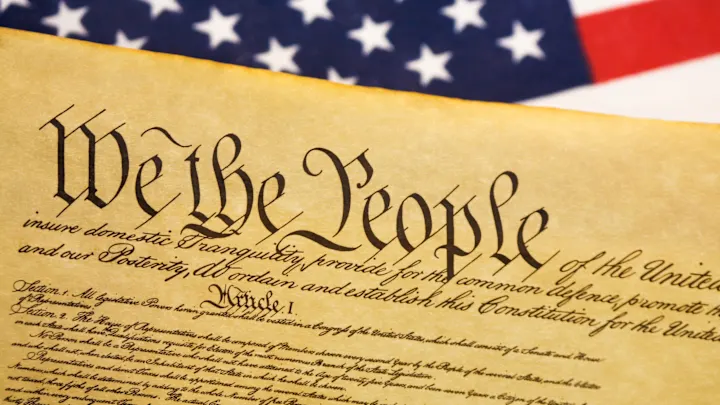
The United States Constitution (1787) was not based on any religious legal system, whether Islamic, Christian, or Jewish. Its framers deliberately constructed a secular governing framework, shaped primarily by three intellectual traditions:
- The Enlightenment
Thinkers such as John Locke and Montesquieu emphasized natural rights, consent of the governed, separation of powers, and freedom of conscience. This was the dominant influence. - English Common Law
Inherited legal practices from England—historically developed in a Christian society—contributed procedural ideas such as due process and rule of law, but not church doctrine. - Classical Greek and Roman Political Thought
Concepts of republicanism, civic virtue, and checks on authority came from pre-Christian antiquity.
Importantly, the U.S. Constitution:
- Mentions no God in its original text
- Prohibits religious tests for public office (Article VI)
- Forbids establishment of any religion (First Amendment)
These features clearly show that the framers intentionally separated religion from state power, largely due to Europe’s long history of religious conflict.
Magna Carta (1215): A Different Context
The Magna Carta, by contrast, emerged in medieval Christian England. It was negotiated between King John, the English barons, and the Catholic Church, and it explicitly invoked God.
Its purpose was not theological but political:
to limit royal authority and affirm that even the king was subject to law.
While Christian in context, Magna Carta’s enduring contribution lies in its legal principle—the restraint of absolute power—not in religious doctrine.
Islam and Shared Principles of Justice
Islamic law (Sharia) contains ethical principles that resonate strongly with universal ideas of justice, including:
- Rule of law and accountability of rulers
- Protection of life, property, and dignity
- Due process and fairness in judgment
- Consultation (shura) in governance
These principles overlap with those found in Magna Carta and modern constitutions. However, overlap does not mean origin. There is no historical evidence that Islamic law directly influenced the drafting of Western constitutional documents.
The similarities arise because different civilizations, facing similar human problems, often arrive at comparable moral solutions.
A Gentle Corrective Note to Fellow Muslims
It is understandable—and human—for some Muslims to wish to claim that modern Western legal systems were inspired by Islam. However, such claims, when unsupported by evidence, unintentionally weaken Muslim credibility.
Islam does not need exaggerated historical ownership to assert its moral strength. A more accurate and dignified position is this:
Islam affirms justice wherever it appears.
Where modern laws uphold justice, Islam recognizes their value—
without needing to claim authorship.
Truthfulness itself is an Islamic virtue.
Conclusion
- Magna Carta arose from a medieval Christian political context
- The U.S. Constitution emerged from Enlightenment secular philosophy
- Islamic principles of justice share universal ethical ground with both
- Similarity does not imply derivation
Recognizing this does not diminish Islam. On the contrary, it reflects intellectual honesty, moral confidence, and respect for history.