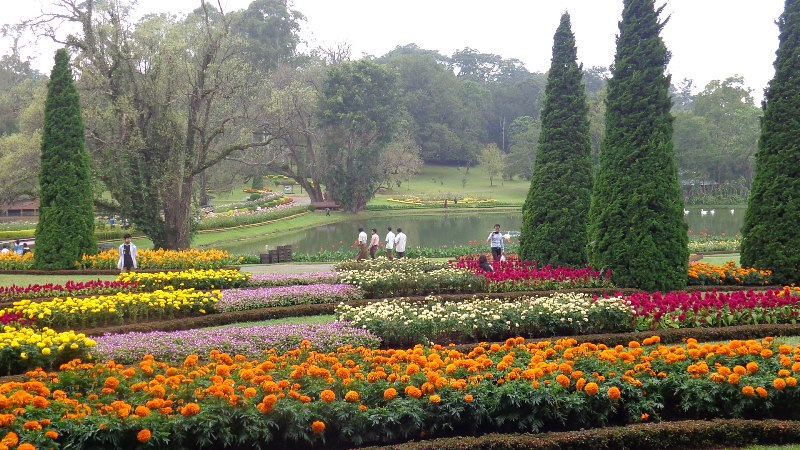
Let all the different flowers blossom in Myanmar’s garden.
Only then can the nation heal, and only then can a true union be rebuilt.
Ethnic minorities and religious minorities are communities numerically smaller than the majority population, distinguished by their unique cultural, linguistic, ethnic, or religious identities. In many societies, these identities overlap. While diversity enriches a nation, minorities often face discrimination, marginalization, and systematic exclusion, especially when political power is monopolized by a dominant group.
Understanding Minority Groups
A minority group is generally defined as a population segment that:
- Is numerically inferior to the rest of the population,
- Possesses distinct ethnic, religious, linguistic, or cultural characteristics,
- Demonstrates a sense of solidarity to preserve these identities,
- And typically lacks political or social power relative to the majority.
An ethnic minority is identified by shared ancestry, culture, language, or physical traits.
A religious minority is defined by beliefs and practices differing from those of the majority population.
In many countries—including Myanmar—these two categories frequently intersect, compounding vulnerability.
Muslims of Myanmar: A Historical Perspective
1. Before the Military Era: No “135 Ethnic Groups”
Contrary to popular belief, there was no such thing as an official list of “135 ethnic groups” in pre-independence Burma or in the early post-independence period.
2. British Colonial Records: Languages, Not “Races”
British colonial censuses documented languages spoken, not “national races” or rigid ethnic categories:
- The 1911 Census recorded 65 languages, both indigenous and foreign.
- The 1931 Census expanded this to 135 languages, including Chinese, Indian, and other migrant languages.
These figures were never intended to represent 135 ethnic groups.
3. Post-Independence Governments: No Fixed Ethnic List
From independence in 1948 through:
- The AFPFL governments,
- The early BSPP period,
- And the initial years of General Ne Win’s rule,
there was no official state-endorsed list of ethnic groups.
4. The First Official List: 144 Ethnic Groups (1972)
The first formal ethnic classification appeared on 9 December 1972, issued by the Ministry of Home and Religious Affairs.
This list officially recognized 144 ethnic groups, including several Muslim communities acknowledged as indigenous peoples of Myanmar, such as:
- Bamar Muslims (Pathi)
- Rohingya
- Mye Du / Myedu
- Pashu / Malay
- Panthay (Chinese Muslims)
These groups were explicitly included as legitimate ethnic nationalities.
5. From 144 to 135: Political Engineering, Not Anthropology
During the later BSPP period and especially under SLORC, this inclusive list was politically altered:
- Many Muslim ethnic groups were removed.
- Meanwhile, some communities previously classified as Chinese or Indian (Kalar)—such as Kokang and Daingnet—were reintroduced under new ethnic labels.
On 5 July 1989, under martial law, Vice-Senior General Saw Maung proclaimed the now-famous “135 ethnic groups” in a three-hour speech.
This list was not the product of anthropology, history, or consensus, but of authoritarian decree.
It would be more accurate to call it “the Martial Law 135.”
From Panglong’s Dream to a National Nightmare
On 12 February 1947, the ethnic groups of Burma signed the Panglong Agreement, envisioning a voluntary Union based on equality and mutual respect.
Nearly 80 years later, that dream has deteriorated into a tragic reality:
- Ethnic minorities remain denied genuine self-determination.
- Religious minorities and mixed-heritage citizens face systemic discrimination.
- Many communities live as internal exiles—or refugees beyond Myanmar’s borders.
The chains of segregation and the manacles of exclusion still cripple the lives of countless citizens, under successive military regimes and even today.
Our Demand
We therefore call for:
1. A Democratic Federal Union of Myanmar
A union that guarantees equal rights for all citizens, regardless of ethnicity, religion, or ancestry.
2. Restoration of Historical Recognition
The reinstatement of Muslims of Myanmar as ethnic minorities, based on the original 1972 list of 144 ethnic groups, including:
- Bamar Muslims (Pathi)
- Rohingya
- Mye Du / Myedu
- Pashu / Malay
- Panthay (Chinese Muslims)
These communities were—and are—part of Myanmar’s indigenous fabric.
Let All Flowers Bloom
William Shakespeare wrote:
“A rose by any other name would smell as sweet.”
Yet in Myanmar, names—and labels—have been used to dehumanize.
General Ne Win once referred to mixed-heritage people with the derogatory phrase “grass growing between bricks” (အုတ်ကြားမြက်ပေါက်).
Even if we are called grass instead of flowers—so what?
Grass survives. Grass endures. Grass grows even in the harshest ground.
Myanmar literature itself reminds us of this truth:
- In Zaw Gyi’s poem, the humble Beda flower survives against nature’s cruelty.
- In Min Thu Wun’s poetry, the modest kha-yae flower is rejected for an expensive rose—yet its worth remains unchanged.
- The hibiscus, once looked down upon in Myanmar, is honored as a national flower in Malaysia and Korea.
Value is not decided by prejudice.
A Final Appeal
I respectfully appeal to:
- The Myanmar junta,
- Opposition leaders of the Spring Revolution,
- And all the people of Myanmar,
Let all the different flowers blossom in Myanmar’s garden.
Only then can the nation heal, and only then can a true union be rebuilt.