A record of long-circulating community rumours (not established history)
The following accounts represent undocumented oral stories, rumours, and community beliefs preserved among Burmese Muslims for generations.
They are not supported by official historical records, but are shared here respectfully as part of cultural memory.
1. Oral Tale of the Last Rakhine King (King Maha Thammada Raza, 1785)
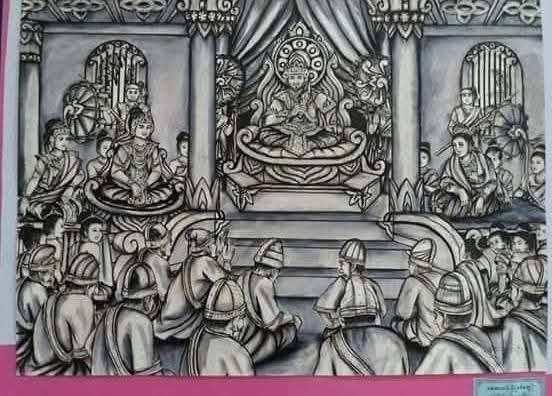
When the Rakhine capital Mrauk-U fell to the Konbaung Dynasty in 1785, the last king, Maha Thammada Raza, was taken to Amarapura along with the kingdom’s sacred regalia, including the Maha Muni Image.
Among Burmese Muslim oral traditions, there is a belief that:
- The king lived his final days among Muslim soldiers who had served the Rakhine monarchy.
- These soldiers looked after him during his captivity.
- According to these oral tales, the king embraced Islam privately before his death.
- It is further believed he was buried within the Shwe Phone Shein Mosque compound, protected by the local Muslim community.
There are no official historical documents confirming this, but the story remains part of long-standing Muslim oral tradition in Amarapura and Mrauk-U.
2. Bodawpaya and the Four Myedu Imams
(Documented event + later Muslim oral traditions)
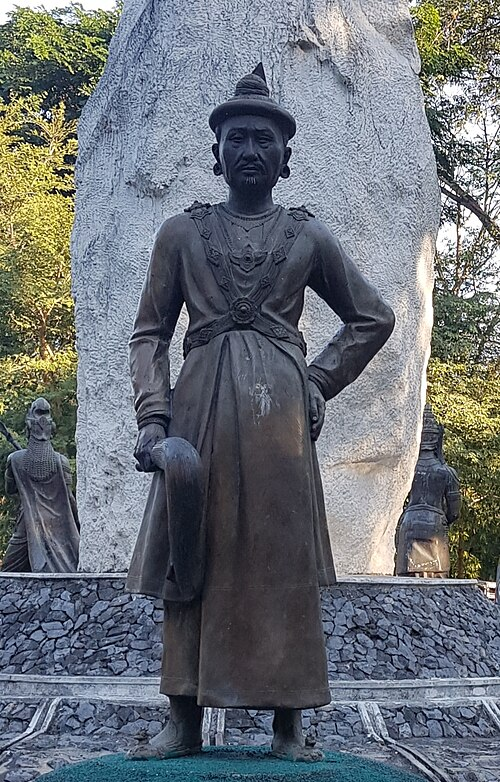
By Kantabon – Own work, CC BY-SA 4.0, https://commons.wikimedia.org/w/index.php?curid=113248114
Documented in scholarship:
According to Moshe Yegar’s The Muslims of Burma: A Study of a Minority, four Muslim Imams from Myedu were executed during King Bodawpaya’s reign because they refused to eat pork.
This episode appears in several works on Muslim history in Burma.
The Shrine of the Four Martyr Saints of Shwebo
Later Muslim narratives:
Over time, Burmese Muslim community accounts added that Bodawpaya regretted the incident, “apologised,” and later recognised the four Imams as saints and even donated four Masjids.
This second part belongs to community tradition, not official history.
Bodawpaya’s relationship with U Nu (Mohamad Kassim)
U Nu, known as Saya Gyi U Nu (1762–1822), was Bodawpaya’s classmate at Nan Oo Phonegyi Kyaung.
A brilliant scholar, fluent in Pali, Hindi, Persian, Urdu, Arabic, and Dekkani, he was appointed:
- Royal Customs Officer
- Royal Purchasing Officer
- Mayor of Ramree (Yammar Wati)
- Holder of the title Shwe Taung Thargathu (“Hero of the Ocean”)
After the Imam incident, Bodawpaya reportedly asked U Nu to explain Islamic teachings. U Nu then produced the earliest known Burmese-language Islamic works, including:
- Islamic Book in Eleven Chapters
- Islamic Book in Three Chapters
- Saerajay Sharaei (35 chapters; reprinted in 1929)
- Guardian of the Burmese-Muslim Race (1931)
- Seven Disciplines in Verse
- Travel Diary of the Bengal Trip — considered the first travel diary in Burmese literature
His Bengal diary later helped guide Bodawpaya during the 1784 annexation of Rakhine, and he strengthened ties with Manipur as well.
The Rumour of Bodawpaya’s Secret Conversion
Among Burmese Muslims, an undocumented oral rumour persists that:
- Bodawpaya became deeply interested in Islam.
- He secretly converted late in life.
- A palace faction reacted by confining him, declaring he was “ill” or “mentally unstable.”
- He was kept incommunicado until his death.
Circumstantial rumour:
Some Muslims cite the abandonment of the gigantic Mingun Pagoda as indirect evidence.
A prophecy warned that if the pagoda was completed, the Moksòe dynasty would fall, so construction stopped.
In Muslim oral versions, political tension surrounding the king’s religious leanings contributed to this halt.
Official history records none of these claims. They remain oral community rumours.
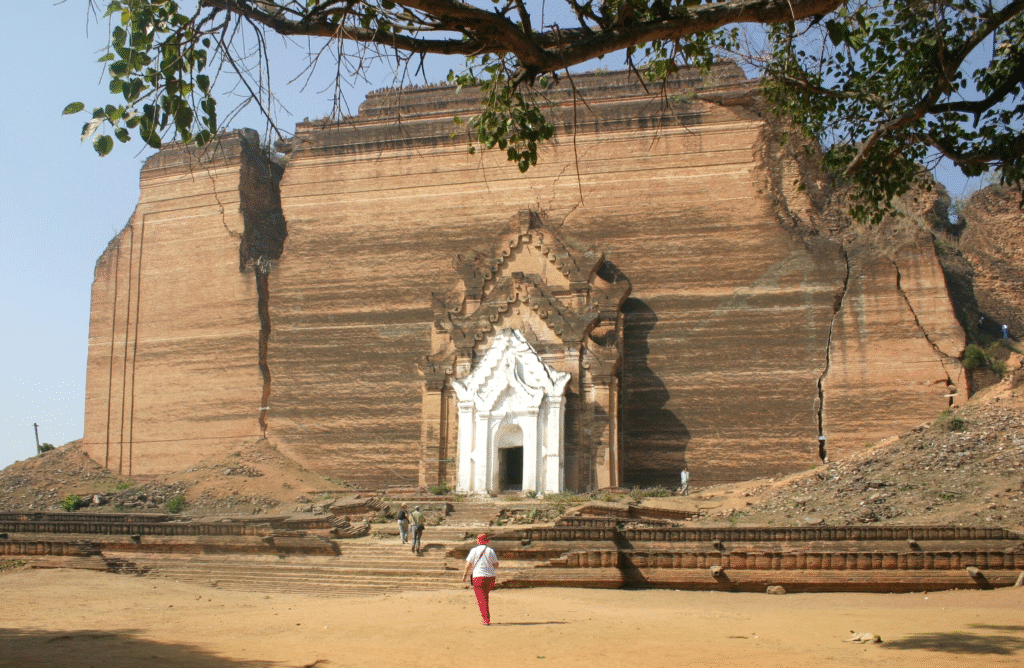
By Gerd Eichmann – Own work, CC BY-SA 3.0, https://commons.wikimedia.org/w/index.php?curid=9005553
3. King Mindon (1808–1878): Tolerance, Muslim Guards, and Oral Rumours
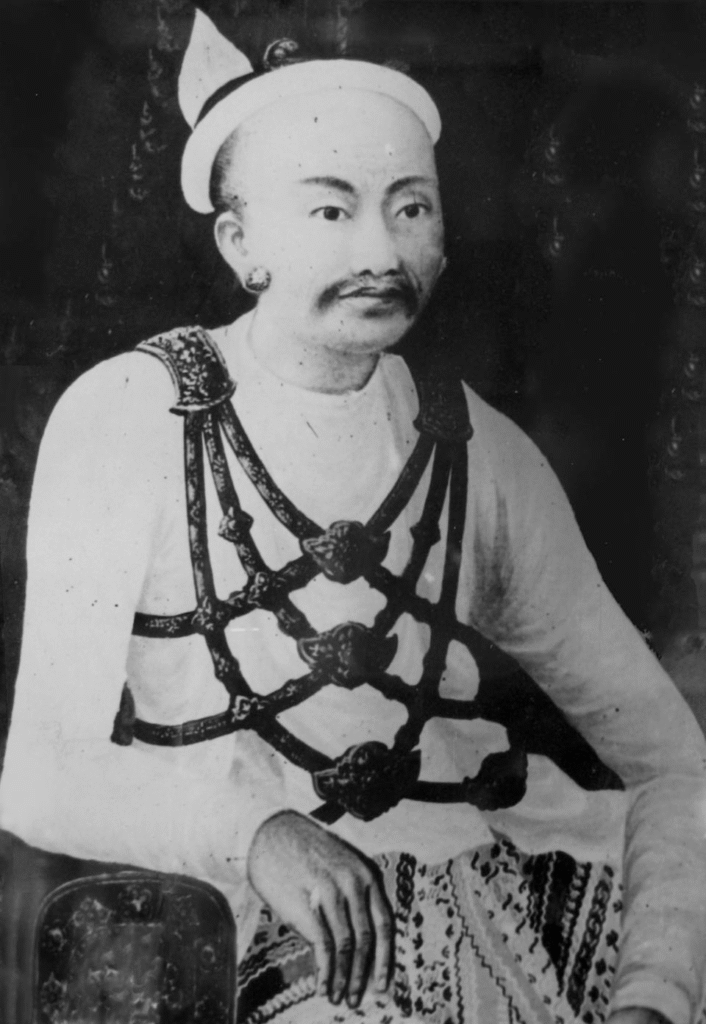
By en user Wagaung, CC BY-SA 3.0, https://commons.wikimedia.org/w/index.php?curid=12063796
Historically, King Mindon is well-known for:
- His deep Buddhist devotion
- Convening the Fifth Buddhist Council (1871)
- Patronage of scholar-monks and missionary schools
- Support for religious minorities
- Protecting Muslims, Christians, and others in Mandalay
Documented Muslim Presence Under Mindon
Muslims in the Konbaung court served as:
- Artillerymen, cavalry, bodyguards
- Palace eunuchs
- Interpreters, advisers
- Port officers and administrators
Mindon granted twelve Muslim residential quarters in Mandalay and permitted the construction of mosques inside and outside the palace, including the Shwe Panneik Mosque.
He even donated to build a rest house in Mecca for Burmese Muslims performing Hajj.
These actions are part of well-documented history.
Muslim Oral Story: The Queen Saved by Two Muslim Bodyguards
Among Burmese Muslims, an oral account claims:
- During the 1866 coup attempt by Princes Myingun and Myingundaing,
- Two Muslim royal guards carried the queen to safety,
- Fighting off attackers with long knives,
- Which left Mindon deeply grateful and convinced of their loyalty.
This story is not recorded in official chronicles, but widely repeated in Muslim oral history.
Rumour of King Mindon’s Secret Conversion
Another long-standing Muslim oral belief holds that:
- King Mindon secretly embraced Islam late in life.
- Powerful palace factions—especially Queen Shinbyumashin—feared losing influence.
- A palace coup followed, with Mindon kept isolated until his death.
- Official chronicles attribute the coup to Shinbyumashin’s desire to install her son-in-law Thibaw and the massacre of 80 royal relatives.
- Muslim oral memory adds that Mindon’s “change of faith” may also have been a factor.
Official historians do not confirm this claim.
It remains an undocumented oral rumour, preserved mainly within Muslim communities of Mandalay and Amarapura.
Conclusion
These narratives form part of the oral and cultural memory of Burmese Muslims, who lived closely with the Konbaung dynasty and preserved stories passed down for generations.
They should be understood as:
- History:
Documented events (e.g., Myedu Imams, Muslim military service, Mindon’s policies, mosque-building). - Oral Tradition:
Community beliefs, rumours, and interpretations about kings secretly converting to Islam or forming exceptional bonds with Muslim subjects.
Recording these stories helps preserve a valuable layer of minority memory—while clearly distinguishing between verifiable history and community oral heritage.