From Saviors to Rulers: How Nations Can Prevent Military Coups
By Dr. Ko Ko Gyi @ Abdul Rahman Zafrudin
Introduction: A Repeating Tragedy
In the decades following decolonization, many nations across Asia, Africa, and Latin America fell into a recurring cycle: civilian governments weakened, militaries intervened “to save the nation,” and those saviors gradually became rulers.
Countries such as Myanmar, Pakistan, Nigeria, and Thailand experienced repeated military takeovers.
Myanmar’s history is especially instructive—not only because of the coups themselves, but because of the early warning signs that were visible yet unaddressed.
Myanmar’s Reality: Warning Signs Ignored
Myanmar’s post-independence history reflects this allegory with striking clarity.
Under Prime Minister U Nu, the civilian government faced internal divisions and external pressures. At the same time, General Ne Win was rising in influence within the armed forces.
Elders and contemporaries have long recalled a number of troubling incidents and widely discussed accounts that, in hindsight, signaled a dangerous erosion of discipline:
- Reports of personal misconduct and disregard for accepted norms among senior military leadership
- Accounts of military officers entering the Prime Minister’s office while armed and behaving in a manner seen as openly defiant of civilian authority
- Increasing willingness of military figures to issue ultimatums, suggesting that the armed forces might withdraw support from the civilian government
Whether viewed as anecdotal or symbolic, such incidents reflected a deeper reality:
the gradual normalization of military arrogance and political ambition.
In Burma, U Nu made a mistake not to remove General Ne Win
(1) when he brought in a foreign prostitute and kept on an island in Inya lake,
(2) when Ne Win while still married to Daw Tin Tin, married Dr Toke Gyi’s wife Daw Khin May Than.
(3) When Ne Win assistances ?Colonel Maung Maung and another one entered PM U Nu’s office without surrending their pistols to the guard, threw the pistol on the U Nu’s table and given ultimatum that, “their soldiers were not willing to sacrifice guarding the corrupt ministers anymore”.
(4) Allow or agreed to appoint General Ne Win as care taker PM in ?1957 after the ruling Pha Sa Pa La divided into two, and to prevent the Ethnic Minorities’ demand for complete autonomy or secession according to Burma’s 1947 constitution ( as agreed in Panlong) previously included a right to secession, though this was rarely exercised peacefully and often led to long-term conflict.
That was a decisive turning point came in 1958, when U Nu—amid political fragmentation—invited General Ne Win to serve as caretaker Prime Minister. This move, intended as a temporary solution, legitimized military involvement in governance.
It ultimately paved the way for the 1962 Burmese coup d’état, ending democratic rule and ushering in decades of military dominance.
Global Lessons: How Coups Can Be Prevented
History offers clear, practical lessons.
1. Enforce Civilian Supremacy Early
Civilian leaders must act decisively at the first signs of insubordination.
In the United States, President Barack Obama dismissed General Stanley McChrystal for remarks seen as disrespectful to civilian authority.
The message was clear:
no military leader is above elected government.
2. Never Normalize Military Entry into Politics
Temporary military roles often become permanent.
Myanmar’s caretaker government in 1958 is a classic example. Similar patterns occurred in Pakistan and Thailand.
Lesson:
Once the military enters politics, it rarely leaves voluntarily.
3. Separate the Instruments of Force
Stable systems divide power:
- Military for external defense
- Police for internal security
In the United States, even local law enforcement structures—such as elected sheriffs—operate independently of the military.
Lesson:
No single institution should control all armed power.
4. Build an Apolitical Military Culture
Professional militaries must see themselves as defenders of the constitution—not arbiters of politics.
Countries like India have maintained this principle despite internal challenges.
5. Maintain Civilian Unity and Competence
Political fragmentation invites intervention.
The split within AFPFL weakened U Nu’s authority and created an opening for military influence.
6. Recognize Early Warning Signs
Coups do not begin on the day tanks roll into the capital. They begin with:
- tolerated indiscipline
- unchecked ambition
- silence in the face of warning signs
Myanmar’s tragedy was not sudden—it was gradual and preventable.
A Warning for the Future: The Risk After Revolution
Today, as Myanmar continues its संघर्ष for democracy, a new danger emerges.
Even resistance movements—armed or political—may one day gain power. History warns that today’s revolutionaries can become tomorrow’s rulers—and, if unchecked, tomorrow’s oppressors.
The folk tale remains relevant:
Victory is not the end of the struggle.
The real test begins after power is achieved.
Conclusion: Breaking the Cycle
To prevent future coups, nations must do more than remove dictators. They must:
- enforce civilian supremacy from the beginning
- reject military involvement in governance
- build strong institutions and political unity
- cultivate a culture of accountability
Above all, leaders must possess the wisdom of the village youth:
to look into the mirror of power—and recognize the first signs of transformation.
Only then can the cycle of saviors turning into monsters finally be broken.
A Folk Lesson: The Metamorphosis of Saviors into Monsters
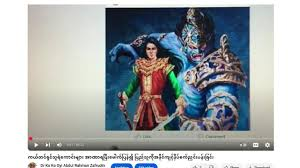
Many years ago, a Burmese cultural opera told a simple but profound story.
A village terrorized by beasts prayed for rescue. A noble prince came, defeated the beast, and was rewarded with power—but soon disappeared. In his place, a new monster emerged.
Again and again, warriors arrived, saved the people, accepted rewards—and later vanished, only for new monsters to arise.
Finally, a wise youth defeated the monster. But unlike the others, he remained vigilant. When tempted by wealth, pleasure, and power, he recognized the transformation beginning within himself. With discipline and awareness, he resisted—and broke the cycle.
The lesson was timeless:
Power, if unchecked, transforms saviors into oppressors.
Read the whole story here @
Myanmar Folk Tale: Metamorphosis of Saviors into Monsters
As SHWE BA in Burma Digest
Once upon a time, long long time ago, there was a village in a far away remote area of Burma called, let’s say, Shwe Bama village. Because of the constant disturbances of the wild beast, the villagers were wishing, praying and waiting for a hero to fight and kill the beast and to liberate them.
One day a prince came to the village and offered his self-less humanitarian voluntary service for the liberation of the village. The prince fought and successfully killed the beast, so the villagers thanked him and offered all the rewards including the right to rule their village. But later the kindhearted, handsome and noble prince surprisingly disappeared from the village. Worse of all, there also suddenly appeared a new ogre (giant) in the forest near the village. So the villagers were very sad and just prayed and wished for another warrior to help them.
Luck is on their side! One strong and brave warrior with a spear suddenly arrived at their village, offered his help, killed the ogre but he also disappeared again later. Unluckily another ogre, holding a spear, appeared in the forest and disturbed the villagers almost at the same time.
The story repeats it self like the wheel of the history and the show goes on with the arrivals and disappearances of warriors with one sword followed by two swords and appearances of new corresponding ogres. More than enough rewards and power followed their victories but they did not understand why those heroes disappeared later and similar new monsters appeared. At last the villagers suspected that some thing might be wrong with those saviors and possibility of transforming into monsters and start terrorizing the villagers they had saved.
At last the leader of village youths organized the youths and killed the two-sword monster. The head of the youth was wise enough to ask his fiancée to watch him closely and to remind him in time to avoid the fate of previous heroes.
During the victory dinner, the youth suddenly disappeared again. That was noticed immediately by his lover and she tried to search for him. Actually the youth had just entered the nearby cage out of curiosity, because of the attraction by a nice music and golden glow coming out from it. He failed to notice the time because he was enjoying the wealth, delicious foods and drinks, beautiful young girls and the new found power in the cave. But because of his strong will power, attention, self-discipline and self-consciousness he managed to look into the mirror. To his surprise and horror he noticed some changes in his face, like an ogre. Coincidentally, his fiancée also appeared at the entrance of the cave and was calling out his name. He suddenly realized that the wealth and power that accompanied the success was corrupting him and slowly changing him into a monster.
The two lovers managed to resist the temptation of power, destroyed the cave and its contents, and returned to their village. Then only all of them knew the secret of how their heroes were changed into the monsters by the ‘Power that corrupts’.
No wonder the power corrupts, and absolute power corrupts absolutely. Just look at the cruel King Thi Baw’s replacement by the exploitations of the empire. After the revolution our allied Japanese changed into Fascists. There are some reports of BIA soldiers’ extreme cruel actions on some of the villages. Freedom fighter AFPFL also changed and corrupted and divided into two parties. BIA had to be replaced with BDA and later transformed into the present Myanmar Tatmadaw but its leaders, Ne Win, Saw Maung and Than Shwe are all corrupt and transformed into biggest monsters and are still terrorizing the country.
We all are waiting for NLD and all the opposition parties to liberate our Shwe Bama but hope and pray that they would be able to control themselves, like the wise village youth leader, from corruption and prevent changing into a monster.
(The above was a very popular story played by the Burmese Government Cultural Opera in 70’s, but once the authorities realized that the opera carried a very good lesson they ordered to drop the curtain on it.)
SHWE BA