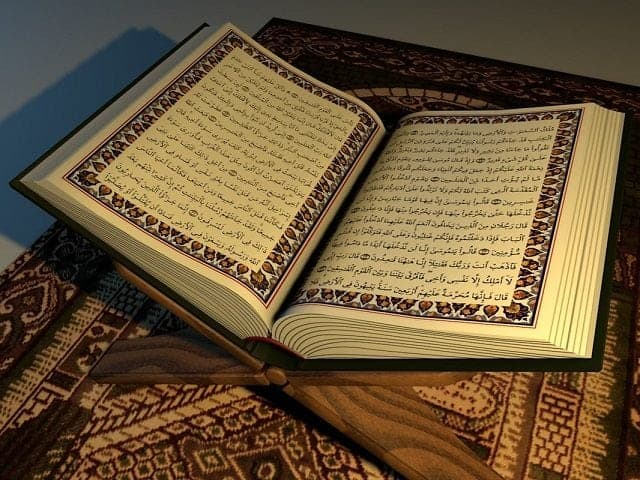
The statement you hear often:
“Qur’an translations can never replace the Arabic recitation.”
Many people repeat it, but few explain why. Let me do that now.
1️⃣ First, an important clarification (very important)
Translations are NOT wrong.
They are:
- helpful
- necessary for understanding
- a mercy for non-Arab Muslims
You are rewarded for reading translations to understand Allah’s message.
What translations cannot do is replace the Qur’an itself in certain roles.
So the issue is not “wrong vs right”, but “purpose vs limitation.”
2️⃣ What exactly is the Qur’an in Islam?
In Islam, the Qur’an is defined as:
The literal word of Allah, revealed in Arabic, recited as worship.
This definition matters.
Once the Arabic words change, even if the meaning is correct:
- it becomes tafsir (explanation)
- not Qur’an
3️⃣ Example 1: A simple human analogy
Imagine your mother spoke to you in Burmese when you were young.
Now someone translates her words into English and says:
“This is exactly what your mother said.”
You may understand the meaning, but:
- the voice is gone
- the emotion is different
- the exact wording is lost
Would you say the translation replaces your mother’s actual voice?
Of course not.
👉 Same with the Qur’an.
4️⃣ Example 2: One short Qur’anic phrase
Arabic verse:
ٱلرَّحْمَٰنِ ٱلرَّحِيمِ
Usually translated as:
“The Most Merciful, the Most Compassionate”
But Arabic scholars explain:
- Raḥmān = overflowing mercy, universal, uncontrollable
- Raḥīm = continuous, personal mercy
English needs many sentences to explain what Arabic does in two words.
So the translation gives meaning,
but the Arabic gives depth + sound + precision.
5️⃣ Sound itself is part of the message
This is something many people miss.
In the Qur’an:
- harsh sounds often come with warnings
- soft sounds often come with mercy
- short verses strike the heart
- long verses calm and explain
Example (meaning only, not quoting):
- verses about punishment are sharp and quick
- verses about Jannah flow gently
Translation cannot carry sound.
That’s why:
- even non-Muslims cry hearing Qur’an
- even without understanding Arabic
6️⃣ Why Arabic recitation is used in prayer (Ṣalāh)
Ṣalāh is not only reading.
It is:
- obedience
- remembrance
- unity of the Ummah
If everyone prayed in their own language:
- prayer would fragment
- Qur’an would slowly change
- exact wording would be lost over generations
Arabic acts like a protective shell.
Meaning is learned through translation,
but worship is preserved through Arabic.
7️⃣ Very important point for you personally
You are a non-Arab Muslim.
Islam never required you to:
- understand full Arabic grammar
- become a linguist
- abandon translations
Your reward is based on:
- effort
- sincerity
- intention
The Prophet ﷺ said (meaning):
The one who struggles while reciting has double reward.
That includes people like you.
8️⃣ So what is the correct balance?
Here is the healthy Islamic balance:
- Arabic recitation → for worship, preservation, blessing
- Translation → for understanding, reflection, guidance
One does not cancel the other.
They complete each other.
🌱 Final reassurance (important)
Nothing is “wrong” with your thinking.
You are not late.
You are not disrespectful.
You are doing what the Qur’an itself invites:
“So that they may reflect.”