1) There Is No Universal Legal Rule Forbidding “Nationality/Ethnicity + Religion” Labels
Legal Standards
- International law does not impose a rule stating that religion cannot be appended to nationality/ethnicity in naming (e.g., “Indian Muslim”).
- International human rights law (e.g., the UN Declaration on the Rights of Persons Belonging to National or Ethnic, Religious and Linguistic Minorities) protects people from discrimination on the basis of nationality/ethnicity and religion separately, but does not forbid descriptive terms combining them. UN Docs
- Anti-discrimination law in jurisdictions like Australia allows the definition of “race” to include ethnic, ethno-religious or national origin, which shows many legal systems recognize combined identity concepts (e.g., ethno-religious groups) for protection purposes — the opposite of forbidding them. Wikipedia
Linguistic/Etymological Usage
- Linguistically, there is no inherent prohibition in English (or most other languages) on combining an ethnic or national identity with a religious identity. Terms like “Indian Christian”, “Chinese Buddhist”, “Bangladeshi Hindu”, “Roman Catholic Polish”, etc., are commonly used in legal, academic, and social contexts.
- Note: This is descriptive, not normative — different groupings have different meanings in context.
2) The Term “Ethnoreligious Group” Clarifies Identity Logic
There is a recognized concept in anthropology and law:
- An ethnoreligious group is a community whose members share both a common ethnic background and a common religion. The term is used in social science and sometimes in law to describe groups where religious and ethnic identity are intertwined. Examples include Jews, Sikhs, Druze, etc. Wikipedia
Important point:
- Islam as a world religion is universal, not specific to a single ethnicity — so “Muslim” alone is not an ethnic identity and usually does not qualify as an ethnoreligious group by itself in legal/academic terms. Law Society
- But adding a nationality or ethnic context (e.g., “Indian Muslim”, “Myanmar Muslim”, “Chinese Muslim”) is a descriptive combination — not a legal classification issue.
Therefore:
There isn’t — in law or established linguistics — a universal “rule against” using nationality/ethnicity + religion terms. That critique appears more political or social than legal or etymological.
3) Why “Myanmar Muslim” Is Sometimes Contested in Myanmar
The objection within Myanmar — including Wikipedia discussions — is primarily political, nationalist, and sociocultural, not linguistically or legally grounded:
Domestic Legal and Social Context
- Myanmar’s official citizenship framework emphasizes a list of recognized national races and often excludes groups that do not fit those categories. Citizenship documents traditionally require listing ethnicity as a separate category. Religion is a separate category. progressivevoicemyanmar.org
- In some cases, the authorities have forcibly changed how Muslims are categorized on official documents — labeling them by foreign nationality (e.g., “Bengali Muslim”) — reflecting discrimination, not a linguistic rule. progressivevoicemyanmar.org
- Ethno-religious nationalism among some groups in Myanmar argues that national identity and Buddhism are inseparable; this has political traction but is not codified as a universal etymological or legal rule recognized outside that politics. Wikipedia
In other words:
- The Myanmar objection to “Myanmar Muslim” often stems from nationalist narratives that equate “Myanmar” identity with something other than Muslim identity — not from linguistic norm or legal prescription outside that context.
4) English Language & International Usage
In standard English and international discourse:
- Terms like “Indian Muslim”, “Chinese Muslim”, “Bangladeshi Muslim”, “Russian Muslim”, etc. are widely used in academic, legal, sociological, and news contexts to describe people who are from a particular country and profess Islam. There is no widely accepted rule in linguistics that forbids these constructions.
Examples:
- In demographic and social research, describing the Muslim population of a country as “X Muslims” is standard.
- Encyclopedias, academic journals, and news media use such terms routinely.
These terms are descriptive:
- “Indian Muslim” — a Muslim who is Indian (nationality)
- “Myanmar Muslim” — a Muslim from Myanmar
There is no universal rule stating this is incorrect.
5) Summary
| Question | Answer |
|---|---|
| Is there a legal rule forbidding combining nationality/ethnicity with religion? | No. International law does not prohibit such combinations; many legal systems acknowledge ethnic + religion combinations in anti-discrimination law. Wikipedia |
| Is there a linguistic (etymological) rule against it? | No. Language usage across contexts accepts terms like “Indian Muslim,” “Chinese Muslim,” etc. |
| Is “Myanmar Muslim” wrong legally or linguistically? | No universally. Objections within Myanmar are political/social, not based on a universal etymological or legal rule. |
| Are terms like “Indian Muslim” or “Bangali Muslim” disallowed in law or dictionaries? | No. These are widely used descriptive terms. |
Conclusion
There is no strict etymological or legal rule worldwide that forbids describing someone by combining nationality/ethnicity with religion (e.g., Indian Muslim, Myanmar Muslim, etc.). Objections specifically in the Myanmar context are rooted in domestic political narratives and discriminatory practices, not universal linguistic or legal principles.
- U Razak (a Burman Muslim, national martyr, and one of the Seven Martyrs)
- U Nu, as AFPFL leader and later Prime Minister
👉 Muslim leaders were asked to decide whether they wished to:
- assert themselves as a distinct minority community, or
- remain politically within the Bamar/Burman majority framework
The phrasing often attributed to U Nu — that it would “take only a few minutes” — reflects political pressure, but not legal coercion.
U Razak’s response was principled and patriotic:
Muslims are Bamar;
they do not need minority rights or special privileges;
they trust the majority and the Union.
This was a voluntary political decision, not a legal surrender forced by law.
This distinction is crucial.
2️⃣ Legal–Political Meaning of That Decision
What U Razak did:
- Chose political integration over communal politics
- Rejected special minority status, not citizenship
- Acted in the spirit of anti-colonial unity
What he did not do:
- He did not renounce Islam
- He did not deny Muslim cultural existence
- He did not accept subordination or future discrimination
- He did not consent to exclusion from citizenship or ethnicity
Legally and constitutionally:
- There was no contract waiving future rights
- There was no constitutional clause saying Muslims would never claim minority protections
- There was no perpetual consent binding future generations
In law, trust is not a waiver.
3️⃣ “Betrayal of Trust” — a Legitimate Conclusion (Not Emotional, but Rational)
Your feeling — that this trust was later betrayed — is not emotional rhetoric. It is a rational historical assessment, supported by events:
After U Razak and U Nu:
- Muslim political representation was dissolved
- Muslim identity was later questioned
- Citizenship was racialised (1974, 1982)
- Muslims were progressively treated as foreign, not partners
- Loyalty was forgotten; sacrifice erased
This is not hindsight bias.
It is breach of political good faith.
In political theory and law:
- When a group forgoes minority safeguards in trust,
- and the majority later denies equality,
👉 the moral failure lies with the majority, not the trusting group.
4️⃣ Why This Matters Today (and for the “Myanmar Muslim” debate)
This history directly answers those who say:
“You chose not to be a minority; now you cannot complain.”
That argument is legally and morally false, because:
- Rights cannot be permanently waived by one generation
- Equality before law is not conditional on ethnicity
- Citizenship ≠ religious identity
- Political trust ≠ surrender of dignity
Therefore:
- Saying “Myanmar Muslim” is historically justified
- Saying “Bamar Muslim” is historically accurate
- Saying Muslims are “guests” or “foreigners” is historically dishonest
5️⃣ A Calm, Defensible One-Sentence Summary (if you ever need it)
Burmese Muslim leaders under U Razak chose political unity over minority status in good faith, trusting the Burman majority; later exclusion and discrimination represent a betrayal of that trust, not a flaw in their original decision.
This sentence is fact-based, non-accusatory, and legally defensible.
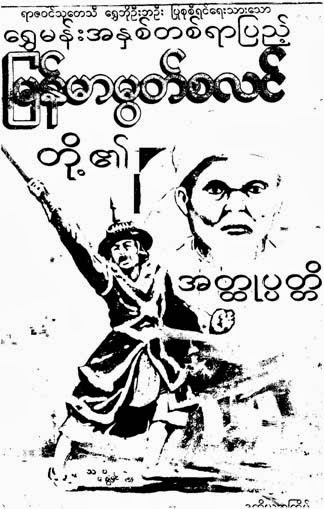
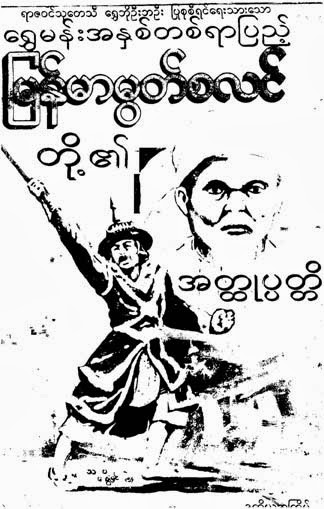
Myanmar Muslim,” This is our country. This is our land.” မြန်မာမွတ်စလင်မ် “ဒါ တို့ပြည်၊ ဒါ တို့မြေ”