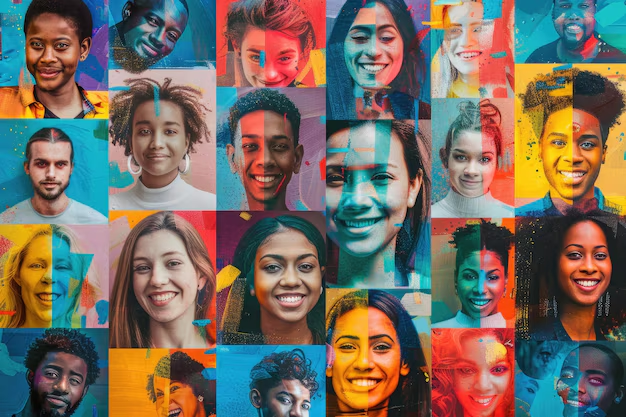
Attention: Myanmar Immigration Officers and country’s destroyer/traitors Ma Ba Tha extremists
Written by YMNN and translated by DARZKKG
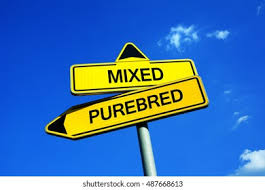
If Myanmar Immigration Officers remarked that you are a mixed-blooded person.
Maung Yin, Ah Ba want to tell you: no one is “pure” — everyone is mixed, so look in the mirror and accept it.
The very first case of “mixed blood” started with Anawrahta. Kyansittha witnessed to that. There was a saying: “The start of Kala (Indian) blood mixing was Anawrahta.” That could have become a proverb. As for Byatwi, Byatta, and Bai Sab — no need to mention. When artists were brought in after the Thai wars, Shan/Thai blood got mixed in. Later, Pauk Phaws’ blood trickled into King Narathihapate’s bloodline too.
At that time in Mrauk-U, Bengali blood was flowing by the gallon. Kings themselves took Kala names and titles, engraving Kala scripts on Royal Coins. When Bamas won over them and the Mahamuni Buddha image was moved to Mandalay, those bloodlines came along together— producing “Royal servant blood,” “Royal guardian blood,”” Royal Archers” and so on. Even the Masjid near Mandalay’s Mahamuni is said to belong to those descendants.
The most mixed era was Taungoo times. King Bayinnaung’s brother, Natshinnaung, the most brilliant king of poets who sang: “Looking toward the army front… the flags flying in the wind, scattering everywhere…” (Amen). He shifted his religion, happily embracing Christian Portuguese blood. Meanwhile Bayinnaung, obsessed with getting the true Buddha tooth relic from Ceylon, sent ships and weapons — and in return with Tamil blood. Whether the relic was genuine is debated, but the Tamil-Kala bloodlines are historically attested (The proof was a saffron robed monk, so I dare not say it aloud).
Under Myaedu King, the captives after winning the wars were full of Hindus, Muslims, Christians — all spread in Sagaing Division (and Mandalay). Chinese generals like Nasaruddin left Panthay (Chinese Muslim) blood in Kachin State. Opium lords brought Communist Chinese (Kuomintang also) leftand blood into Kawlin and Wuntho (and Shan States). The descendants of Bo Thee carried Kadu blood into Moehne and Moekaung.
Merchants from Punjab and Malmān traded in Inwa, leaving traces in central Burma. Manipuri Asan mixed with Chin blood, producing distinct looks around Pakokku.
In the British colonial era, when “masters” were desired, mixing with Bo blood was common. Burmese who wanted to curry favor even kept Bo in the front room and called them “master” with relish.
Later, economic migrants brought Chetty (South Indian) blood. If you want proof, look at families of Japanese-resistance actor Thiha. Or check around Maung Yin’s neighborhood: dark-skinned, thick-browed Buddhists with hooked lashes — that’s Chetty-Kala descent. Was it because they couldn’t refuse a marriage proposal, or because they loved the Chetty chest hair too much, or simply for money? Ask yourself.
In the Zayawaddi area, Ajay Devgn and Amrita Bhajan spread their bloodlines. Even Subhas Chandra Bose gathered recruits from there to fight Japan.
Surati blood is testified by Aung San Market itself.
In the Japanese era, there was even a saying: “The master returned home to Japan and left the pregnant wife in Burma.” Among Japanese-mixed families, artist Ko Khin Wun was most respected.
Back in the 14th century, Panthay miners in Namtu mixed with Shan blood. The Chinese presence was so grand that even Min Theinkha wrote them into his stories. Pale-skinned, short-nosed Buddhists — surely carrying a drop or two of Arti or That Kaw blood.
The Low Pang and Chiang Kai-shek (Kuomintang) groups also mixed with Shans. Some of their descendants became ethnic leaders, even attending the Panglong Conference (I and 2)
After WWII, famine drove Chinese into Burma. Their mixed bloodlines now dominate Mandalay with big houses and flashy cars. Real Communist once drank liquor under the rain-god shrine, but now they build monasteries, donate on Sabbath (U Pothe) days but form evening drinking circles — (say “Sadhu” three times Maung Yin!).
In southern Burma, the Salons and Pashus carry Malay blood strongly.
So, Maung Yin, let me ask you: What’s your skin color — white, black, brown, or yellow? Are your brows thick or thin? Eyes narrow or wide? Lashes hooked or straight? Nose short, long, flat, sharp? Lips thin or thick? Hair dense or sparse? Beard growing or absent like a woman’s? Look carefully in the mirror. Then decide: what mixed blood are you?
And if you still think you’re “pure blood,” slap your cheek and read the whole thing again from the start.
Maung Yin, Ah Ba want to tell you: no one is “pure” — everyone is mixed, so look in the mirror and accept it.