Based on The Royal Orders of Burma, A.D. 1598–1885 (Part II: 1649–1750)
By Dr. Than Tun (M.A., B.L., Ph.D. London), Professor of History, Mandalay University
Published by the Center for Southeast Asian Studies, Kyoto University, 1985
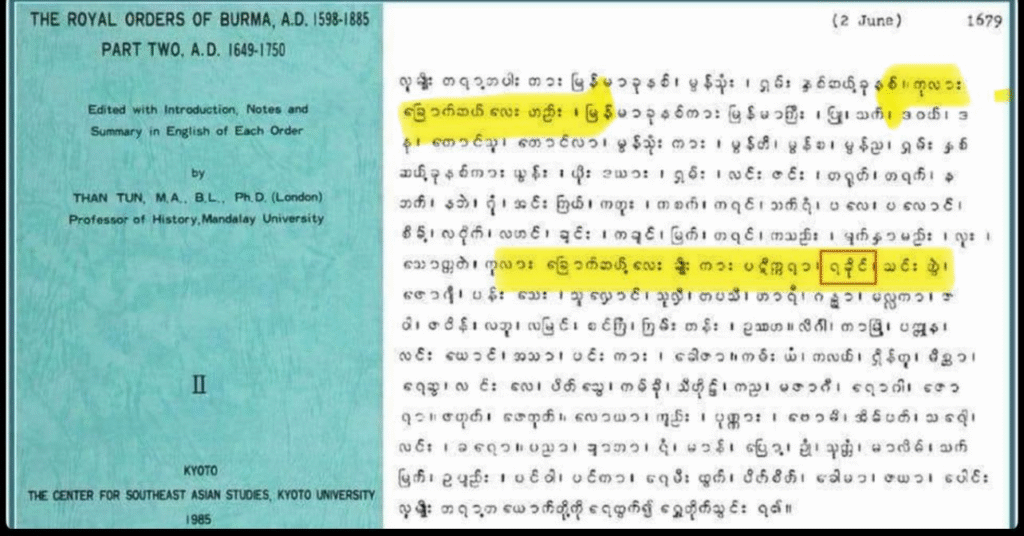
For centuries, Myanmar kings meticulously preserved demographic and administrative data in what were known as the Golden Royal Archives. Among these records is a remarkable classification of 101 ethnic communities living under the Burmese kingdom during the mid-17th to early-18th centuries.
This official list—compiled long before modern ethnic politics—reveals a deeply multicultural society shaped by migration, trade, warfare, and intermarriage across South Asia, Southeast Asia, and East Asia.
Below is a summarised and modernised interpretation of Dr. Than Tun’s transcription.
1. Seven “Myanmar” Groups
- Myanmar Gyi (Main Bamar)
- Pyu (Ancient Tibeto-Burman civilisation)
- Thet
- Dawai (Dawei/Tavoyan)
- Danu
- Taungthu (Pa-O)
- Taunglar
These reflect early sub-groups within the broader Bamar/Myanmar identity.
2. Three Mon Groups
The record notes three distinct Mon communities, reflecting the long presence of Mon civilisation in Lower Myanmar.
3. Twenty-Seven Shan and Related Groups
The “Shan” category was broad, including neighbouring peoples:
- Yodaya (Ayutthaya/Thai)
- Shan
- Lin Zin
- Tayoke (Chinese)
- Tayek (likely Turkic or Central Asian origins)
- Karen
- Kathay (Meitei people of Manipur, India)
- Chin
- Kachin
- And other Tai-related or mountain groups
This illustrates centuries of movement between northern Myanmar, Yunnan, Assam, and Thailand.
4. Sixty-Four “Kalar”: Migrant Communities in Burma
In the 17th–18th century archives, the term “Kalar” meant foreigners/migrants primarily from the West of Myanmar (India, Bengal, Persia, Arabia) and also some Southeast Asian communities.
It did not carry the modern derogatory meaning.
These 64 groups included:
- Rakhines (classified as migrants in Upper Burma during that period) (NOTE: Rakhines were called Kalars)
- Padeikkhayars (Indians from Pathein and Bengal)
- Panthays – Pathi/Bamar Muslims/Chinese Muslims
- Zawgyi / Tapathi – Iranian-origin alchemists and occult practitioners
- Malacca (Pashu) – early Malay/Bajau migrants
- Kanyan
- Kalae – Tamils
- Ceylon – Sri Lankans
- Punna – Brahmins
- Chekka – Chak/Chakma peoples
- And many others representing South Asian, Middle Eastern, Malay, and Central Asian origins
This vast category shows how cosmopolitan pre-colonial Burma truly was—long before the British Empire expanded mobility.
Why This Matters Today
This 350-year-old royal record proves:
- Myanmar has always been multi-ethnic, multicultural, and connected to global migration.
- Groups such as Muslims, Tamils, Bengalis, Chinese, Thai, Manipuri, Malays, and Persians were not “new arrivals” but part of the kingdom’s recognised demographic landscape.
- Identity politics of the modern era should not erase this long, documented history of diversity.
Dr. Than Tun’s work remains a crucial reminder that the Golden Land was built by many peoples, not one.
Appendix:
The Malacca (Pashu) community—later known as the Pashu Malays—reflects a long history of two-way migration between Burma and the Malay Peninsula. According to the Malay Annals (Sejarah Melayu), early Bagohmen or people from Bago/Pegu (Mon) were recorded among the founders of the Malacca Sultanate, with historical accounts noting that no fewer than twenty Bago-based ships regularly sailed in and out of the Malacca port as part of its maritime trade network. Burmese records support this connection as well. The Glass Palace Chronicle recounts that King Alaungsithu of Pagan (grandson of King Kyansittha) travelled to the Pashu Peninsula—present-day Malay Peninsula—while en route to Ceylon. Alaungsithu’s royal lineage further illustrates the region’s cultural interlinkages: he was the son of Saw Yun (son of King Saw Lu) and Princess Shwe Einthi, daughter of Kyansittha. Princess Shwe Einthi herself is remembered in Burmese historical literature for her tragic love affair with the Prince of Pateikkaya, a kingdom believed to have been located either in Pathein or eastern Bengal, emphasising the longstanding ties between Burma, Bengal, and the Malay world.
Additional Historical Note on Princess Shwe Einthi
Burmese chronicles also highlight a revealing episode of early social attitudes during the Pagan era. When Princess Shwe Einthi, daughter of King Kyansittha, fell in love with the Prince of Pateikkaya—a kingdom believed to be in Pathein or eastern Bengal—the king refused to allow the marriage because the suitor was regarded as a Kalar, a term then used for Indians, Bengalis, or Muslims. Instead, Kyansittha chose to marry his daughter to Saw Yun, who was physically handicapped, demonstrating that ethnic and religious prejudices were already deeply embedded in elite court society over 900 years ago. This episode serves as one of the earliest recorded examples of how racial and religious discrimination influenced political and personal decisions within the Burmese royal family.
မြန်မာ ဘုရင်များ ၏ ရွှေစာချုပ်တော်တွင် မှတ်တမ်းတင်ထားသော မြန်မာနိုင်ငံရှိ လူမျိုး ၁၀၁ မျိုး – (ရှေးဗမာ ဘုရင်များက ရခိုင် များကို ကုလား စာရင်းသွင်းခဲ့သည့် အထောက်အထား )
—-
မူရင်းကိုးကားချက်:
ဒေါက်တာသန်းထွန်း (သမိုင်းပါမောက္ခ၊ မန္တလေးတက္ကသိုလ်) ရေးသားသည့် The Royal Orders of Burma, A.D. 1598–1885 (Part II: 1649–1750) စာအုပ်ကို အခြေခံထားပါသည်။
(Center for Southeast Asian Studies, Kyoto University, ၁၉၈၅ ခုနှစ်ထုတ်)
မြန်မာဘုရင်များသည် လူဦးရေဆိုင်ရာနှင့် အုပ်ချုပ်ရေးဆိုင်ရာ အချက်အလက်များကို ရွှေစာချုပ်တော်ဟု ခေါ်သော မှတ်တမ်းများတွင် ရာစုနှစ်များစွာကြာသည့်အထိ စနစ်တကျ ထိန်းသိမ်းခဲ့ကြသည်။ ထိုမှတ်တမ်းများထဲတွင် ၁၇ ရာစုအလယ်ပိုင်းမှ ၁၈ ရာစုအစောပိုင်းကာလများအတွင်း မြန်မာဘုရင့်နိုင်ငံတော်အောက်တွင် နေထိုင်ခဲ့ကြသော လူမျိုးစု ၁၀၁ မျိုးကို ခွဲခြားသတ်မှတ်ထားသည့် ထူးခြားသော စာရင်းတစ်ခု ပါဝင်သည်။
ခေတ်သစ် လူမျိုးရေးနိုင်ငံရေးများ မပေါ်ပေါက်မီ ကတည်းက ပြုစုထားခဲ့သော ဤတရားဝင်စာရင်းတွင် တောင်အာရှ၊ အရှေ့တောင်အာရှနှင့် အရှေ့အာရှတို့မှ ရွှေ့ပြောင်းဝင်ရောက်မှု၊ ကူးသန်းရောင်းဝယ်မှု၊ စစ်ပွဲများအကြောင်းနှင့် အချင်းချင်း လက်ထပ်ထိမ်းမြားမှုတို့အကြောင်း မှတ်တမ်းတင်ထားသည့် ဘာသာစကားမျိုးစုံ၊ ယဉ်ကျေးမှုမျိုးစုံပါဝင်သည့် လူ့အဖွဲ့အစည်းများ အကြောင်းကို ဖော်ပြထားပါသည်။
အောက်တွင် ဒေါက်တာသန်းထွန်း မှတ်တမ်းတင်ခဲ့သော လူမျိုး အုပ်စု စာရင်းကို အနှစ်ချုပ်ပြီး ခေတ်နှင့်အညီ ပြန်လည်ဖော်ပြလိုက်ပါသည်။
၁။ “မြန်မာ” ခုနစ်မျိုး
—
ဗမာ /မြန်မာ လူမျိုးအုပ်စုတွင် လူမျိုးခွဲပေါင်း ခုနစ်မျိုးပါဝင်သည်။
* မြန်မာကြီး (အဓိက ဗမာ)
* ပျူ (ရှေးဟောင်း တိဗက်-ဗမာ ယဉ်ကျေးမှု)
* သက်
* ထားဝယ် (ဒဝါယ/တဝိုင်း)
* ဓနု
* တောင်သူ (ပအိုဝ်း)
* တောင်လှ
၂။ မွန် သုံးမျိုး
—
မှတ်တမ်းတွင် အောက်မြန်မာနိုင်ငံ၌ မွန်ယဉ်ကျေးမှု၏ ကာလရှည်ကြာစွာ တည်ရှိမှုကို ထင်ဟပ်စေသော ထူးခြားသည့် မွန်လူ့အဖွဲ့အစည်း သုံးခုကို မှတ်သားထားသည်။
* မွန် (အဓိက မွန်လူမျိုးစု)
* ရာမည (မွန်တို့၏ နေရပ်ဖြစ်သော ရာမညဒေသကို ရည်ညွှန်းသည်။)
* ပဒဲ (ပဒဲလူမျိုးစု သို့မဟုတ် မွန်အုပ်စုငယ်တစ်ခု)
၃။ ရှမ်းနှင့် ဆက်စပ်အုပ်စု ၂၇ မျိုး
—
“ရှမ်း” အမျိုးအစားသည် နယ်နိမိတ်ချင်းထိစပ်နေသည့် လူမျိုးများကိုပါ ထည့်သွင်းထားသော ကျယ်ပြန့်သည့် အမည်တစ်ခုဖြစ်သည်။
* ယိုးဒယား (အယုဒ္ဓယ/ထိုင်း)
* ရှမ်း
* လင်းဇင်း
* တရုတ် (တရုတ်လူမျိုး)
* တာရက် (တာကစ် သို့မဟုတ် အာရှအလယ်ပိုင်းဇာတိ ဖြစ်နိုင်ခြေများ)
* ကရင်
* ကသည်း (အိန္ဒိယနိုင်ငံ၊ မဏိပူရမှ မေတေ လူမျိုးများ)
* ချင်း
* ကချင်
* အခြားသော တိုင်နှင့် ဆက်စပ်သည့် သို့မဟုတ် တောင်ပေါ်အုပ်စုများ
ဤအချက်သည် မြန်မာနိုင်ငံမြောက်ပိုင်း၊ ယူနန်ပြည်နယ်၊ အာသံနှင့် ထိုင်းနိုင်ငံတို့အကြား ရာစုနှစ်များစွာကြာ ရွေ့လျားမှုကို ဖော်ပြသည်။
၄။ “ကုလား” ၆၄ မျိုး
—
မြန်မာနိုင်ငံရှိ ရွှေ့ပြောင်းအခြေချ လူ့အဖွဲ့အစည်းများ
၁၇ ရာစုမှ ၁၈ ရာစုမှတ်တမ်းများတွင် “ကုလား” ဆိုသည့် ဝေါဟာရသည် မြန်မာနိုင်ငံ၏ အနောက်ဘက် (အိန္ဒိယ၊ ဘင်္ဂလား၊ ပါရှား၊ အာရေဗျ) မှ အဓိကအားဖြင့် လာရောက်သော နိုင်ငံခြားသားများ/ရွှေ့ပြောင်းလာသူများနှင့် အရှေ့တောင်အာရှ လူ့အဖွဲ့အစည်းအချို့ကို ဆိုလိုသည်။
၎င်းသည် ယနေ့ခေတ်ကဲ့သို့ နိမ့်ချသော အခေါ်အဝေါ် အဓိပ္ပာယ်ကို မဆောင်ခဲ့ပေ။
ဤ ၆၄ မျိုးသော အုပ်စုများတွင် ပါဝင်သည်များမှာ-
* ရခိုင် (ထိုကာလက အထက်မြန်မာနိုင်ငံတွင် ရွှေ့ပြောင်းလာသူများအဖြစ် သတ်မှတ်ခံရသည်။) (မှတ်ချက်- ရခိုင်များကို ကုလားဟု ခေါ်ဝေါ်ခဲ့သည်)
* ပဒိတ်ခယား (ပုသိမ်နှင့် ဘင်္ဂလားမှ အိန္ဒိယလူမျိုးများ)
* ပန်းသေး – ပသီ/ဗမာမွတ်စလင်/တရုတ်မွတ်စလင်များ
* ဇော်ဂျီ/တပသီ – အီရန်ဇာတိ နက္ခတ္တဗေဒပညာရှင်များနှင့် ဂမ္ဘီရပညာရှင်များ
* မလက္ကာ (ပရှူး) – ရှေးဦး မလေး/ဗာဂျောင် ရွှေ့ပြောင်းလာသူများ
* ကညာန်
* ကလယ် – တမီလ်လူမျိုးများ
* သီဟိုဠ် – သီရိလင်္ကာလူမျိုးများ
* ပုဏ္ဏား – ဗြဟ္မဏများ
* ချက်ကာ – ချက်/ချက်မာလူမျိုးများ
* အခြားသော တောင်အာရှ၊ အရှေ့အလယ်ပိုင်း၊ မလေးနှင့် အာရှအလယ်ပိုင်းဇာတိကို ကိုယ်စားပြုသော လူမျိုးများစွာ ပါဝင်သည်။
ဒီနှစ်ပေါင်း ၃၅၀ သက်တမ်းရှိသော ရွှေစာချုပ်တော်မှတ်တမ်းများ အရ မြန်မာနိုင်ငံသည် ဗြိတိသျှအင်ပါယာ မချဲ့ထွင်မီကာလ ကိုလိုနီခေတ်မတိုင်မီကတည်းက ကမ္ဘာနေရာအနှံအပြားမှလာသော လူမျိုးပေါင်းစုံ ယဉ်ကျေးမှုပေါင်းစုံ ပေါင်းစပ်ခဲ့သည် ဆိုသည့်အချက်ကို ပြသနေသည်။
မွတ်စလင်၊ တမီလ်၊ ဘင်္ဂါလီ၊ တရုတ်၊ ထိုင်း၊ မဏိပူရီ၊ မလေး၊ ပါရှန် စသည့် အုပ်စုများသည် ခုမှ အသစ်ရောက်လာသူများ မဟုတ်ဘဲ ရှေးဘုရင့်နိုင်ငံတော်များလက်ထက်ကတည်းက အသိအမှတ်ပြုထားသော လူ့အဖွဲ့စည်း၏ တစ်စိတ်တစ်ပိုင်း ဖြစ်ခဲ့ကြသည်။
ယခုခေတ်ရောက်မှ လူမျိုးမတူ ဘာသာမတူသဖြင့် သမိုင်းအထောက်အထားများအား အတင်းအဓမ္မ ဖျောက်ဖျက်ဖို့ မကြိုးစားသင့်ပါ။
ဒေါက်တာသန်းထွန်း၏ သမိုင်း မှတ်တမ်းမှတ်ရာ စာအုပ်များသည် မြန်မာပြည်ဟာ လူမျိုး တစ်မျိုးတည်းမှ တည်ဆောက်ထားခြင်း မဟုတ်ဘဲ လူမျိုးပေါင်းများစွာ ယဉ်ကျေး မူပေါင်းများစွာ ပေါင်းစည်း ပြီးအဆင့်ဆင့်တည်ဆောက်လာခဲ့ခြင်း ဖြစ်ကြောင်းကို မီးမောင်းထိုးပြခဲ့သော သမိုင်းအဖြစ် ယခုချိန်ထိ ကျန်ရှိနေဆဲဖြစ်သည်။
မလက္ကာ (ပရှူး) မလေး အသိုင်းအဝိုင်းနှင့် မြန်မာသမိုင်းဆိုင်ရာ ဆက်နွှယ်မှု
—
မလေးရာဇဝင်ကျမ်း (Sejarah Melayu) အရ၊ ရှေးဦး ဗဂိုမင်း သို့မဟုတ် ပဲခူးမှ လူများသည် မလက္ကာစူလ်တန်နိုင်ငံကို တည်ထောင်သူများထဲတွင် မှတ်တမ်းတင်ခံရပြီး၊ ပဲခူးအခြေစိုက် သင်္ဘော အစင်း ၂၀ ထက်မနည်းသည် မလက္ကာဆိပ်ကမ်းသို့ ရေကြောင်းကုန်သွယ်ရေးကွန်ရက်၏ တစ်စိတ်တစ်ပိုင်းအဖြစ် ပုံမှန် ဝင်ထွက်သွားလာခဲ့ကြောင်း သမိုင်းမှတ်တမ်းများက ဖော်ပြသည်။
မြန်မာ့မှတ်တမ်းများကလည်း ဤဆက်နွှယ်မှုကို ထောက်ခံသည်။ မှန်နန်းရာဇဝင်တော်ကြီးတွင် ပုဂံပြည့်ရှင် အလောင်းစည်သူမင်း (ကျန်စစ်သားမင်း၏ မြေးတော်) သည် သီဟိုဠ်သို့ အသွားတွင် ပရှူးကျွန်းဆွယ် ယခု မလေးကျွန်းဆွယ် သို့ ခရီးလှည့်လည်ခဲ့ကြောင်း ဖော်ပြသည်။
အလောင်းစည်သူသည် စောလူးမင်း၏သား စောယွန်းနှင့် ကျန်စစ်သားမင်း၏သမီး ရွှေအိမ်စည်မင်းသမီးတို့မှ ဖွားမြင်ခဲ့ခြင်း ဖြစ်သည်။
ရွှေအိမ်စည်မင်းသမီးကိုယ်တိုင် ပဋိက္ခယား မင်းသားနှင့် ကြေကွဲဖွယ် ချစ်ဇာတ်လမ်းအကြောင်း သမိုင်းမှတ်တမ်းရှိခဲ့သည်။ ပဋိက္ခယား တိုင်းသည် ယခု ပုသိမ် သို့မဟုတ် ဘင်္ဂလား စစ်တကောင်းနယ် တွင် တည်ရှိသည်ဟု ယူဆရပြီး၊ မြန်မာ၊ ဘင်္ဂလားနှင့် မလေးကမ္ဘာတို့အကြား ကူးလူးဆက်ဆံရေးရှိခဲ့ကြောင်းကို ဖော်ပြနေပါသည်။
ရွှေအိမ်စည်မင်းသမီးအကြောင်း
—
မြန်မာ့ရာဇဝင်ကျမ်းများသည် ပုဂံခေတ်က ရှေးဦးလူမှုရေးသဘောထားများကို ဖော်ပြသည့် ဖြစ်စဉ်တစ်ခုကိုလည်း မီးမောင်းထိုးပြခဲ့သည်။
ကျန်စစ်သားမင်း၏သမီး ရွှေအိမ်စည်မင်းသမီးသည် ပဋိက္ခယား မင်းသား နှင့် ချစ်ကြိုက်သောအခါ ဘုရင်က လူမျိုး ဘာသာ မတူသဖြင့် အိမ်ထောင်ပြုခွင့် မပြုခဲ့ပေ။ ကျန်စစ်သားသည် မိမိ၏သမီးတော်ကို ပဋိက္ခယား မင်းသား နှင့် ရမည် စိုးသဖြင့် ကိုယ်အင်္ဂါချို့ယွင်းနေသော စောယွန်းနှင့် လက်ထပ်စေခဲ့သည်။
ဤဖြစ်စဉ်သည် လူမျိုးရေး ဘာသာရေးဆိုင်ရာ အစွဲအလမ်းများသည် နှစ်ပေါင်း ၉၀၀ ကျော်ကတည်းက မြန်မာ/ဗမာ နိုင်ငံရေး လူမူ့ရေးတွင် မည်သို့ လွှမ်းမိုးခဲ့ကြောင်း မှတ်တမ်းတင်ထားသည့် အစောဆုံး ဥပမာများထဲမှ တစ်ခုဖြစ်သည်။
(ဒေါက်တာ ဦးကိုကိုကြီး ရဲ့ အင်္ဂလိပ် ဘာသာ ဆောင်းပါးအား ဆီလျော်အောင် ဘာသာပြန်ထားခြင်း ဖြစ်သည်။)