Equal Rights for All Citizens of Myanmar
There was a time in Myanmar when the ideals in our own National Song were not merely lyrics—but lived values.
“Where justice and independence prevail…
Where equal rights and fair policies prevail…
For all people to live in peace.”
These lines were meant to unite us. They were meant for every citizen, regardless of race, religion, or ancestry. They were meant for all our children.
A Memory from a More Inclusive Era
In the early years of Gen. Ne Win’s BSPP government, racial and religious discrimination—though never entirely absent—was far less institutionalized than it is today.
In 1966–67, a Burmese Muslim student (8th Standard, St. Peter’s High School) and Dolly Lin, a Burmese Chinese student from St. Joseph Convent (9th Standard), were both selected as Mandalay Luyechun Outstanding Students. Both were proudly chosen to raise the national flag at the Whole Burma Student Sports Festival.
St. Peter’s School Band, gymnasts, and cyclists performed at the opening ceremony. The event was celebrated nationwide; newsreels of the ceremony were screened repeatedly in cinemas across the country.
That was Myanmar—a Union where young people of different faiths could stand under one flag without fear.
A Bitter Contrast Today
Today, Myanmar has sunk into a cycle of discrimination and racial riots. We have witnessed Ma Ba Tha-led mobs weaponize the same national flag and shout only selected phrases from the National Song:
“Our country, our homeland…
This is our nation, our homeland and she belongs to us.”
But instead of unity, those words were used as war-cries to attack Muslim communities and destroy properties. The National Song—meant to uplift the nation—was twisted into a tool of exclusion and intimidation.
This is not the Myanmar our forefathers dreamed of.
This is not the Union the National Song asks us to preserve “for perpetuity.”
Man Proposes, God Disposes
Life takes us where we are needed.
Dolly Lin, the Burmese Chinese girl who once stood proudly under the flag, is now a renowned neurosurgeon in a foreign country.
And I, the Burmese Muslim boy who stood beside her, now live comfortably abroad, meeting prime ministers and ministers not out of prestige, but out of responsibility. Perhaps Allah SWT placed me here for a purpose:
to serve the millions of Myanmar migrants—legal and undocumented—who struggle daily in Malaysia,
and to continue speaking for human rights, free from Myanmar’s political constraints.
A Plea for the Future of Myanmar
Today, I offer this heartfelt plea to all fellow citizens of Myanmar:
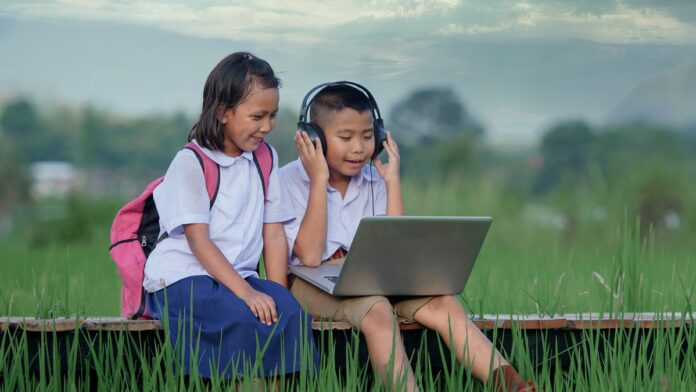
Let us allow our children—
children of mixed heritage, children of every faith, children of every race—
to once again hold hands,
to once again sing from their hearts,
and to once again march together to our National Song.
Let them sing the whole song, not just the parts used for hatred.
Let them inherit a Myanmar where the promise of equal rights becomes reality, not rhetoric.
Let them rebuild the Union our ancestors hoped would “long live till the end of the world.”
Let justice prevail
Let equal rights prevail.
Let peace prevail.
Let our children inherit a Myanmar worthy of its own National Song.
Read and watch also: