Following the signing of the Treaty of Yandabo on February 24, 1826, King Bagyidaw honored his loyal soldiers with rewards.
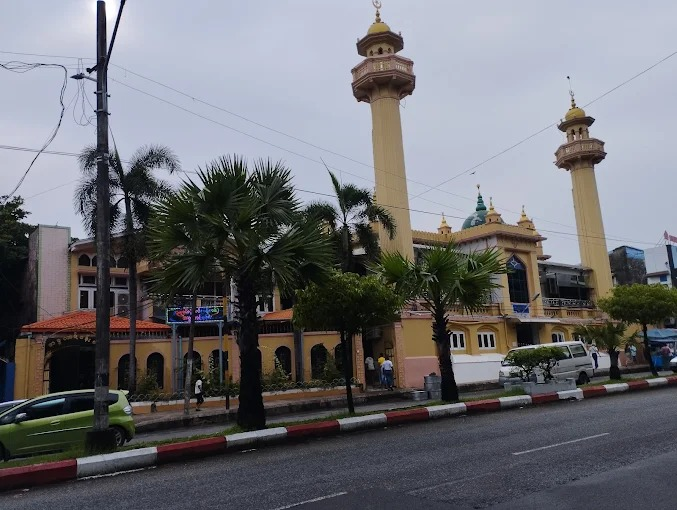
Among them were two Muslim Rakhine brothers, U Shwe Thine and U Shwe Hmine, who served as military officers. They respectfully petitioned the king for a place to perform religious rites and burial, as they were devout Muslims. In response, the king granted them land near what is now Aung San Stadium in Insein, Yangon. This act is recorded in the Peza (Dried Palam leaves) chronicles.
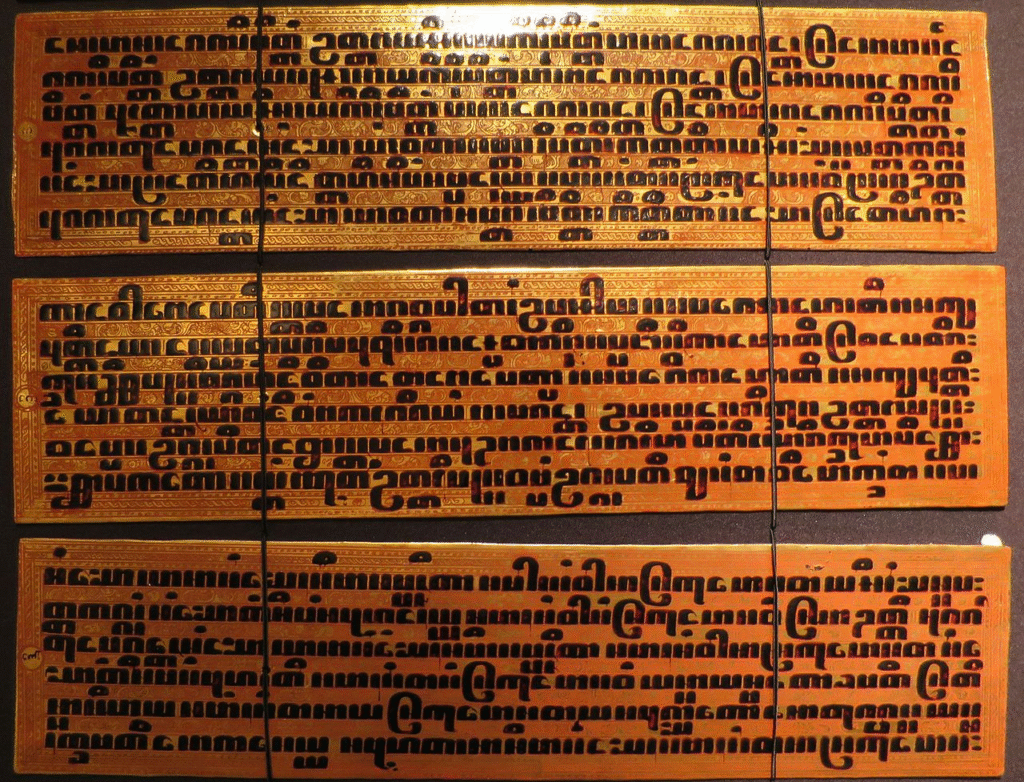
By Hiart – Own work, CC0, https://commons.wikimedia.org/w/index.php?curid=35196095
Later, after the Second Anglo-Burmese War in 1852, a British officer named “Sarfaya” constructed a road through that area. Because the mosque was partially demolished during this process, it came to be known as the “Ta-chan Pet Mosque” (literally, “Half-Demolished Mosque”).
Throughout the Anglo-Burmese wars, including the battles of Danubyu and Wettheekan, Muslim officers such as Naymyo Gonnarath (နေမျိုးဂုဏ္ဏရတ်) Khan Sab Bo and the brothers U Shwe Hmine and U Shwe Thine fought valiantly alongside Maha Bandula, the famed Burmese general. Historical records show that these Muslim soldiers fought not for race or religion, but for the dignity and sovereignty of their homeland.
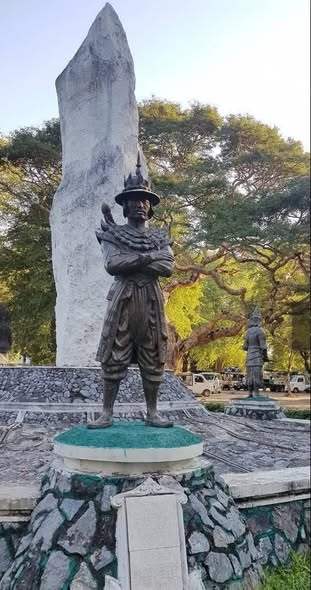
U Shwe Hmine, a Rakhine Muslim commander, led a battalion known as the “Thein Gyi Troop,” composed of 500 brave Muslim Burmese soldiers. “Thein Gyi” referred to the Theinpya Deforce Forte. One of the most significant battles during King Bagyidaw’s reign was the Battle of Gauttau Pallin(ဂေါ့တော့ပုလ္လင်း), where over ten thousand British troops clashed with the Burmese army. Despite being outnumbered, the Burmese soldiers fought with great courage and inflicted heavy losses on the British, forcing them to retreat. Khan Sab Bo also led over a hundred cavalrymen into this historic battle (Konbaung Dynasty Chronicle, Vol. 2, pp. 376–377).
In recognition of their loyalty and bravery, King Bagyidaw held a grand ceremony to honor his troops. Over 1,300 Muslim soldiers—including young bachelors and riflemen—were awarded golden sashes, green and red silk sashes, and green-and-white ceremonial scarves (Konbaung Dynasty Chronicle, Vol. 2, p. 477).
The participation of indigenous Burmese Muslims in these life-sacrificing battles against British colonial forces is a shining chapter in our nation’s history.
Even today, we witness Myanmar Muslims joining hands with the people’s resistance forces to uproot tyranny. Alongside political movements like ours, they continue to take part in the nonviolent struggle against dictatorship.
Thus, this document stands as a tribute to the patriotism and sacrifice of Myanmar’s indigenous Muslim community.
- Prophet Muhammad (peace be upon him) in address of the Farewell Hajj_
- “No Arab has any superiority over a non-Arab, nor does a non-Arab have any superiority over an Arab.
- Nor does a white man have any superiority over a black man or the black man any superiority over the white man.
- You are all the children of Adam, and Adam was created from clay” (al-Bayhaqi and al-Bazzaz).
(Verily, Allah commands justice, kindness, and generosity towards relatives. He forbids indecency, evil, and transgression. He admonishes you so that you may take heed.) Quran (16:90)
(“All people are descended from Adam and Eve, and an Arab has no superiority over a non-Arab, nor does a non-Arab have superiority over an Arab. Similarly, a white person has no superiority over a black person, nor does a black person have superiority over a white person. The most superior among you is the one who is most pious and righteous.”)
Prophet Muhammad
(The one who guides to goodness is like the one who does it, and will receive a similar reward.)
Prophet Muhammad’s Hadith | Muslim Scripture
Looks like it’s a post from Ko Chay’s YouTube channel, based in Taung Kote, Rakhine State.